Custom Forging Sourcing Guide: How US Buyers Save 40–55% on Forged Parts (2026)
March 2, 2026 · 17 min read
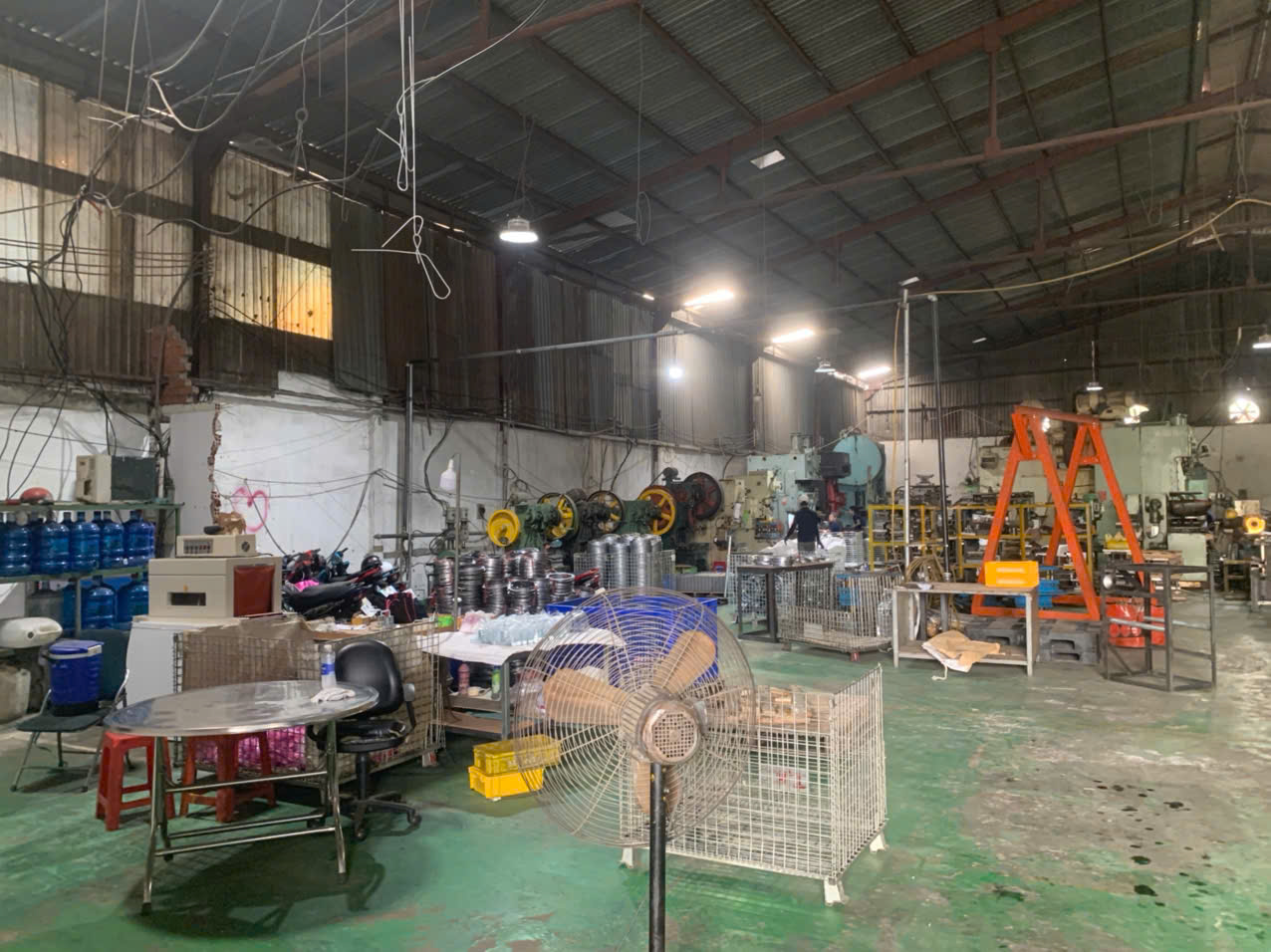
If your parts see cyclic loads, impacts, or vibration — and you're currently machining them from bar stock — you're probably paying 3–5× more than you need to. Forging produces parts with aligned grain flow that delivers 20–30% higher fatigue strength than equivalent machined or cast parts, with significantly less material waste.
The challenge for US procurement teams isn't whether forging is the right process — it's finding forging capacity that delivers quality at a competitive price. Domestic US forging shops quote lead times of 12–20 weeks and prices that make forgings uncompetitive against machined alternatives. Chinese forging is cheap but carries 7.5–25% Section 301 tariff penalties.
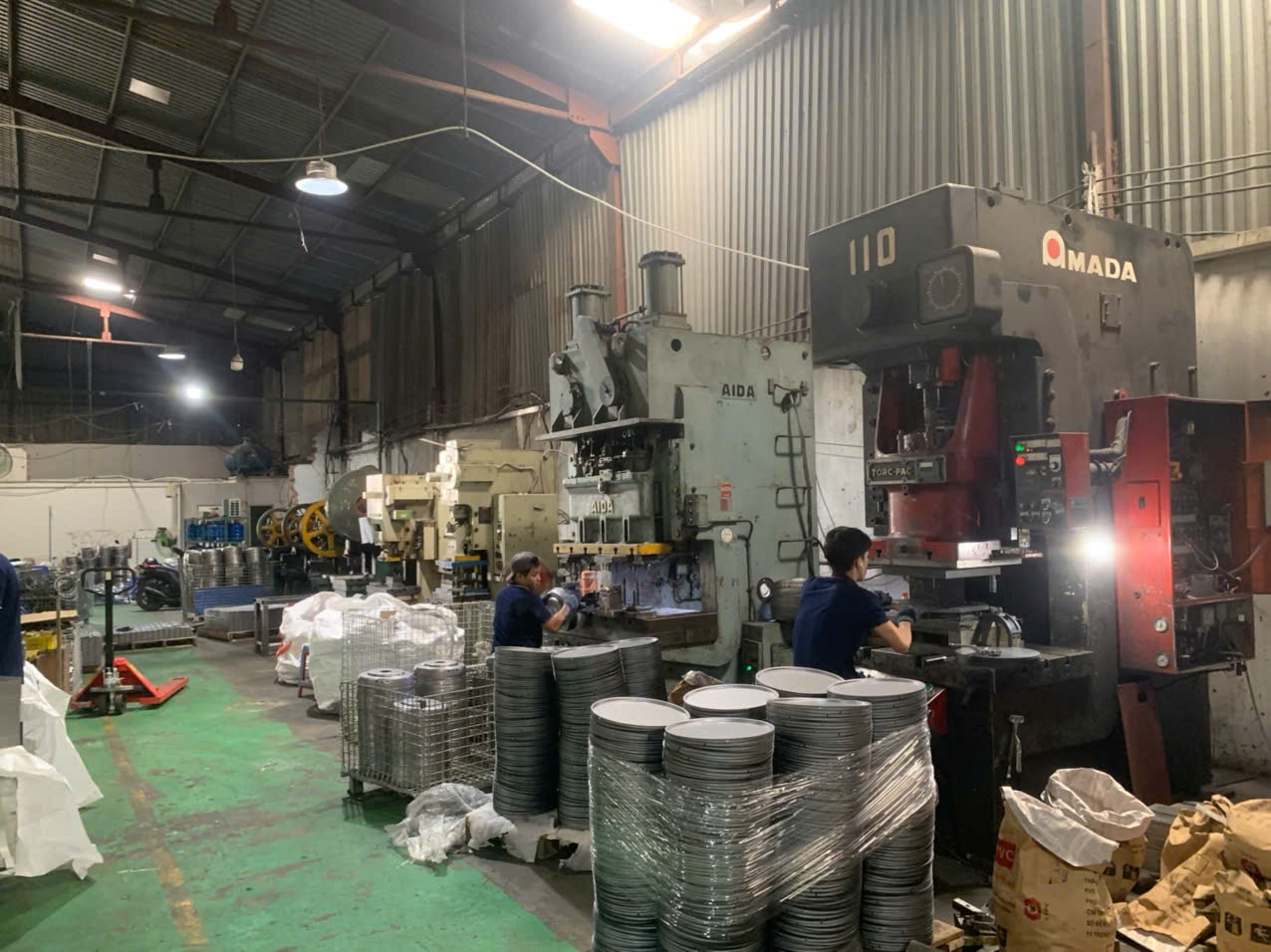
Vietnam has emerged as the sweet spot: quality forging operations (many supplying Honda, Toyota, and Yamaha Tier 1 programs), costs 40–55% below US domestic, and 0% tariff on most forged parts entering the US.
Forging Processes: Which One Fits Your Part?
Hot Forging
Metal heated above recrystallization temperature (1,100–1,250°C for steel, 400–480°C for aluminum) and pressed into shape. This is the workhorse process for most custom forged parts.
Use when: Parts exceed 1kg, require complex geometry, or use alloy steels that resist cold forming. Tolerances: ±0.5–1.5mm as-forged (per DIN 7526 Grade F), with post-machining to ±0.02mm on critical features.
Cold Forging
Room-temperature forming. Tighter tolerances (±0.05–0.15mm), excellent surface finish (Ra 0.8–3.2μm), and work-hardened surfaces — but limited to simpler shapes and parts under ~3kg. Often eliminates post-machining entirely.
Use when: High volumes (100K+ per year), symmetrical parts like ball studs, pins, gear blanks, fasteners. The per-part economics at volume are unbeatable.
Warm Forging
Heated to 600–900°C for steel — below recrystallization but enough to improve material flow. Delivers ±0.2–0.5mm tolerances with lower die wear than cold forging. A good compromise for medium-complexity automotive parts.
Open-Die vs. Closed-Die
Open-die: For large, simple shapes — shafts, rings, blocks. Low tooling cost, but limited geometry control. Parts up to several hundred kilograms.
Closed-die (impression die): This is what most US buyers need. The metal fills precision-machined die cavities, producing near-net-shape parts. Higher tooling cost ($2K–$40K) but much lower per-part cost and tighter dimensional control.
Cost Comparison: US vs. China vs. Vietnam Forging
Here's what the numbers actually look like for a typical project:
Die Tooling
| Die Complexity | US Domestic | China | Vietnam |
|---|---|---|---|
| Simple (single cavity, <2kg part) | $8,000–$15,000 | $1,800–$4,500 | $2,000–$5,000 |
| Medium (multi-step, 2–10kg part) | $15,000–$35,000 | $4,500–$12,000 | $5,000–$15,000 |
| Complex (multi-cavity, >10kg) | $40,000–$80,000 | $12,000–$30,000 | $15,000–$40,000 |
Per-Piece Cost (Including Forging + Heat Treatment + Basic Machining)
| Part Example | Weight | US | China (landed w/tariff) | Vietnam (landed) |
|---|---|---|---|---|
| Carbon steel flange (2kg) | 2kg | $12–$18 | $4.50–$7.50* | $4.00–$6.50 |
| 4140 connecting rod (0.8kg) | 0.8kg | $8–$14 | $3.80–$5.70* | $3.20–$4.80 |
| AL6061 suspension arm (1.5kg) | 1.5kg | $15–$25 | $5.30–$8.70* | $4.50–$7.00 |
| SS316 valve body (5kg) | $35–$55 | $15–$22.50* | $13–$20 |
* China landed cost includes Section 301 tariff (7.5–25%) + ocean freight. Vietnam landed cost includes ocean freight but 0% additional tariff.
The pattern is clear: Vietnam undercuts China on landed cost for most forged parts because the tariff delta (10–25%) more than offsets China's slightly lower raw manufacturing cost. Against US domestic, the savings are 40–55%.
Forging vs. Alternatives: Decision Framework
Before you request a forging quote, make sure forging is actually the right process:
Choose forging when:
- Parts experience fatigue, cyclic, or impact loading
- Production volume exceeds 500 pieces per year
- Material is steel, aluminum, brass, or titanium (not magnesium, zinc, or plastics)
- Part weight is 50g–80kg
- You can accept ±0.5mm as-forged with machining on critical surfaces
- Internal porosity is unacceptable (pressure vessels, safety-critical)
Choose CNC from billet when:
- Volumes under 200 pieces
- Complex internal features (channels, blind holes)
- Tolerances tighter than ±0.1mm on multiple features without post-machining
- Rapid iteration needed (no tooling commitment)
Choose die casting when:
- Thin walls (<3mm), complex internal geometry
- Material is aluminum, zinc, or magnesium
- Volume exceeds 5,000+ per year (amortize higher tooling cost)
- Fatigue strength is not the primary design driver
Writing a Forging RFQ That Gets Accurate Quotes
Vague RFQs get vague (inflated) quotes. Here's exactly what to include:
- 3D STEP file + 2D PDF drawing — Show finished dimensions, machining stock (1.5–3mm/side for hot forging), draft angles (3–7° hot, 0.5–1° cold), and parting line preference.
- Material & heat treatment — "AISI 4140, Q&T to HRC 28–32" — not "strong alloy steel." Include ASTM specification number if applicable (A105, A182, etc.).
- Tolerance classification — Separate as-forged dims from post-machined dims. Reference DIN 7526 (Grade E, F, or G) or ASTM tolerance standards.
- Testing & inspection — Hardness (every piece?), dimensional (AQL level?), material cert (EN 10204 3.1?), NDT (UT per ASTM A388? MPI per ASTM E1444?). State which tests are required vs. desired.
- Volume & delivery — Annual forecast, batch sizes, delivery schedule. A 500-piece trial order followed by 2,000/quarter is very different from a one-time 500-piece order.
- Post-processing scope — Do you want the supplier to also machine, heat-treat, surface-finish, and package? Or just provide raw forgings? Integrated scope typically saves 15–20% vs. splitting operations across vendors.
Material Selection Guide for Forged Parts
| Material | Common Grades | Forging Temp | When to Use |
|---|---|---|---|
| Carbon steel | 1020, 1045, 1060 | 1,100–1,250°C | General structural, flanges, low-cost parts |
| Alloy steel | 4130, 4140, 4340, 8620 | 1,050–1,200°C | High-strength: gears, shafts, connecting rods |
| Stainless steel | 304, 316L, 410, 17-4PH | 1,050–1,150°C | Corrosion resistance: valves, marine, food equipment |
| Aluminum | 6061-T6, 2024-T4, 7075-T6 | 400–480°C | Lightweight: aerospace, automotive suspension, wheels |
| Brass | C360, C377, C863 | 700–800°C | Plumbing, electrical, decorative hardware |
| Titanium | Ti-6Al-4V (Grade 5) | 900–950°C | Aerospace, medical, extreme environments |
Tariff Advantage: Why Vietnam Forging Beats China on Landed Cost
This is the single biggest factor driving the shift to Vietnam forging:
- Section 301 tariffs on Chinese forgings: 7.5–25% on forged steel and aluminum articles (HTS 7326, 8207, 7307). Chinese forged flanges specifically face anti-dumping duties of 6.09–183.36%.
- Vietnam: 0% tariff on most forged parts under MFN rates. No anti-dumping orders. No countervailing duties.
- Net effect: Even though Vietnam's FOB factory price is 10–20% above China's, the landed cost at a US port is 5–15% below China after tariffs. For anti-dumping categories like flanges, the savings are dramatically larger.
Quality Assurance: What to Expect & Require
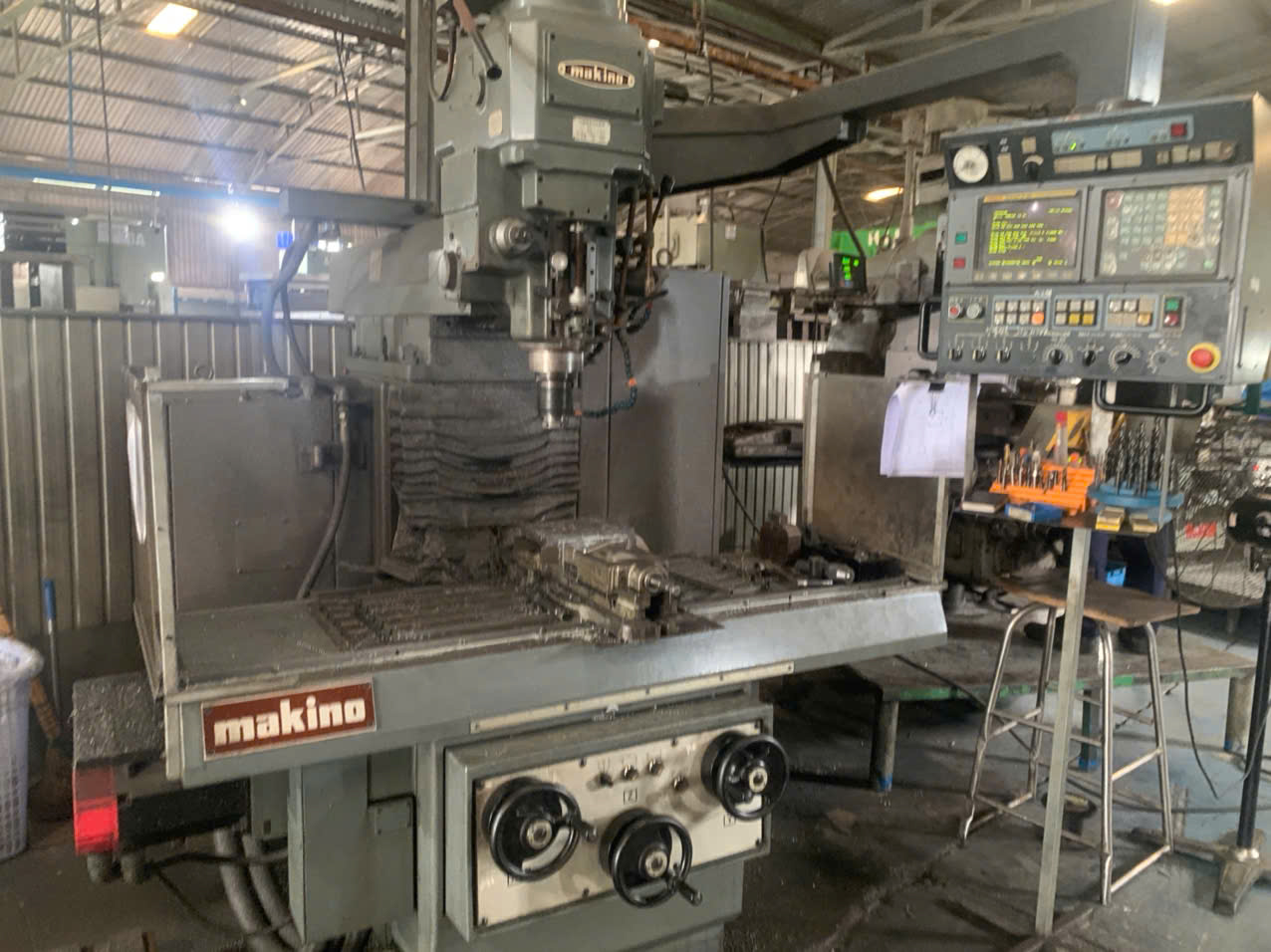
Forging quality control has unique requirements beyond typical machined parts inspection:
- Incoming material inspection: Mill test certificates (EN 10204 3.1), chemical composition verification via spectrometer, ultrasonic testing of billet for internal defects.
- In-process: Forging temperature monitoring (induction heating logs), visual inspection for underfill/laps/folds after each press operation, die condition tracking.
- Post-forging NDT: Magnetic Particle Inspection (MPI per ASTM E1444) catches surface/near-surface cracks. Ultrasonic Testing (UT per ASTM A388) finds internal discontinuities. Specify which tests and acceptance criteria in your RFQ.
- Dimensional: CMM measurement on machined features, go/no-go gauges for functional dimensions, 3D scan comparison to CAD for complex forgings.
- Hardness & metallurgy: Rockwell/Brinell hardness testing per ASTM E18/E10. Cross-section grain flow analysis on first article. Ensure grain flow follows the part's stress direction.
Lead Times
| Phase | Timeline |
|---|---|
| Quotation | 3–5 days |
| Die design & manufacturing | 4–8 weeks |
| T1 samples | 1–2 weeks |
| Mass production | 2–4 weeks |
| Ocean freight to US | 25–35 days |
First order total: 12–18 weeks. Repeat orders: 4–8 weeks (existing die).
Industries We Source Forged Parts For
- Automotive: Steering knuckles, connecting rods, gear blanks, ball joints, hub units
- Agricultural equipment: Plow points, cultivator teeth, PTO shafts, hydraulic cylinder parts
- Oil & gas: ASME B16.5 flanges, valve bodies, hammer unions, pipe fittings
- Construction: Bucket teeth, track links, pivot pins, ripper shanks
- Industrial: Couplings, sprockets, crane hooks, lifting hardware
Get a Custom Forging Quote
Dewin connects you with vetted, IATF 16949-certified forging facilities. We handle supplier matching, quality oversight, and logistics — you get finished parts delivered to your door.
Quote in 48 Hours
Send us your 3D model + drawing. We'll return a detailed quote covering die tooling, per-piece cost, heat treatment, machining, surface finish, and landed cost at your US facility.
Request a Quote →