Custom Sheet Metal Fabrication Guide 2026
February 18, 2026 · 14 min read
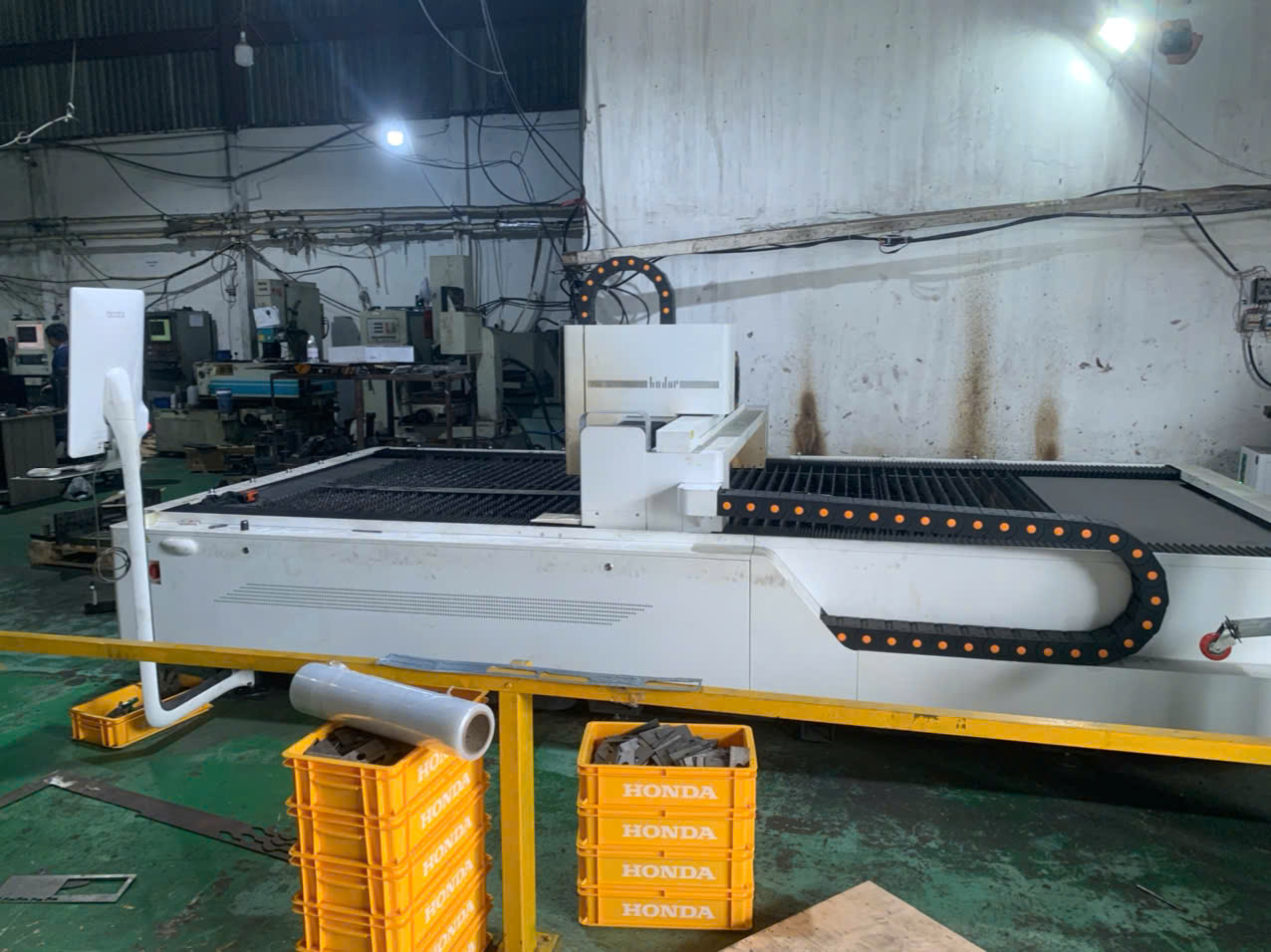
Sheet metal fabrication is the backbone of industrial manufacturing. From server rack enclosures to agricultural equipment brackets, HVAC ductwork to EV battery trays — if it's made from flat metal stock that gets cut, bent, and welded into shape, it's sheet metal fabrication. The global market exceeds $300 billion annually, and US buyers are increasingly sourcing custom sheet metal parts from Vietnam to cut costs 40–60% while maintaining quality.
This guide covers everything a US procurement manager or engineer needs to know: processes, materials, tolerances, realistic 2026 pricing, and how to evaluate offshore sheet metal suppliers.
The Four Core Sheet Metal Processes
1. Laser Cutting — The Starting Point
Modern sheet metal fabrication begins with fiber laser cutting. A 3–6 kW fiber laser cuts mild steel up to 20 mm, stainless up to 12 mm, and aluminum up to 10 mm with positional accuracy of ±0.05 mm and kerf width of 0.1–0.3 mm depending on material thickness.
Cost drivers: Cutting speed depends on material and thickness. 1 mm mild steel cuts at 25–40 m/min. 3 mm stainless cuts at 3–6 m/min. 6 mm aluminum cuts at 2–4 m/min. Most shops charge by cutting time: $1.50–4/min (US) vs. $0.50–1.50/min (Vietnam). Nesting efficiency (how tightly parts pack on the sheet) affects material utilization — good nesting hits 80–90% usage; poor nesting wastes 30–40% of the sheet.
What to specify in your RFQ: Material type and grade, sheet thickness, quantity, DXF/DWG cutting files, edge quality requirements (dross-free, deburr needed), and any critical dimensions with tolerances tighter than ±0.1 mm.
2. Bending/Forming — Where Flat Becomes 3D
CNC press brakes convert flat laser-cut blanks into 3D shapes. Modern CNC press brakes (50–300 ton) achieve angular accuracy of ±0.5° standard, ±0.25° with back-gauge compensation. Bend radius must be ≥ material thickness for mild steel, ≥ 1.5× thickness for stainless steel, and ≥ 2× thickness for aluminum (to prevent cracking).
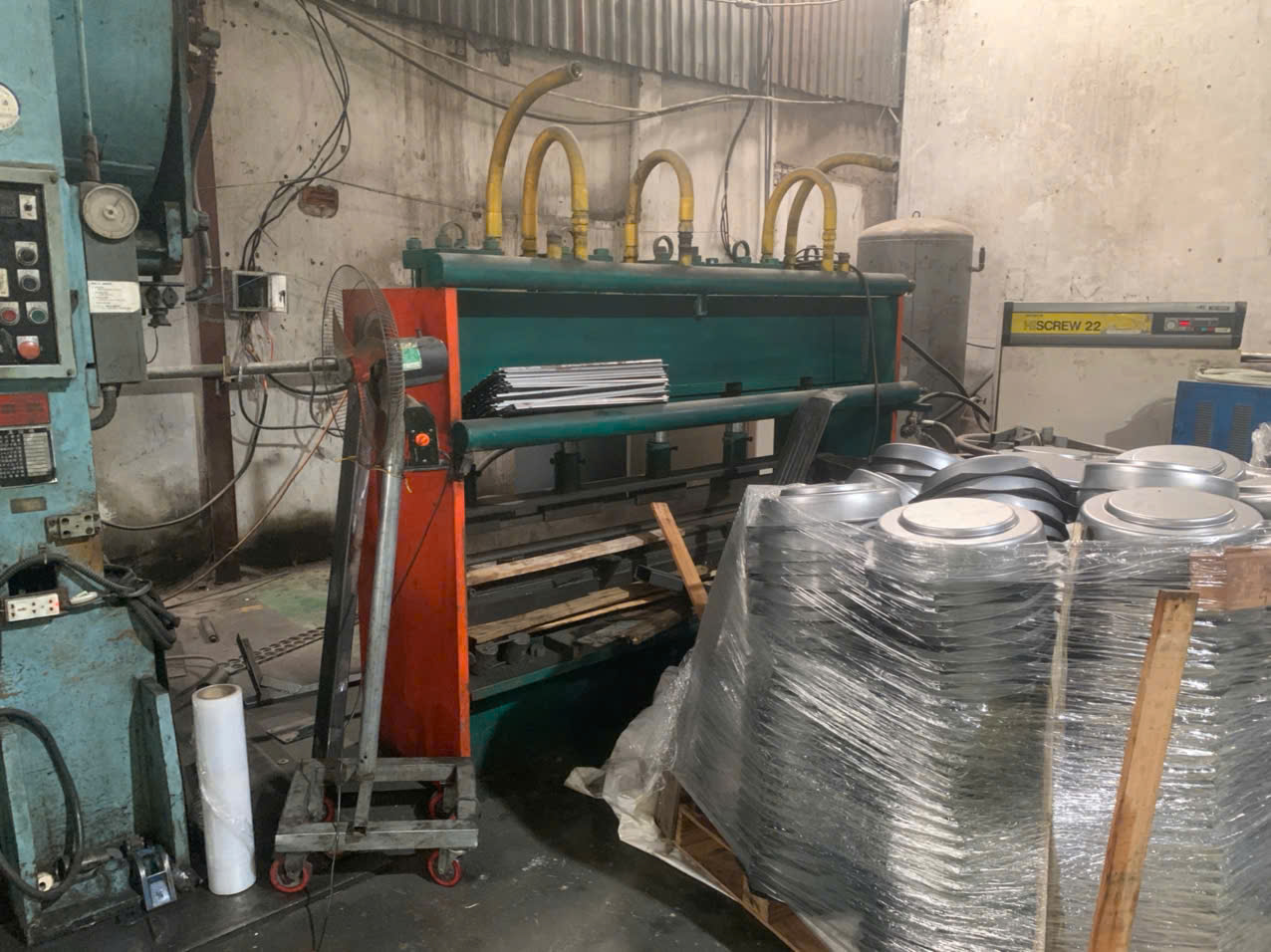
Critical DFM rules for bending:
- Minimum flange length: At least 4× material thickness, or the press brake can't grip the part. For 2 mm steel, minimum flange = 8 mm.
- Hole-to-bend distance: Keep holes at least 2.5× material thickness + bend radius away from bend lines. Closer holes deform during bending.
- Bend relief cuts: Where bends terminate at an edge, add 1 mm wide relief cuts extending 1 mm past the bend line. Prevents tearing.
- Springback compensation: Stainless steel springs back 3–5°. Mild steel springs back 1–2°. Aluminum springs back 2–4°. Good shops compensate automatically; specify final angle, not overbend.
- Grain direction: Bending perpendicular to rolling direction produces cleaner bends with tighter radii. Specify grain direction for critical cosmetic bends.
3. Welding — Joining It Together
Sheet metal assemblies typically use MIG (GMAW), TIG (GTAW), or spot/resistance welding. Process selection depends on material, appearance requirements, and production volume:
- MIG welding: Fast, economical, good for mild steel and aluminum ≥1.5 mm. Produces visible weld bead — grind smooth for cosmetic surfaces (adds $2–8/part). Best for structural and non-cosmetic assemblies.
- TIG welding: Slower but superior finish. Essential for stainless steel (prevents carbide precipitation), thin materials (<1.5 mm), and visible welds. 2–3× slower than MIG. Specify TIG only where appearance or material demands it.
- Spot welding: Fastest for overlapping joints. 0.5–3 seconds per spot. Ideal for enclosures, brackets, channels. Low cost at volume. Requires 8–12 mm flange overlap. Not suitable for watertight joints.
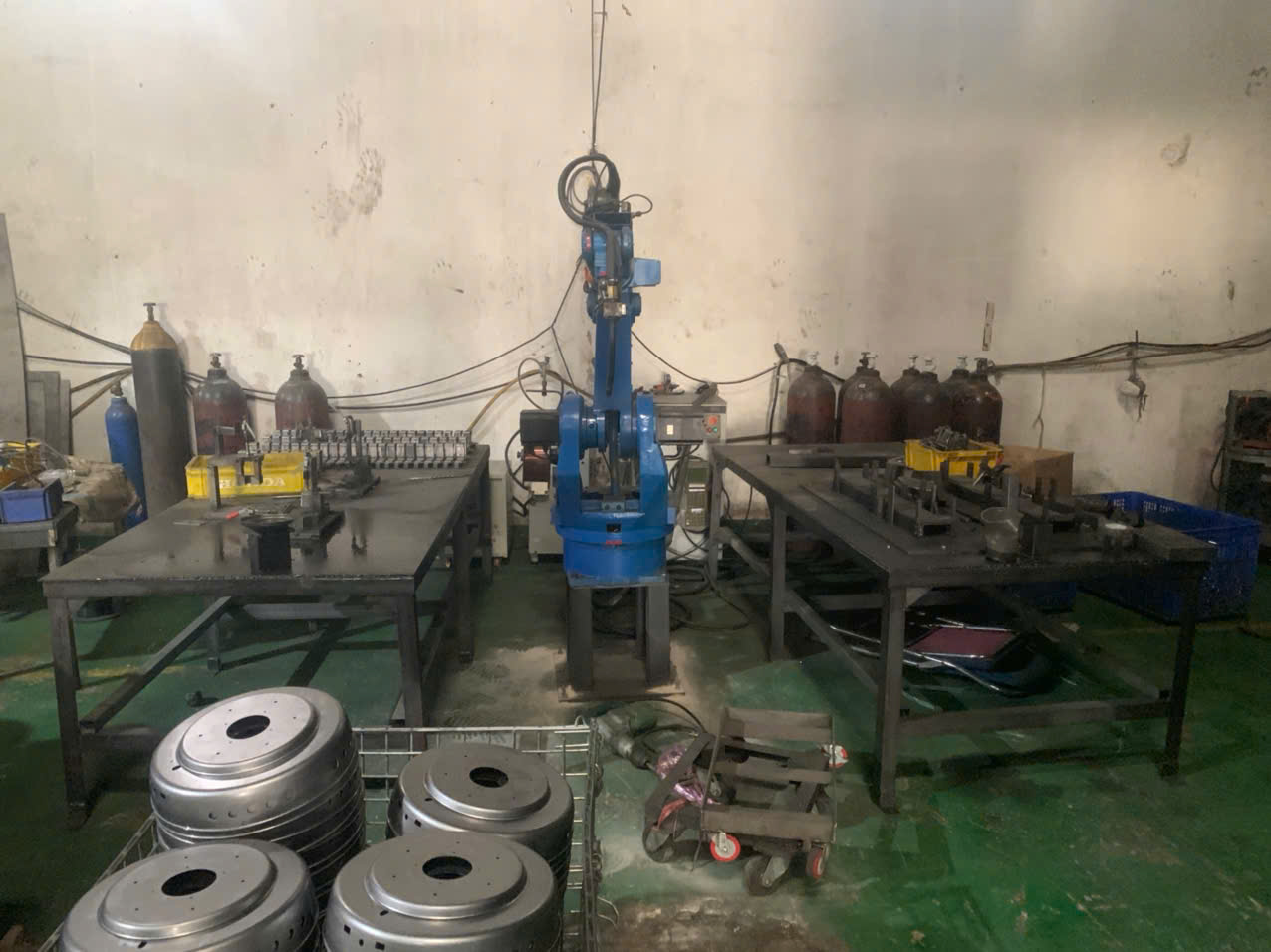
- Robotic welding: For 500+ identical assemblies. Setup cost $500–2,000 for programming, but per-part welding cost drops 40–60% vs. manual. Vietnam shops increasingly have robotic cells.
4. Stamping — High Volume, Low Cost
For quantities above 5,000–10,000 parts, progressive die stamping beats laser cut + bend on per-part cost by 50–80%. A progressive die performs multiple operations (cut, pierce, bend, form) in one press stroke. Cycle times: 20–60 strokes/minute = 20–60 parts/minute.
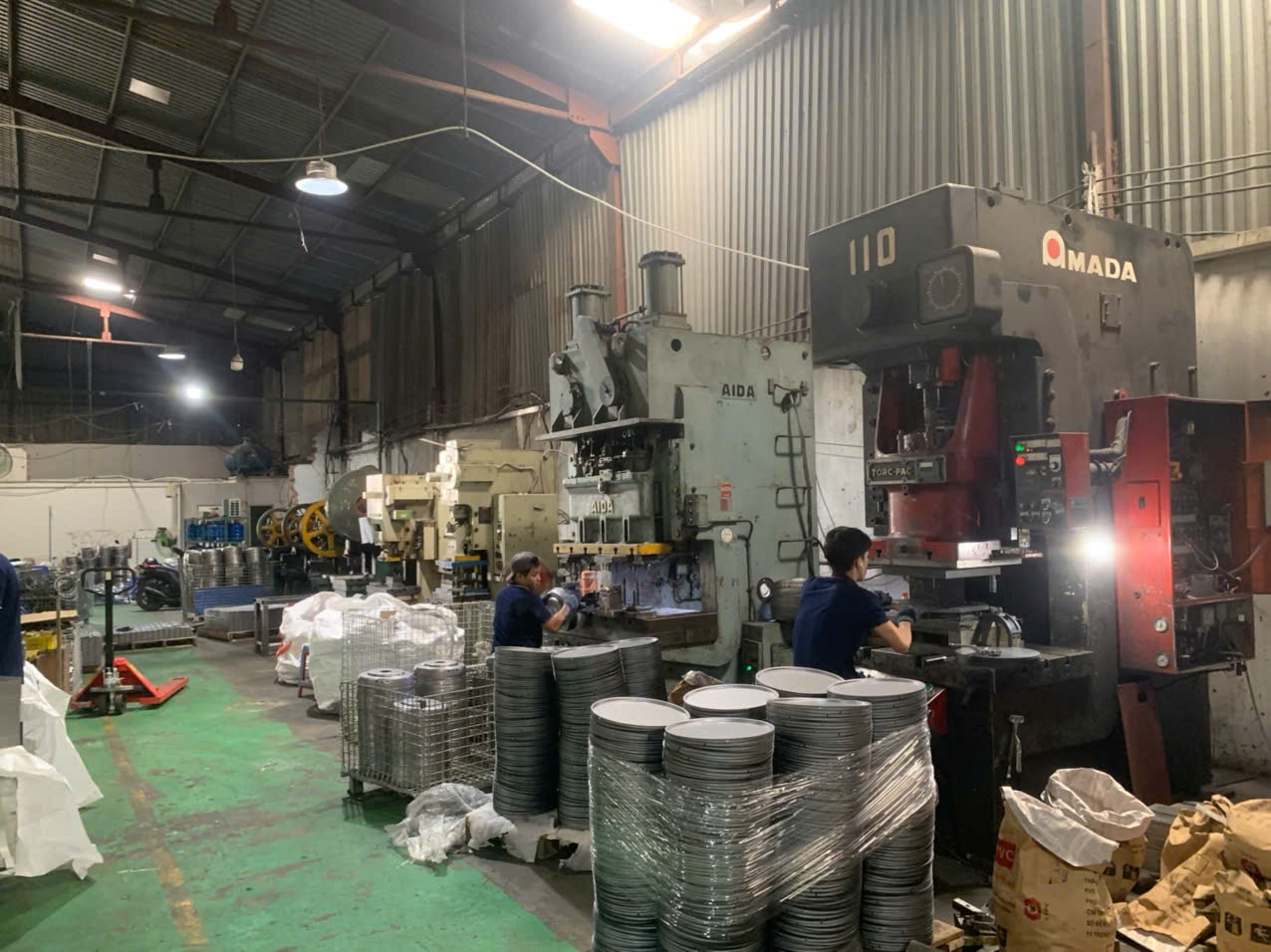
The trade-off is tooling cost: A progressive die costs $5,000–30,000 (Vietnam) vs. $15,000–80,000 (US). Amortize over expected lifetime (100,000–1,000,000+ strokes). At 10,000 parts with a $10,000 die, tooling adds just $1/part — and the per-part fabrication cost drops to $0.50–3 vs. $5–15 for laser+bend.
When stamping makes sense: Annual volume >5,000 parts, part geometry fits in a single press direction (no undercuts), material thickness ≤6 mm, tolerances ±0.1 mm or wider. If your part meets these criteria and you're paying for laser cutting, you're overpaying.
Material Selection Guide for Sheet Metal
Mild Steel (SPCC, SPHC, A36)
The default choice. $0.80–1.20/kg. Excellent formability, weldability, and machinability. Yield strength 250 MPa (SPCC cold-rolled) to 400 MPa (SAPH440 high-strength). Requires coating (powder coat, zinc plating, paint) for corrosion resistance. Use for: structural brackets, enclosures, frames, machine guards, agricultural equipment.
Stainless Steel (SS304, SS316, SS430)
SS304 (18/8 Cr-Ni) is the workhorse: $2.50–4/kg. Corrosion resistant without coating. Yield strength 205 MPa (annealed). Work hardens rapidly — use sharp tools, avoid recutting chips. SS316 adds molybdenum for marine/chemical resistance at $3.50–5.50/kg. SS430 (ferritic, magnetic) is cheaper at $1.80–2.80/kg but less corrosion resistant. Use for: food equipment, medical devices, marine hardware, architectural panels.
Aluminum (AL5052-H32, AL6061-T6, AL3003)
AL5052-H32 is the sheet metal standard: $3.50–5/kg. Best corrosion resistance of common alloys, good formability. Yield 193 MPa. AL3003 is cheaper ($3–4/kg) with good formability but lower strength (yield 125 MPa) — use for non-structural panels. AL6061-T6 is heat-treatable (yield 276 MPa) but cracks easier during bending — requires ≥2× thickness bend radius. Use for: electronic enclosures, heat sinks, marine equipment, lightweight structures.
Galvanized Steel (SGCC, DX51D)
Pre-coated with zinc layer (Z100–Z275, meaning 100–275 g/m² zinc). $1.00–1.60/kg. Eliminates post-fab coating for many applications. Weld through the coating (use silicon bronze MIG wire to prevent zinc fume porosity). Watch for zinc spatter near cuts/welds — touch up with zinc-rich paint. Use for: HVAC ductwork, outdoor enclosures, agricultural equipment, construction hardware.
2026 Per-Part Pricing: Real Benchmarks
Actual quoted ranges from our Vietnam supplier network vs. US domestic shops. All prices assume standard tolerances (±0.1 mm cut, ±0.5° bend) unless noted.
Simple Bracket (laser cut + 2 bends, mild steel 2 mm, ~150×80 mm)
- Qty 100: $4–8/part (US) · $1.50–3.50/part (Vietnam)
- Qty 1,000: $2–4.50/part (US) · $0.80–2/part (Vietnam)
- Qty 10,000: $1–2.50/part (US) · $0.40–1.10/part (Vietnam)
Medium Enclosure (laser + 6 bends + hardware inserts, 1.5 mm SPCC, ~300×200×100 mm)
- Qty 100: $18–35/part (US) · $7–15/part (Vietnam)
- Qty 1,000: $10–22/part (US) · $4–10/part (Vietnam)
- Qty 10,000: $6–14/part (US) · $2.50–6/part (Vietnam)
Welded Assembly (4-piece, MIG weld, 3 mm mild steel, powder coated)
- Qty 100: $35–75/part (US) · $15–35/part (Vietnam)
- Qty 1,000: $20–45/part (US) · $8–20/part (Vietnam)
- Qty 10,000: $12–28/part (US) · $5–13/part (Vietnam)
Stainless Enclosure (SS304, 1.2 mm, TIG welded seams, #4 brushed finish)
- Qty 100: $45–100/part (US) · $20–50/part (Vietnam)
- Qty 1,000: $28–65/part (US) · $12–30/part (Vietnam)
Surface Finishing Options and Cost
Most sheet metal parts require post-fabrication finishing. Costs per part at 500-piece batch:
- Powder coating — $2–8/part depending on size. Most common finish for mild/galvanized steel. 60–120 µm thickness. RAL color system. Excellent durability (1,000+ hours salt spray for quality powder).
- Zinc plating — $1–4/part. Electroplated zinc 8–25 µm + chromate passivation (clear, yellow, black). Good for hardware, fastener-grade corrosion resistance (200–500 hours salt spray).
- Hot-dip galvanizing — $0.50–3/part for dipping. 45–85 µm zinc coating. Best long-term corrosion protection (20+ years outdoor). Rough finish — not cosmetic. Ideal for structural/outdoor parts.
- E-coating (electrocoat) — $1.50–5/part. Uniform 15–25 µm film even in recesses. Excellent for complex geometries. Common automotive primer. Often used as base coat under paint.
- Stainless passivation — $0.50–2/part. Citric or nitric acid bath removes free iron from cut/weld surfaces. Essential for food-grade and medical stainless parts. No dimensional change.
- Brushed/polished finish (stainless) — $3–12/part depending on area. #4 brushed is standard (120–180 grit linear finish). Mirror polish (#8) requires progressive buffing — $8–25/part.
Tolerances: What to Expect and Specify
Sheet metal tolerances differ from CNC machining. Here's what's standard and what costs extra:
- Laser cutting: ±0.1 mm standard on fiber laser. ±0.05 mm achievable with slower speed. Position accuracy ±0.03 mm on modern machines (Trumpf, Amada, Bystronic).
- Bending: ±0.5° angular tolerance standard. ±0.25° achievable with CNC back-gauge correction. Linear dimension after bending: ±0.2 mm standard, ±0.1 mm with compensation.
- Hole positions: ±0.1 mm for laser-cut holes. ±0.05 mm for CNC-punched. Hole diameter: ±0.05 mm laser, ±0.025 mm reamed.
- Flatness: Sheet stock flatness per ASTM A568: 6 mm per meter for cold-rolled, 12 mm per meter for hot-rolled. Laser cutting can induce 0.5–2 mm warp on thin (<1.5 mm) parts — specify leveling if critical.
- Welded assemblies: ±0.5–1 mm linear dimensions standard due to thermal distortion. ±0.25 mm achievable with fixturing and post-weld straightening. Specify critical post-weld dimensions — shops will fixture accordingly.
Sourcing Sheet Metal from Vietnam: What US Buyers Need to Know
Vietnam's sheet metal fabrication industry has matured significantly. Major Vietnamese fabricators now operate Trumpf, Amada, and Bystronic laser cutters alongside Amada and LVD press brakes — the same equipment used in top US and European shops. Here's the practical sourcing guide:
- Equipment parity: Leading Vietnam sheet metal shops run 4–6 kW fiber lasers, CNC press brakes with 6-axis back gauges, robotic welding cells, and automated powder coating lines. Equipment capability is comparable to mid-tier US shops.
- Labor cost advantage: Skilled sheet metal workers earn $400–700/month in Vietnam vs. $3,500–5,500/month in the US. This drives the 40–60% cost differential on labor-intensive operations (welding, assembly, finishing).
- Material sourcing: Vietnam imports most steel from China, Japan, South Korea, and domestically from Hoa Phat (Vietnam's largest steelmaker). Stainless comes primarily from POSCO (Korea) and Tsingshan (China/Indonesia). Material costs are competitive with or slightly below US pricing.
- Tariff advantage: Sheet metal parts from Vietnam (HTS 7326: articles of iron/steel) face standard MFN duty of 0–3.4%. No Section 301 surcharge. Equivalent parts from China face 25% Section 301 tariffs. Net tariff savings: 22–25%.
- Shipping: Flat sheet metal parts pack efficiently. A standard 20' container holds 15–18 metric tons of sheet metal parts. Sea freight Ho Chi Minh City → US West Coast: $2,500–4,000/container (2026 rates). Transit time: 18–22 days. For urgent orders, air freight at $4–7/kg.
- Quality systems: Look for ISO 9001 certification (baseline), AWS D1.1 welding qualification, and material test reports (MTR) with each shipment. Request a first article inspection (FAI) per AS9102 format for critical parts.
DFM Checklist: 10 Rules to Cut Sheet Metal Costs
- Standardize bend radii. Use one inner bend radius for all bends (ideally = material thickness). Each unique radius requires a different die — adds $50–200 setup per radius.
- Avoid tight tolerances on bent dimensions. Bending introduces more variation than cutting. If you need ±0.1 mm on a feature, machine it after bending — don't expect it from the press brake.
- Design for standard sheet sizes. Common sheets: 1220×2440 mm (4×8 ft), 1500×3000 mm, 1250×2500 mm. Design parts to nest efficiently on standard sheets. Odd sizes mean material waste or custom blanks.
- Use PEM inserts instead of tapped holes. Self-clinching PEM nuts (M3–M8) install in-line during fabrication. Stronger than tapped sheet metal, especially in thin (<2 mm) material. Cost: $0.05–0.20 per insert installed.
- Minimize weld length. Each linear cm of weld costs $0.10–0.30 (MIG) or $0.20–0.60 (TIG). Use tab-and-slot self-locating joints to reduce jigging time and weld length. Intermittent welds (stitch welding) cost 50% less than continuous welds where full seal isn't needed.
- Specify minimum necessary surface finish. "Cosmetic" finish adds 20–40% to part cost. If only one face is visible, specify "cosmetic one side" — the shop can handle, stack, and fixture more freely.
- Add bend reliefs and corner reliefs. 1 mm relief cuts at bend terminations prevent tearing and improve bend quality. Corner reliefs (2× thickness radius) at intersecting bends prevent material bunching. Design these in — don't make the shop add them.
- Consider tolerance stacking. A part with 8 bends accumulates tolerance. If overall assembly dimension is critical, specify that dimension directly and let the shop figure out intermediate bends.
- Consolidate parts. A single laser-cut and bent part often replaces a 3-piece welded assembly at lower cost. Review your assemblies for consolidation opportunities — fewer parts = less welding, less fixturing, less inspection.
- Provide complete documentation. 3D CAD (STEP preferred), flat pattern DXF, dimensioned drawings with GD&T, material certs required, finish specifications, and quantity/schedule. Incomplete RFQs get conservative (expensive) quotes.
Get a Sheet Metal Quote in 24 Hours
Send us your drawings — STEP, DXF, or PDF — and we'll return a detailed quote within one business day. Our Vietnam sheet metal suppliers handle everything from 10-piece prototypes to 100,000-piece production runs across mild steel, stainless, aluminum, and galvanized steel. All with material certifications, FAI capability, and 40–60% cost savings vs. US domestic.