Metal Injection Molding (MIM): Design, Costs & Sourcing Guide
March 5, 2026 · 14 min read
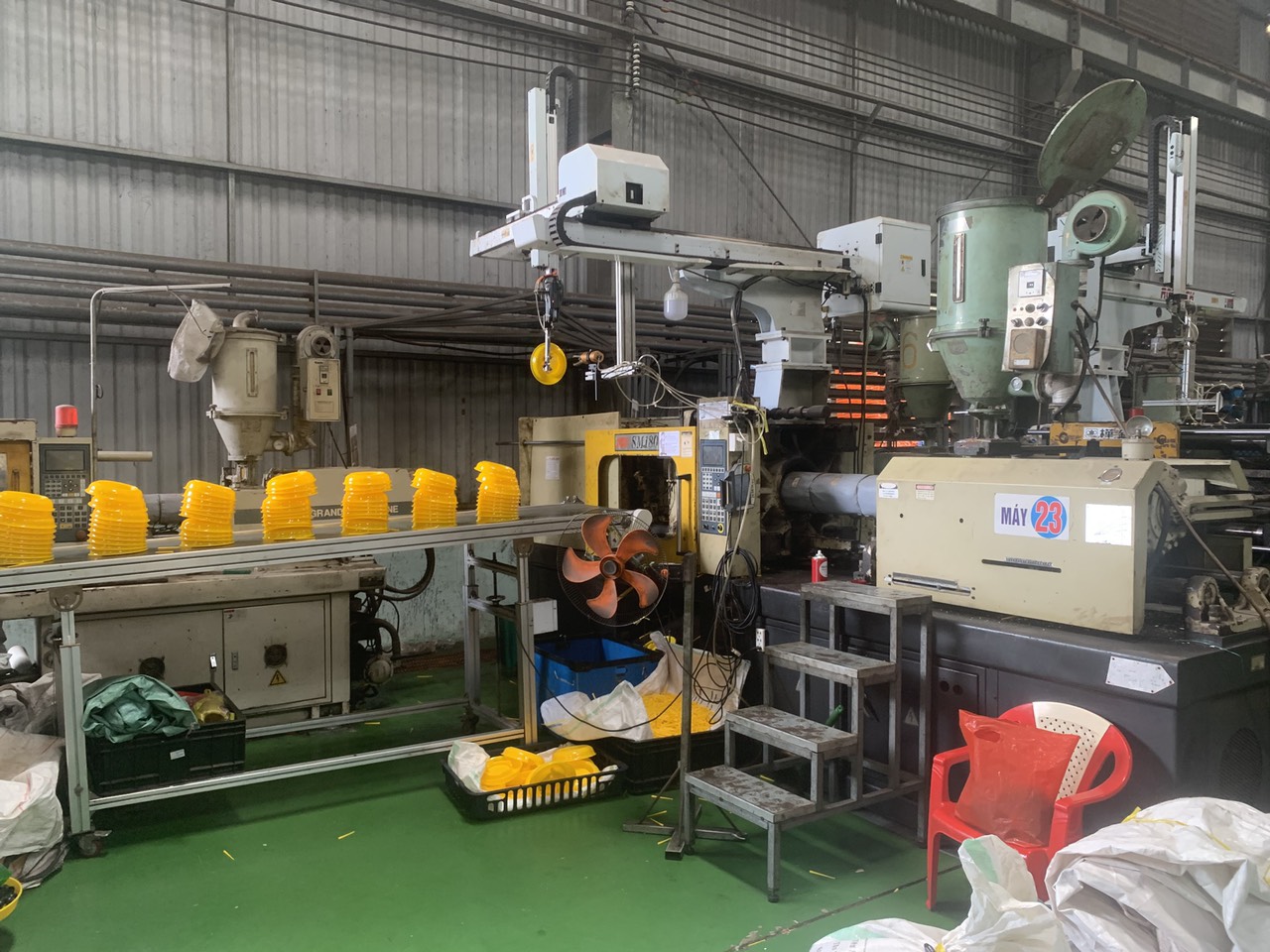
Metal Injection Molding (MIM) produces small, complex metal parts at costs that make CNC machining and investment casting look expensive above 5,000 annual units. If you're sourcing components under 50 grams — firearm internals, surgical instruments, watch cases, automotive sensor housings, or electronic connectors — MIM should be on your evaluation matrix.
This guide covers the process, design constraints, real cost-per-part data, and how to source MIM parts offshore with tariff advantages over China.
The MIM Process: Four Stages
MIM blends fine metal powder (2–20μm particle size) with thermoplastic binder to create a feedstock that injection-molds like plastic but sinters into near-fully dense metal.
- Feedstock Preparation: Metal powder (60–65% by volume) mixed with binder (PE, PP, paraffin wax) at 150–200°C. Pelletized for consistent flow.
- Injection Molding: Feedstock injected at 150–200°C, 50–100 MPa pressure. Cycle times: 15–45 seconds. Produces a "green part" oversized by 18–22% to account for sintering shrinkage.
- Debinding: Binder removal via solvent, thermal, or catalytic process (6–24 hours). Results in a fragile "brown part" at 35–40% porosity.
- Sintering: 1,200–1,400°C in H₂, N₂, or vacuum atmosphere (12–36 hours). Parts reach 95–99% theoretical density with ±0.3–0.5% dimensional tolerance.
Materials Available
Stainless Steel (316L, 17-4PH, 420)
~60% of all MIM production. 316L for corrosion resistance (surgical, food grade); 17-4PH for high strength (1,000+ MPa after H900 heat treatment); 420 for hardness (cutlery, blades). Powder cost: $15–30/kg.
Low-Alloy Steel (MIM-4605, MIM-2200)
Dominates firearms and automotive. Heat treatable to 55 HRC. Tensile strength 440–1,200 MPa depending on condition. Powder cost: $12–20/kg.
Tool Steel (M2, S7, H13)
Cutting tools, dies, wear-resistant components. Tensile strength 900–2,000 MPa. Higher powder cost ($30–60/kg) but produces near-net-shape parts that skip expensive EDM and grinding.
Titanium (Ti-6Al-4V, CP Ti)
Medical implants, aerospace brackets. Powder cost $150–300/kg makes MIM's 95–98% material utilization critical — CNC machining wastes 40–70% of titanium bar stock.
Tungsten & Specialty Alloys
W-Ni-Fe for counterweights and radiation shielding. Kovar/Invar for electronic packages and glass-to-metal seals. Niche but growing segments.
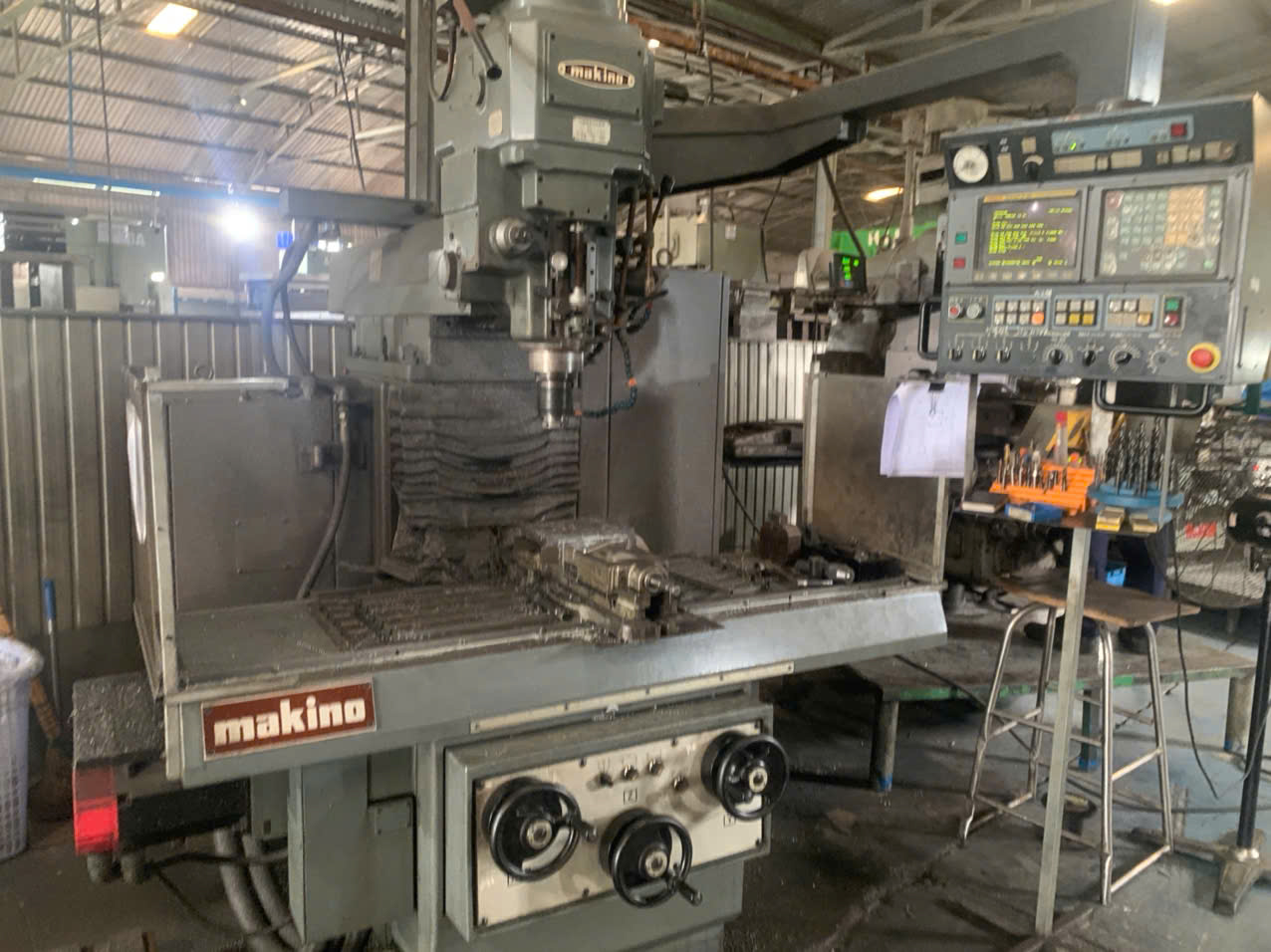
Design Rules That Save Money
- Wall thickness: 0.5–6mm optimal. Below 0.3mm: incomplete fill. Above 8mm: debinding defects. Keep wall uniformity within ±15% to prevent sintering warpage.
- Draft angles: 0.5–1° minimum (half what die casting needs). Green parts are slightly flexible, so ejection is easier.
- Corner radii: ≥0.1mm internal. Sharp corners crack during debinding.
- Holes: Through-holes down to 1.5mm dia. Blind holes up to 2:1 depth:diameter. Cross-holes and angled features — free in MIM tooling, expensive in CNC (4+ axis setups).
- Threads: External threads molded in. Internal threads need secondary tapping ($0.03–0.08/hole at production volumes).
- Undercuts: Possible with side/collapsible cores but add $3,000–8,000 to tooling per feature. Redesign to eliminate when possible.
- Part weight: 1–50g sweet spot. >100g = long debinding (48+ hrs) + sintering distortion risk. <0.5g = feedstock precision challenges.
- Flatness: Sintering fixtures hold 0.1mm/25mm. Unsupported spans >30mm may warp 0.2–0.5mm.
MIM vs CNC: The Real Cost Comparison
Example part: 316L stainless bracket, 18×12×8mm, 15g, 6 features including cross-holes.
Decision rule: MIM wins above 5,000 units/year for complex geometry, above 2,000 units for parts requiring 4+ axis CNC setups. Below 1,000 units, CNC wins on total cost (tooling amortization kills MIM economics at low volumes).
Cost Structure Breakdown
- Metal powder (25–40% of unit cost): 316L at $15–25/kg; 17-4PH at $20–30/kg; Ti-6Al-4V at $150–300/kg. Major feedstock suppliers: BASF Catamold, ARC Group, Indo-MIM.
- Debinding + sintering (30–40%): Furnace energy, atmosphere gases (H₂ $5–8/m³, Ar $8–15/m³), and long cycle times. Batch furnaces process 500–2,000 parts/run.
- Injection + tooling (15–25%): Multi-cavity molds (2–16 cavities) cut injection cost linearly per cavity added.
- Secondary ops (5–15%): Coining, CNC finishing of critical dimensions, heat treatment, electropolishing.
Tariff Advantages: Vietnam vs China MIM
- China Section 301 tariffs: MIM parts (HTS 7326, 7318, 7616) face 7.5–25% additional duties. A $5.00 part becomes $5.75–6.25 before freight.
- Vietnam MFN rates: 0–5.5% standard duty. Same $5.00 part lands at $5.00–5.28.
- Annual savings example: At 50,000 pcs/year of a $3.00 MIM part, switching from China to Vietnam saves $11,250–37,500 in tariffs alone — on top of Vietnam's lower base manufacturing costs.
- CPTPP bonus: Vietnam's CPTPP membership provides preferential access to Japan, Australia, Canada, Mexico — useful for multi-market distribution of finished goods containing MIM components.
Common Defects and Prevention
- Sintering distortion: Uneven walls → uneven shrinkage. Fix: ±15% wall uniformity + sintering fixtures ($1K–3K/fixture).
- Blistering: Trapped binder gases. Fix: slow ramp rate (1–2°C/min) through 200–400°C critical zone.
- Porosity clusters: Powder segregation or bad gate location. Fix: verify feedstock homogeneity (±0.5% powder loading) + mold flow simulation.
- Carbon control: Residual binder carbon shifts properties. 316L needs <0.03% C for corrosion resistance. Fix: H₂/vacuum atmosphere + carbon monitoring per lot.
- Dimensional drift: Furnace temp variation. Fix: require ±2°C uniformity survey + SPC on 3+ critical dims.
What to Put in Your MIM RFQ
- 3D STEP file with tolerances on critical dims only. Blanket tight tolerances increase secondary machining cost.
- Material per MPIF Standard 35: "MIM-316L per MPIF 35" — not just "stainless steel."
- Density requirement: ≥7.6 g/cm³ for 316L (~96% theoretical). Higher density may need HIP ($2–5/part).
- Heat treatment condition: H900/H1025/H1150 for 17-4PH; target hardness range for steels.
- Surface finish: As-sintered (free, Ra 1.0–3.2μm). Tumble polish $0.05–0.15/part. Electropolish $0.20–0.50/part.
- Volumes: Annual volume + per-release lot size. MIM economics improve dramatically above 10K pcs/year.
- Quality level: Dimensional report (every lot), metallographic section (quarterly), or full PPAP (first article).
Key Industries
The global MIM market hit $4.2B in 2025, projected to exceed $6B by 2030. Fastest-growing sectors for US buyers:
- Firearms: Triggers, sears, safeties, magazine components. 500K–5M pcs/year per SKU. Glock, SIG Sauer, S&W all use MIM extensively.
- Medical: Laparoscopic instruments, orthodontic brackets, bone screws. 316L/17-4PH. Requires ISO 13485 + FDA 21 CFR 820 from suppliers.
- Electronics: SIM trays, hinges, camera brackets. Apple-scale volumes (100M+/yr).
- Automotive: Turbocharger vanes, shift forks, sensor housings. IATF 16949 expected.
Need MIM Parts?
Dewin connects you with vetted MIM and powder metallurgy manufacturers — full quality oversight from feedstock to finished part. Request a quote →