Surface Finishing for Machined Parts: Anodizing, Powder Coating & Plating — Complete Buyer's Guide (2026)
February 19, 2026 · 15 min read
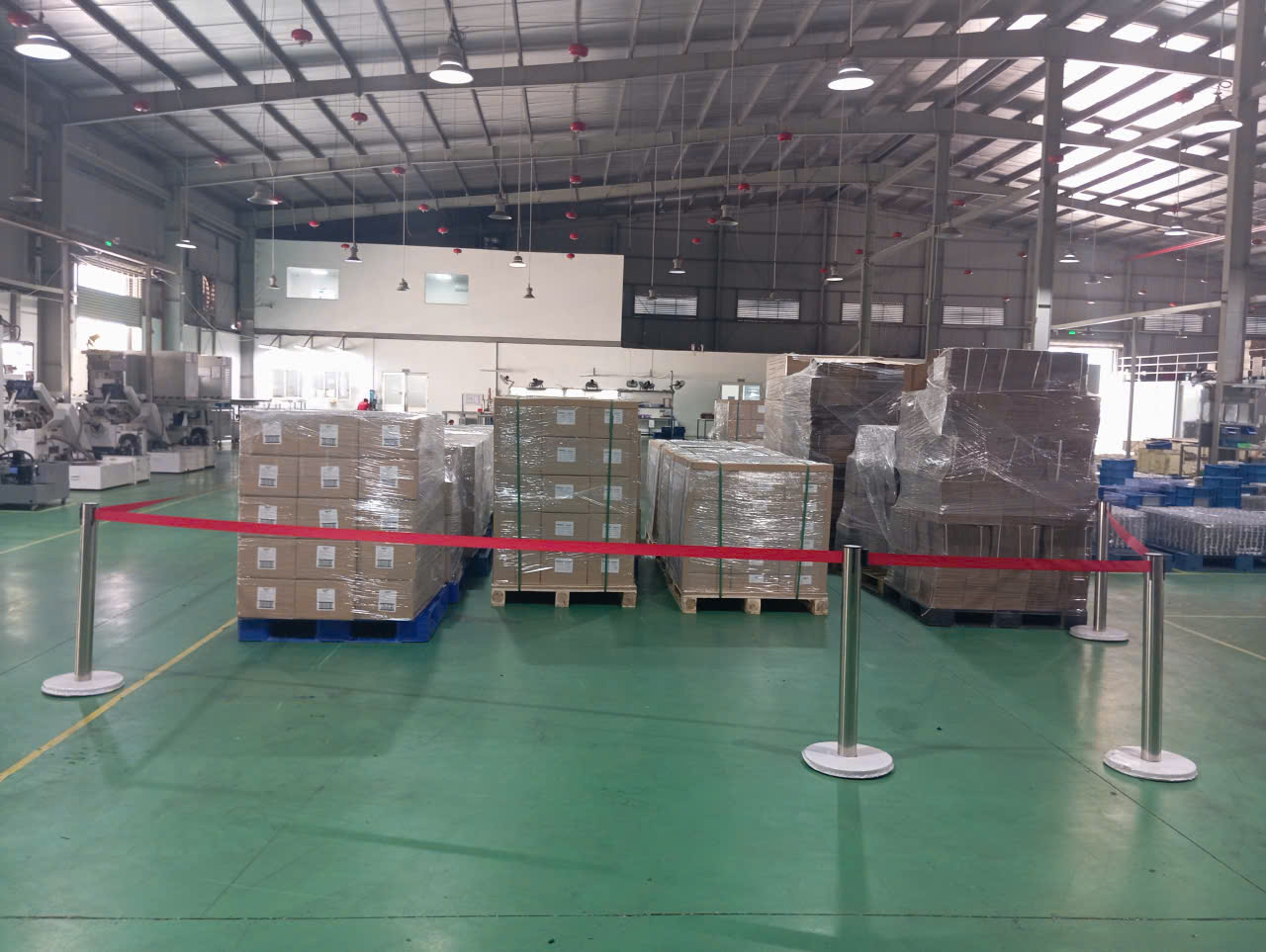
You've designed the part, selected the alloy, and specified tolerances — but the surface finish you choose determines whether your part lasts 6 months or 10 years, whether it passes incoming inspection, and whether you're paying $0.15 or $5.00 per piece for treatment. For procurement managers and engineers sourcing custom machined parts, surface finishing is where deep knowledge translates directly to cost savings.
This guide covers every major surface finishing process, with real 2026 pricing from both domestic and offshore (Vietnam) sources, technical specifications, and exactly how to call out finishes on your drawings and RFQs.
Surface Roughness 101: What Ra Values Mean for Your Parts
Before selecting any coating, you need to specify the base machined surface roughness. This is the single most misunderstood spec on engineering drawings — here's what each Ra value actually means in practice:
- Ra 3.2 µm (125 µin): Standard milling finish. Visible tool marks. Perfectly fine for non-cosmetic structural parts, hidden surfaces. No cost premium.
- Ra 1.6 µm (63 µin): Fine machined. Slight tool marks under angled light. The sweet spot for most functional parts — sealing surfaces, bearing housings. Adds 5-10% machining time.
- Ra 0.8 µm (32 µin): Precision finish. Smooth to touch. Required for dynamic seals (O-ring grooves), mating surfaces. Adds 15-25% to machining cost.
- Ra 0.4 µm (16 µin): Near-mirror. Requires grinding or lapping after CNC. Hydraulic valve spools, precision fits. Adds 30-50% to cost.
- Ra ≤ 0.1 µm (4 µin): Mirror polish. Superfinishing or diamond lapping. Optical, medical implant, and mold cavity applications. 2-3x base machining cost.
💰 Cost tip: Specify Ra only on functional surfaces. Use "as machined" on non-critical faces. We routinely see drawings with Ra 0.8 µm specified all-over that could save 20-30% by calling it out only on seal faces and bores.
Anodizing: The #1 Finish for Aluminum Parts
Anodizing converts surface aluminum into aluminum oxide through electrolytic oxidation. Unlike paint or plating, it grows into the base metal — it won't peel, chip, or delaminate. It's the default finish for 90% of aluminum CNC parts.
Type II Anodizing (Standard / Decorative)
- Layer thickness: 5–25 µm. Decorative: 8-12 µm. Functional: 18-25 µm.
- Dimensional impact: ~50% of layer grows outward. A 20 µm coat adds ~10 µm per side — critical for ±0.025 mm tolerance bores.
- Colors: Clear, black, red, blue, gold, green, purple. Black is cheapest (highest volume).
- Salt spray (ASTM B117): 336-500 hours when sealed
- Hardness: 200-400 HV
- Cost comparison (2026):
- US domestic: $1.50-8.00/part (small-medium), 5-7 day lead time
- Xometry/Fictiv: $2.00-10.00/part (bundled with machining)
- Vietnam (via DEWIN): $0.15-3.50/part, often in-house at the CNC shop
Type III Anodizing (Hardcoat)
- Layer thickness: 25–75 µm (MIL-A-8625 Type III: ≥50 µm)
- Dimensional impact: Significant — 50 µm coat adds ~25 µm per side. Design undersize for tight fits.
- Hardness: 400-700 HV — comparable to hardened tool steel
- Salt spray: 1,000+ hours
- Cost: 2-3x Type II. US domestic: $5-20/part. Vietnam: $0.50-8.00/part.
- Alloy matters: 6061-T6 and 7075-T6 anodize cleanly. 2024 (high copper) gives uneven color. Cast alloys (A356, A380) produce inconsistent results.
How to Call Out Anodizing on a Drawing
ANODIZE PER MIL-A-8625, TYPE II, CLASS 2 (BLACK), 18-22 µm. SEAL PER MIL-A-8625. Always include: specification (MIL-A-8625 or ISO 7599), type, class (1=clear, 2=dyed), color, thickness range, sealing requirement. Mark masking areas on the drawing (threads, press-fits, datums).
Powder Coating: Best Value for Color & Corrosion
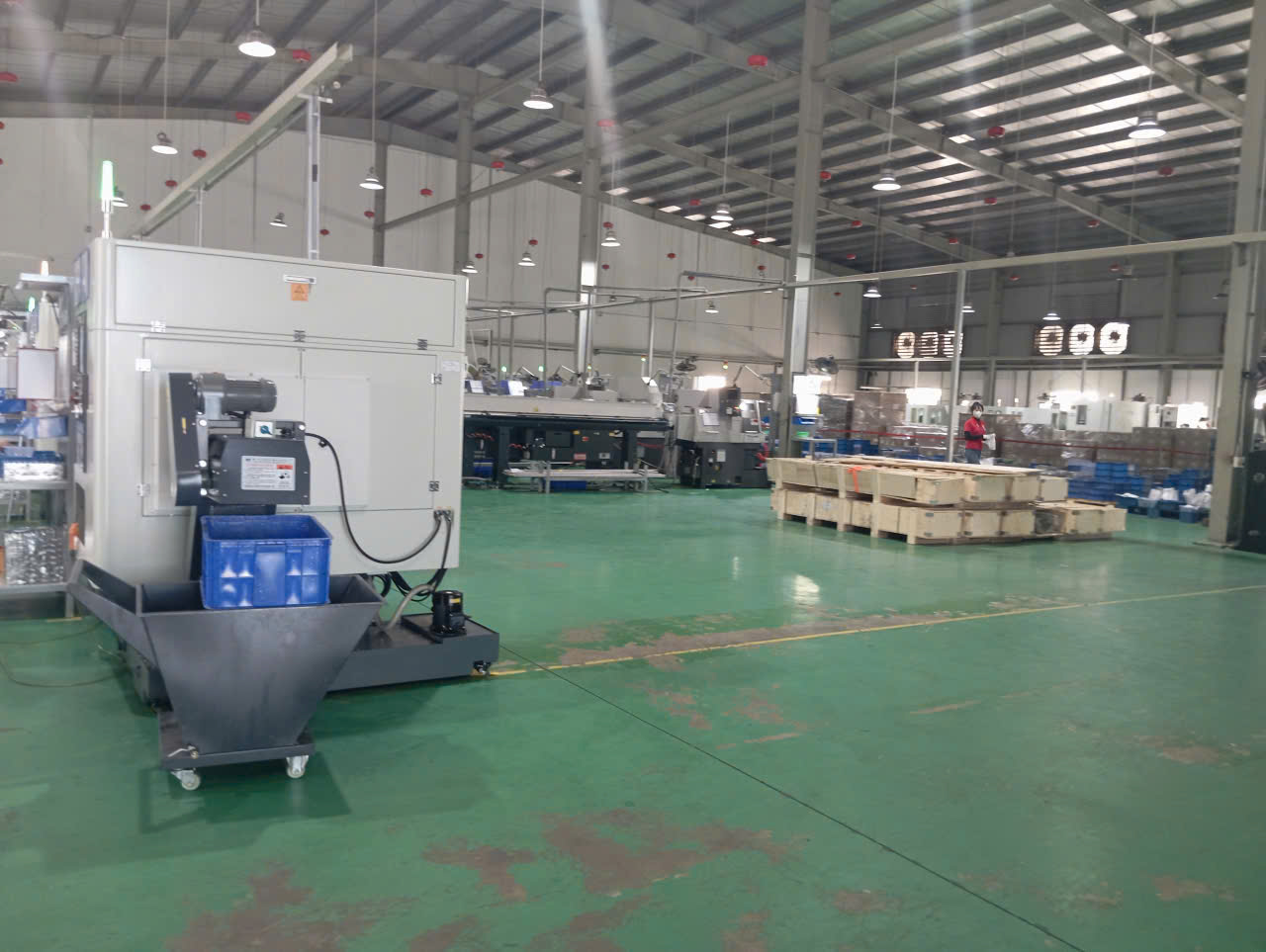
Powder coating is the go-to when you need specific colors, thick corrosion protection, or are finishing steel parts. Applied electrostatically and cured at 180-200°C, it creates a 60-120 µm coating that outperforms wet paint in durability, adhesion, and environmental impact (zero VOCs).
Specs & Cost Comparison
- Thickness: 60-120 µm standard. 50-80 µm thin-film for precision parts. 120-200 µm for outdoor/heavy-duty.
- Adhesion test: Cross-hatch per ASTM D3359, Grade GT0 or GT1
- Salt spray: 500-1,500 hours (depending on substrate prep and powder type)
- UV resistance: Polyester powders for outdoor (5-10 year fade resistance). Epoxy for indoor only (yellows in sunlight). Hybrid for semi-outdoor.
- Color matching: RAL colors stocked. Custom Pantone matching adds $200-500 setup + 2-3 days.
- Cost (2026):
- US domestic: $2-12/part (small-medium), setup fees common for short runs
- Vietnam: $0.30-5.00/part, integrated with fabrication
- Substrate prep is key: Phosphate wash (basic), zinc phosphate (better), sandblast + phosphate (best). Sandblast prep adds $0.10-0.50/part but doubles salt spray life. Always specify.
Powder Coating vs. Anodizing: Decision Guide
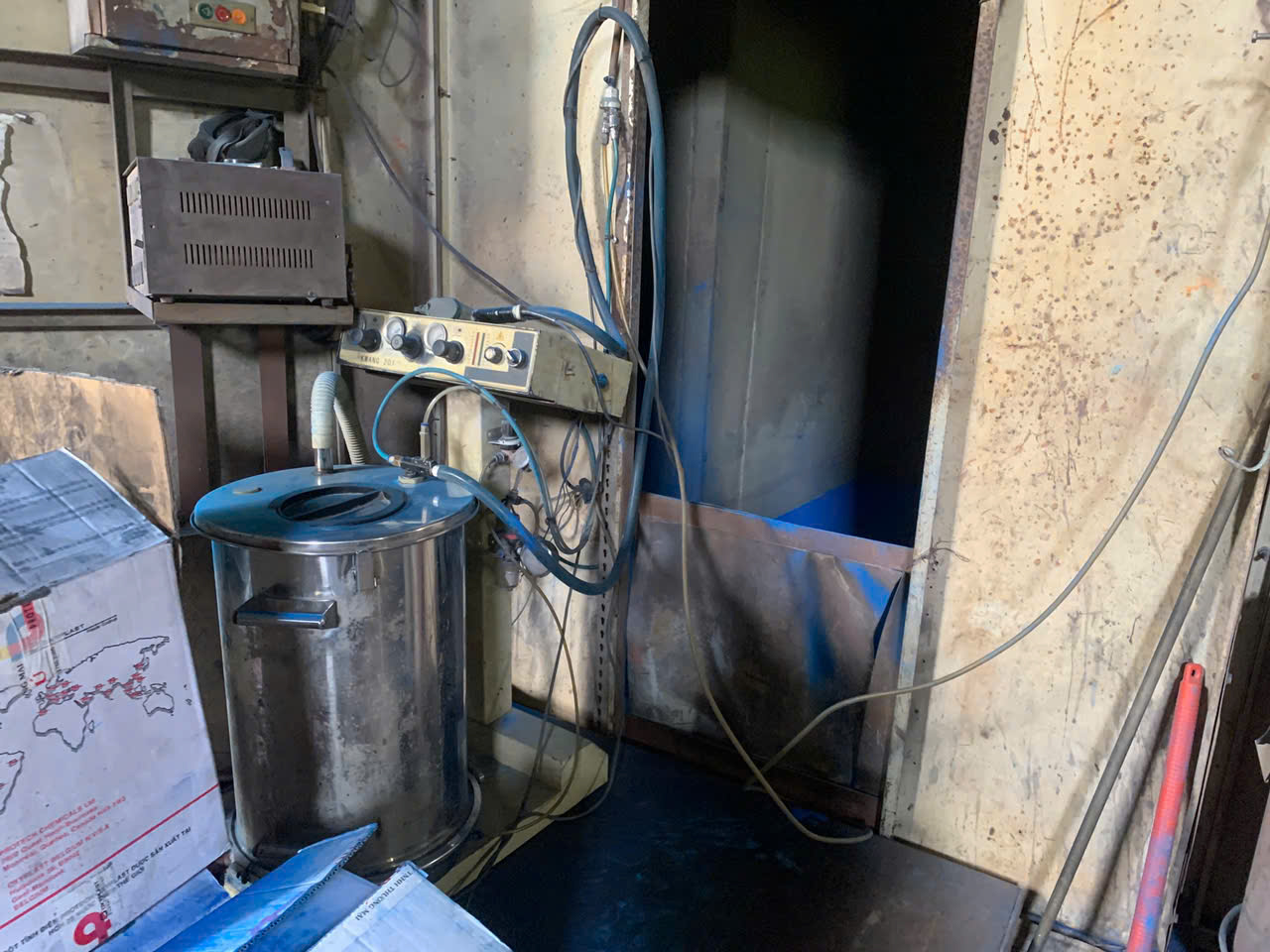
- Choose anodizing when: Aluminum substrate, need scratch/wear resistance, tight tolerances (thinner layer), electrical conductivity required, temperatures > 200°C
- Choose powder coating when: Steel or mixed metals, specific RAL/Pantone colors needed, maximum corrosion barrier, cost is the priority (20-40% cheaper than anodizing), large parts or assemblies
Electroplating: Zinc, Nickel, Chrome & Specialty
Zinc Plating
- Thickness: 5-25 µm (8-12 µm typical)
- Passivation: Clear (96-120 hr salt spray), yellow chromate (240-400 hr), with sealant (500+ hr). Always specify trivalent chromium for RoHS compliance.
- Cost: $0.05-1.50/part (offshore) vs. $0.50-5.00/part (domestic)
- Best for: Steel fasteners, brackets, commodity corrosion protection
Nickel Plating
- Electroless nickel (EN): Uniform thickness in recesses/blind holes. 10-50 µm. 500-700 HV as-plated; 900-1100 HV after heat treatment. The premium choice for wear surfaces, mold components, hydraulic parts.
- Spec:
ELECTROLESS NICKEL PER ASTM B733, CLASS 3 (25 µm MIN) - Cost: $0.50-3.00/part (offshore), $3-12/part (domestic). EN is 2-3x electrolytic but far more uniform.
Chrome Plating
- Decorative: 0.25-0.5 µm chrome over nickel underlayer. Mirror finish. $1-5/part (offshore).
- Hard chrome: 20-250 µm, 850-1050 HV. Hydraulic cylinders, piston rods, wear components. $2-15/part.
- ⚠️ Compliance: Hexavalent chrome (Cr6+) restricted under REACH/RoHS. Specify trivalent (Cr3+) for EU-bound products.
Passivation & Conversion Coatings
Stainless Steel Passivation — Don't Skip This
The most common mistake when sourcing stainless parts: forgetting to specify passivation. CNC machining embeds microscopic iron particles from cutting tools into the stainless surface. Without passivation, these particles rust — creating brown spots on your "stainless" parts within months.
- Process: Citric or nitric acid bath removes free iron and restores the chromium oxide passive layer
- Spec:
PASSIVATE PER ASTM A967, METHOD 1 (CITRIC ACID) - Cost: $0.05-0.25/part offshore, $0.50-2.00/part domestic — the cheapest insurance you'll buy
- Impact: SS304 salt spray jumps from 200-400 hrs (unpassivated) to 500-1,000+ hrs
Chromate Conversion (Alodine / Chem Film)
- Purpose: Corrosion protection for aluminum that preserves electrical conductivity. Essential for EMI shielding enclosures and grounding surfaces where anodizing (an insulator) won't work.
- Spec:
CHEMICAL CONVERSION PER MIL-DTL-5541, TYPE II, CLASS 3 - Thickness: 0.5-4 µm — zero dimensional impact
- Cost: $0.10-0.40/part (offshore), $1-3/part (domestic)
Specialty & Emerging Finishes
- Black oxide (steel): Thin conversion coating (< 1 µm). Minimal corrosion protection alone — requires oil/wax. Matte black look. $0.05-0.20/part. Tooling, fixtures, firearms components.
- Electropolishing (stainless): Dissolves 10-40 µm, achieving Ra 0.2-0.4 µm. Required for FDA food-contact and medical devices. $0.50-3.00/part (offshore).
- Bead blasting: Uniform matte texture (Ra 1.6-6.3 µm). $0.10-0.50/part. Often paired with anodizing for a satin look — the "Apple finish."
- Brushing / hairline: Unidirectional grain. Consumer electronics, architectural hardware. $0.20-0.80/part.
- PVD coating (TiN, TiAlN, CrN): Vacuum-deposited, 1-5 µm, 2000-3500 HV. Cutting tools, mold inserts, high-wear components. $2-10/part.
- Hot-dip galvanizing: 45-85 µm zinc on structural steel. $0.08-0.15/kg. Not for precision parts.
Surface Finish Quick-Reference Matrix
| Your Need | Best Finish | Offshore Cost | US Cost |
|---|---|---|---|
| Corrosion (aluminum) | Type II anodize | $0.15–3.50 | $1.50–8.00 |
| Wear resistance (aluminum) | Type III hardcoat | $0.50–8.00 | $5–20 |
| Corrosion (steel) | Zinc + yellow chromate | $0.05–1.50 | $0.50–5.00 |
| Custom color | Powder coat (RAL) | $0.30–5.00 | $2–12 |
| Conductivity preserved | Chromate conversion | $0.10–0.40 | $1–3 |
| Food/medical (stainless) | Electropolish + passivate | $0.55–3.25 | $3–15 |
| Extreme wear | Hard chrome or PVD | $2–15 | $8–30 |
| Cosmetic matte | Bead blast + anodize | $0.25–4.00 | $2–10 |
How to Specify Surface Finish in Your RFQ
Whether quoting domestic or offshore, include these six elements for every surface treatment:
- Specification standard: MIL-A-8625, ASTM B633, AMS 2700, etc. "Anodize" alone isn't a spec.
- Thickness range: Min-max in µm. "18-25 µm" not "per spec."
- Color + texture: RAL number or Pantone code. Specify gloss level (matte, satin, gloss).
- Surface coverage: Mark on drawing which surfaces receive treatment. Call out masking for threads, press-fit bores, and datum surfaces.
- Acceptance criteria: Salt spray hours, adhesion test method, thickness measurement locations.
- Compliance: RoHS, REACH, Prop 65 — specify upfront to avoid hexavalent chromium or other restricted substances.
💡 Don't Over-Specify (It's Costing You Money)
The #1 finish-related cost mistake: MIL-spec callouts on commercial parts. Type III hardcoat on a decorative enclosure? That's $3-5/part wasted. MIL-DTL-5541 on a consumer product bracket? Unnecessary paperwork and testing fees. Match the spec to the application — your parts live in a warehouse, not on an aircraft carrier.
Offshore Finishing: Why Vietnam Delivers Better Value
Surface finishing is one of the strongest cost advantages of sourcing from Vietnam. Finishing labor runs $3-6/hr (vs. $25-45/hr in the US), chemical and powder costs are competitive, and Vietnam's electronics/automotive supply chain build-out (Samsung, Canon, Toyota) has created a mature finishing infrastructure.
- 40-60% cost savings vs. US domestic finishing houses
- Zero Section 301 tariffs — unlike China-finished parts which carry 25% duty
- Integrated production: Many Vietnam CNC shops anodize and powder coat in-house, eliminating multi-vendor quality risk
- 15-30% cheaper than China for equivalent finishing quality
DEWIN's supplier network includes factories with in-house finishing lines — we deliver machined + finished parts as a turnkey package, with salt spray reports, thickness measurements, and first-article inspection included.
Get Machined + Finished Parts, Turnkey
Upload drawings with your surface finish specs. We'll quote machining, finishing, and shipping as one package — typical lead time 2-3 weeks.
Request a Quote →