Custom Weldment Sourcing Guide: Save 45–60% on Welded Assemblies
March 4, 2026 · 17 min read
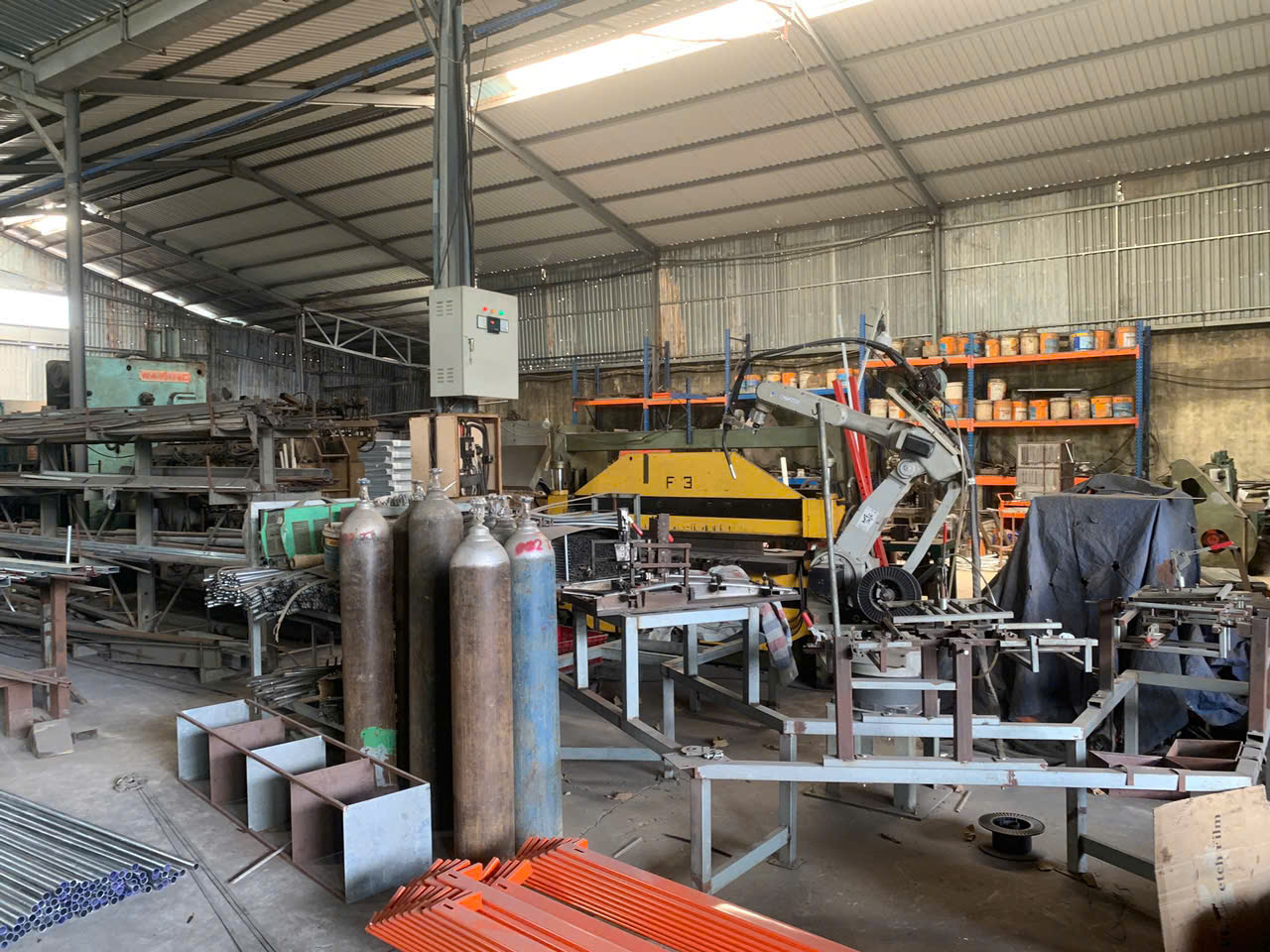
Welded assemblies are one of the best candidates for offshore sourcing — and one of the most misunderstood. A structural steel frame that costs $400–600 at a US fab shop can land at your dock for $140–200 from a qualified Vietnam fabricator, with equivalent weld quality. The savings come from labor: welding is inherently labor-intensive, and a certified welder in Vietnam costs $4–6/hr vs. $25–45/hr in the US. That 5–8× labor differential flows directly to your bottom line on multi-joint assemblies.
But weldments are also where bad offshore sourcing goes catastrophically wrong. Undercut welds on a load-bearing frame, dimensional distortion that prevents assembly, incomplete penetration on a pressure boundary — these aren't cosmetic issues. This guide covers how to source welded assemblies offshore with confidence: process selection, cost benchmarks, specification best practices, and quality control protocols that prevent failures.
Welding Processes: What to Specify and When
MIG/MAG (GMAW) — 70% of Structural Weldments
- Speed: Deposition rate 3–8 kg/hr — the fastest manual process, ideal for structural steel
- Cost: $1.50–4.00/linear meter (Vietnam) vs. $6–12/linear meter (US shops)
- Materials: Carbon steel, low-alloy steel (A36, S355, 4130). Also used for aluminum with pulsed MIG and spool gun
- Shielding gas: Ar/CO₂ 80/20 for mild steel (less spatter, better bead appearance). Pure CO₂ acceptable for structural work where appearance isn't critical — saves 40% on gas cost
- When to specify: Default choice for carbon/alloy steel frames, chassis, brackets. Unless you have a specific reason to require another process, let the supplier use GMAW — it's their most efficient and consistent process
TIG (GTAW) — When Appearance and Purity Matter
- Speed: Deposition rate 0.5–1.5 kg/hr — 3–5× slower than MIG, directly reflected in cost
- Cost: $4–10/linear meter (Vietnam) vs. $15–30/linear meter (US). The gap widens on TIG because labor cost dominates
- Materials: Stainless steel (mandatory for food/pharma-grade welds), aluminum (best bead quality), titanium, exotic alloys
- When to require TIG: (1) Stainless assemblies that will contact food, chemicals, or require passivation — MIG produces spatter that creates corrosion initiation sites. (2) Thin-wall stainless/aluminum (<2mm) where MIG burn-through risk is high. (3) Cosmetically visible welds where bead appearance matters
- When TIG is unnecessary: Structural mild steel frames, enclosures that will be painted, assemblies hidden from view. Specifying TIG when MIG suffices adds 40–70% to welding cost with no functional benefit
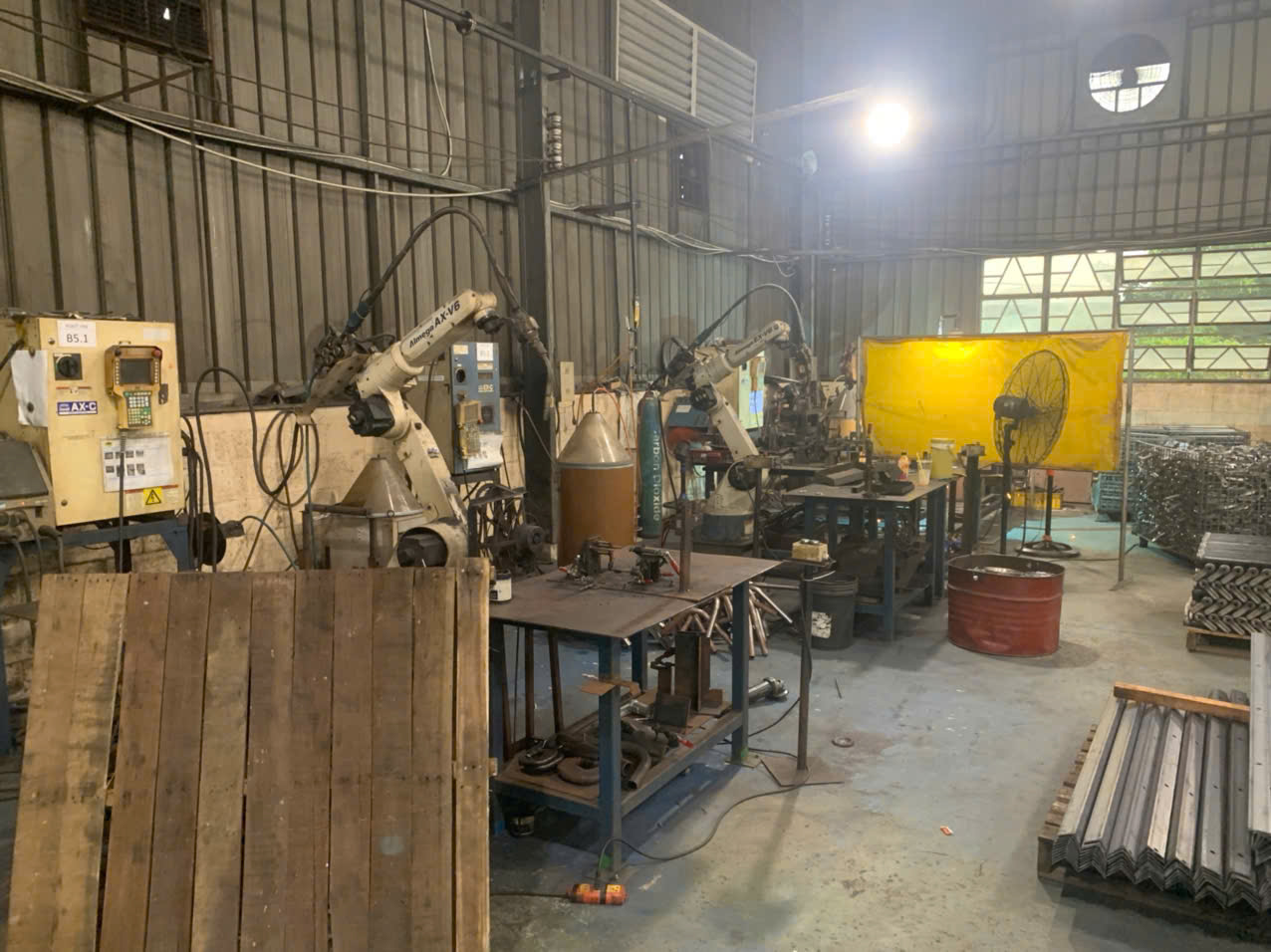
Robotic Welding — The Volume Threshold
- Break-even: Fixture tooling costs $2,000–15,000. At 200–500+ units/year, the 30–50% per-weld cost reduction pays back the tooling investment
- Consistency: ±0.5mm positional repeatability eliminates human variability — critical for automotive and agricultural equipment brackets where fit with mating parts must be repeatable across thousands of units
- Limitation: Robotic welding requires consistent fit-up. Parts with high dimensional variability from upstream processes (e.g., flame-cut plates with ±2mm edges) will cause robotic weld failures. Laser-cut or CNC-processed input parts work best
Real Cost Benchmarks: US vs. Vietnam vs. China
All Vietnam prices include production + packaging. Add $8–15/unit for ocean freight (shared container) and $2–5/unit for customs/drayage to get your landed cost.
Part 1: Steel Equipment Frame (A36, MIG, Powder Coated)
- Size: 1200×600×400mm, 50×50×3mm square tube, 12 welded joints, 18 kg finished weight
- US quote (100 units): $380–520/unit | 4–6 week lead time
- China (with 25% Section 301): $181–244/unit landed | 6–8 week lead
- Vietnam (0% Section 301): $138–190/unit landed | 6–10 week lead
- Annual savings at 500 units: $95,000–165,000 vs. US domestic
Part 2: SS304 Food Equipment Frame (TIG, Passivated)
- Size: 1500×800×1000mm, 40×40×2mm tube + 3mm plate, full TIG, electropolished contact surfaces
- US quote (50 units): $1,200–1,800/unit
- Vietnam landed: $480–720/unit — 55–60% savings
- Why the gap widens on stainless TIG: TIG is 3–5× more labor-intensive than MIG. When labor is 80%+ of welding cost, the 5–8× wage differential creates massive absolute savings
Part 3: Aluminum Instrument Enclosure (6061-T6, TIG)
- Size: 400×300×200mm, 3mm wall, 16 TIG joints, anodized
- US quote (200 units): $220–340/unit
- Vietnam landed: $95–160/unit — 45–55% savings
- DFM note: 6061-T6 loses temper in the HAZ during welding (yield drops from 276 MPa to ~55 MPa). Either (a) design for reduced strength near welds, (b) post-weld T6 re-treatment ($3–6/kg), or (c) switch to 5052-H32 which doesn't require heat treatment and has similar corrosion resistance
Welding Standards for US-Destined Parts
Specifying the right welding standard prevents quality disputes and ensures your parts meet code requirements. Here's what to reference:
AWS D1.1 — Steel Structures
- The default standard for structural steel welding in the US. If your weldment bears load, reference this
- Key sections to specify: Clause 4 (WPS qualification), Clause 6 (visual acceptance criteria), Table 6.1 (static) or Table 6.2 (cyclically loaded) acceptance limits
- Common over-specification: Requiring Table 6.2 (cyclic) acceptance for parts that only see static loads. This mandates 100% UT of CJP welds and tighter visual acceptance — adding 15–25% inspection cost. Verify your actual loading condition
AWS D1.2 — Aluminum Structures
- Addresses aluminum-specific concerns: HAZ strength reduction, filler alloy selection (4043 vs. 5356), interpass temperature limits (150°C max for most alloys)
- Fewer offshore shops are qualified to AWS D1.2 — verify capability during supplier evaluation
AWS D1.6 — Stainless Steel
- Covers austenitic, ferritic, duplex, and precipitation-hardened stainless steels
- Critical for controlling sensitization (carbide precipitation at 425–870°C range) that destroys corrosion resistance in the HAZ
- Key specification: Require 308L/316L filler for 304L/316L base metals (low carbon fillers prevent sensitization)
ASME BPVC Section IX — Pressure Applications
- Mandatory for any weldment containing or carrying pressure (air tanks, hydraulic reservoirs, piping)
- Requires documented WPS + PQR + WPQ (welder performance qualification) — non-negotiable for liability reasons
RFQ Specification Checklist for Weldments
Use this checklist to ensure your weldment RFQ gets accurate, comparable quotes from multiple suppliers:
Mandatory Items
- ☐ 3D model (STEP/IGES) + 2D drawing with weld symbols per AWS A2.4
- ☐ Base material grade: A36, S355J2, SS304L, AL6061-T6 — never "mild steel" or "stainless"
- ☐ Weld joint details: For each joint — type (fillet, groove, plug), size (leg/throat for fillets, groove depth for CJP/PJP), length (continuous vs. intermittent)
- ☐ Dimensional tolerances: Overall assembly ±X.Xmm, critical interface dimensions called out separately. Include flatness/straightness for frames >1m
- ☐ Surface treatment: Powder coat (RAL color, 60–80μm), hot-dip galvanize (ASTM A123), paint system (primer + topcoat), passivation (ASTM A967 for SS), anodize (type/color for AL)
- ☐ Welding standard: AWS D1.1 static or cyclic, AWS D1.2/D1.6 as applicable, or ISO 5817 quality level B/C/D
- ☐ Inspection requirements: VT (100%), dimensional (100% or sampling plan), NDE type and percentage of joints
- ☐ Annual volume + lot size + release frequency
- ☐ Delivery terms: FOB, CIF, or DDP (most suppliers quote FOB — add your own freight estimate for comparison)
Items That Reduce Cost If Specified Correctly
- ☐ Process flexibility: "MIG acceptable" or "Supplier's choice of process" — this lets the shop optimize. Requiring TIG on a mild steel frame adds 40–70% to weld cost
- ☐ Tolerance relaxation on non-critical dimensions: ±2.0mm vs. ±0.5mm can save 15–20% on fabrication by eliminating fixture complexity
- ☐ Weld repair policy: "Minor cosmetic weld repair acceptable per [standard]" — zero-defect requirements on large weldments dramatically increase scrap rates and cost
- ☐ Packaging specification: Bulk packing in steel frames (cheapest), individual cardboard boxing (moderate), custom crating (most expensive). Match to your handling needs, not habit
Quality Control Protocol for Offshore Weldments
Phase 1: Supplier Qualification
- Request WPS + PQR for your material/thickness combination — if they can't produce these documents, they're not a serious welding shop
- Verify welder certifications: position qualifications (3G minimum for vertical welds, 6G for pipe), certification body, and date (recertification required every 6 months without continuity of work)
- Review equipment list: welding power sources (brand/model), positioners, fixtures, inspection equipment
- Request sample weldment or visit factory — the quality of existing work tells you more than any certification document
Phase 2: First Article Inspection (FAI)
- Full dimensional report on first 1–3 units — every dimension, every weld, every feature
- Material certificate (mill test report for base material, lot cert for welding consumables)
- Weld cross-section macro (destructive test on a separate test piece or sacrificial unit) — reveals penetration, fusion, porosity that visual inspection can miss
- Photo documentation of all critical welds from multiple angles
- Decision gate: Do not release production until FAI is approved. This single step prevents 90% of quality disasters
Phase 3: Production QC
- In-process visual inspection per AWS D1.1 Clause 6.9 at weld station — catch defects before downstream operations (grinding, coating) make them invisible
- Dimensional sampling: check 10–20% of units against critical dimensions using calibrated measuring tools or go/no-go fixtures
- Fillet weld gauge check per lot — verify leg length and throat dimension at each unique joint
- Pre-shipment inspection: 100% visual + dimensional check of packed units, packaging integrity verification
Tariff Impact: Vietnam vs. China Weldments
- China Section 301: Fabricated steel structures (HTS 7308) carry 25% additional tariff. This adds $35–60 per unit on a typical $150–250 weldment
- Vietnam Section 301: 0% — not on the tariff list. Standard MFN duty rates apply (0–5.5% depending on HTS classification)
- Section 232: Applies to raw steel imports, not fabricated products. Your weldment is classified as a manufactured article, not a steel product — but consult your customs broker to confirm HTS classification
- Net effect: A weldment that costs the same ex-works from both China and Vietnam lands 20–25% cheaper from Vietnam after tariffs. When Vietnam is also 10–15% cheaper ex-works (common for labor-intensive assemblies), the landed cost advantage reaches 30–40%
When Offshore Weldments Make Sense — and When They Don't
Source Offshore When:
- Annual volume exceeds 50 units — below this, logistics overhead erodes savings
- High labor content: multi-joint assemblies, TIG welding, complex geometries. The more hands-on time, the more you save
- You can plan 6–10 weeks ahead (production + ocean freight)
- Parts ship in standard containers (40' HC max: 12m × 2.35m × 2.69m internal)
- You're currently sourcing from China and paying 25% tariff on top
Keep It Domestic When:
- Prototypes, samples, or <20 units — your local fab shop wins on speed and flexibility
- Oversized assemblies requiring flat-rack shipping ($3,000–8,000 per rack vs. $200–500 per shared container slot)
- Lead time under 4 weeks
- Buy American Act, Berry Amendment, or ITAR compliance required
- On-site fit-up and modification is anticipated — design isn't frozen
Get Started: Request a Weldment Quote
Dewin manages custom welded assembly sourcing from vetted fabricators in Vietnam. Our engineers review your drawings, qualify the right supplier for your process and material requirements, and manage quality control through delivery. We handle everything from RFQ through FAI through production inspection.