How to Write a Manufacturing RFQ That Gets Accurate Quotes Fast
February 18, 2026 · 11 min read
A well-written RFQ (Request for Quotation) is the single most important document in your manufacturing sourcing process. A good RFQ gets you accurate, competitive quotes in 24–48 hours. A bad RFQ gets you inflated quotes, endless back-and-forth clarifications, and wasted weeks.
After processing thousands of RFQs from US buyers for Vietnam manufacturing, we've seen the same mistakes cost procurement teams 20–40% in unnecessary spending. This guide shows you exactly what to include, what to skip, and how to structure your RFQ for the fastest, most accurate response.
Why Bad RFQs Cost You Money
When a manufacturer receives an incomplete or ambiguous RFQ, they do one of two things: ask questions (delays your timeline 3–7 days) or assume worst case (inflates your quote 20–40%). Here's what happens with common RFQ gaps:
- Missing tolerances: Shop assumes tightest reasonable tolerance → quotes precision pricing. A ±0.025 mm quote vs. ±0.1 mm quote can differ by 40–60%.
- "Good surface finish" instead of Ra value: Shop quotes bead blast + anodize ($5–10/part extra) when as-machined would have been fine.
- No quantity specified: Shop quotes for 100 pieces (safe assumption) when you need 5,000. You miss volume pricing that could save 50%.
- STL file only, no drawing: STL contains zero tolerance or feature information. Shop must reverse-engineer dimensions and assume conservative specs. Expect 20–30% higher quotes.
- No material specified: Shop quotes the most expensive reasonable material. "Stainless steel" without a grade means they quote SS316L instead of the SS304 you actually need — 40% material cost difference.
The Complete Manufacturing RFQ: Section by Section
1. Part Identification
- Part name and number — Your internal P/N for tracking. Critical when quoting multiple parts.
- Revision level — Rev A, Rev B, etc. Prevents quoting obsolete geometry.
- Description — One sentence: "Aluminum mounting bracket for servo motor, used in food packaging machinery." Context helps the manufacturer understand function and suggest DFM improvements.
2. Technical Files (The Most Important Section)
This is where 80% of RFQ problems originate. Provide ALL of the following:
- 3D CAD file (STEP format preferred) — STEP (.stp/.step) is universally readable. IGES works but loses some feature data. Native format (SolidWorks, Fusion 360, etc.) is a bonus for DFM analysis. Never send STL alone — it's a mesh, not engineering data.
- 2D drawing (PDF) — With dimensioned views, GD&T callouts, critical tolerances, surface finish symbols, and notes. The drawing is the legal manufacturing document — the 3D file is for programming. Without a drawing, the shop is guessing.
- Flat pattern / DXF (sheet metal only) — If you have bend allowance calculations, share them. If not, state that the manufacturer should calculate flat pattern from the 3D model.
3. Material Specification
Be specific. Here's the difference between good and bad material specs:
- Bad: "Aluminum" — Could be any of 20+ alloys, massive cost range
- Bad: "Stainless steel" — SS304? SS316? SS303? SS430? Each has different cost, machinability, and properties
- Good: "AL6061-T6 per AMS QQ-A-225/8"
- Good: "SS304 per ASTM A240, 2B finish mill sheet"
- Good: "ABS+PC blend, Sabic Cycoloy C6600, black"
If you're flexible on material: "AL6061-T6 preferred, open to equivalent alloys if cost savings >15%. Suggest alternatives with pricing." This invites the manufacturer to optimize without guessing.
4. Tolerances and Critical Dimensions
The #1 cost lever you control. Be explicit about what matters:
- General tolerance: "All dimensions ±0.1 mm unless otherwise noted" — This single line can save you 25% vs. leaving it ambiguous.
- Critical dimensions: Call out the 3–8 dimensions that actually matter for fit and function. "Bore Ø25.000 ±0.012 mm" or "Hole pattern ±0.05 mm true position."
- Surface finish: Specify Ra value and measurement method. "Ra 0.8 µm max on mating face A, Ra 3.2 µm acceptable on all other surfaces."
- GD&T: If you use geometric tolerances (flatness, parallelism, concentricity), include them on the drawing per ASME Y14.5-2018. GD&T communicates functional intent far better than ± tolerances alone.
5. Quantity and Schedule
Always quote multiple quantities. Price per part drops dramatically with volume, and you need this data for sourcing decisions:
- Quote quantities: "Please quote 100, 500, 1,000, and 5,000 pieces." Four quantity tiers takes the shop 5 extra minutes but saves you weeks of re-quoting when volumes change.
- Annual forecast (if available): "Expected annual volume: 8,000–12,000 pieces, released in quarterly batches of 2,000–3,000." This lets the manufacturer optimize tooling, material purchasing, and capacity planning — resulting in better pricing.
- Delivery schedule: "First article: 3 weeks. Production delivery: 6 weeks ARO (After Receipt of Order). Monthly releases preferred." Be realistic — demanding 2-week lead time on complex parts gets you either a "no quote" or a rush-fee quote.
- Prototype vs. production: State clearly if this is a prototype order (expecting changes) or production (tooling investment justified). Prototype pricing is 2–5× production pricing and that's normal.
6. Surface Treatment and Finishing
Specify exactly. Ambiguity here is expensive:
- Coating type + spec: "Powder coat per [color], thickness 60–80 µm, salt spray 500 hours min" — not "painted."
- Plating: "Zinc plating 8–12 µm with yellow chromate passivation per ASTM B633 Type II" — not "zinc plated."
- Anodize: "Type II anodize per MIL-A-8625, 15–25 µm, black dye, sealed" — not "black anodized."
- If no finish needed: Explicitly state "No surface treatment required. Ship as-machined/as-fabricated." This prevents the shop from adding protective finish costs "just in case."
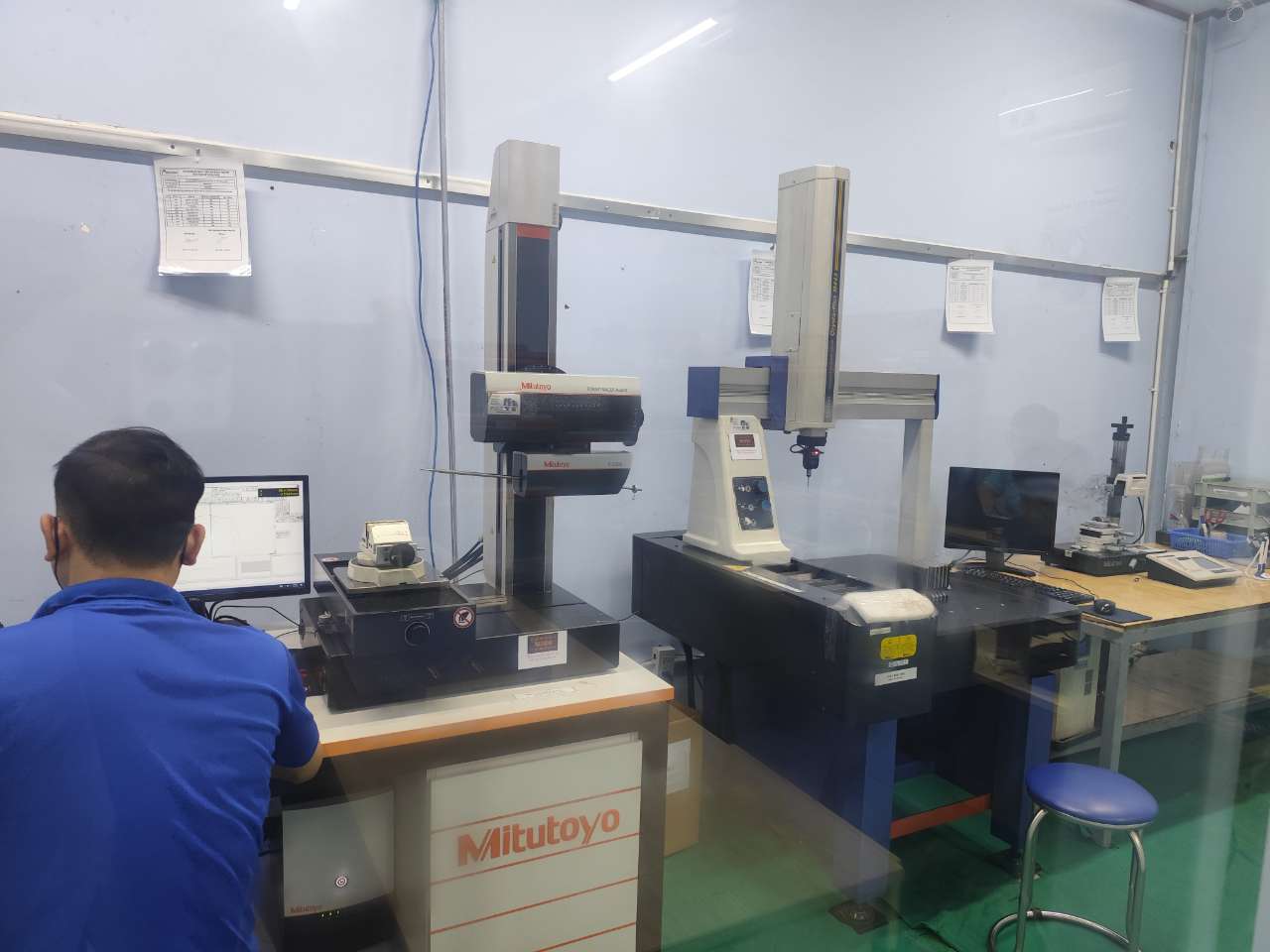
7. Quality and Inspection Requirements
- Inspection level: "100% inspection on critical dimensions. Statistical sampling (AQL 1.0, Level II) on general dimensions." — This is the most common spec for production parts. Requiring 100% inspection on every dimension adds 15–25% cost.
- First article inspection (FAI): "FAI required per AS9102 format before production release." Standard for aerospace; increasingly used for industrial parts. Adds $200–500 one-time cost.
- Material certifications: "Provide material test reports (MTR) per ASTM E45 / EN 10204 3.1 with each shipment." Standard request — most suppliers provide at no extra cost.
- Testing: If parts need hardness testing (HRC/HRB), salt spray testing, tensile testing, or pressure testing, specify the standard and acceptance criteria.
8. Packaging and Shipping
Often overlooked, but critical for offshore sourcing:
- Packaging method: "Individual poly bag + bubble wrap. 50 pieces per carton. Carton dimensions max 50×40×30 cm, max 20 kg." Proper packaging spec prevents damage and simplifies receiving.
- Shipping terms: "Quote FOB Ho Chi Minh City and CIF Los Angeles." Getting both prices lets you control freight if you have better rates. Most Vietnam suppliers quote FOB by default.
- Labeling: "Each carton labeled with P/N, quantity, lot number, date of manufacture, and PO number." Simple but prevents warehouse confusion.
RFQ Checklist: The Quick Version
Copy this checklist into your RFQ template. Check every box before sending:
- ☐ Part name, number, revision
- ☐ STEP file attached
- ☐ 2D drawing (PDF) with dimensions and tolerances
- ☐ Material grade specified (not just "aluminum" or "steel")
- ☐ General tolerance stated
- ☐ Critical dimensions identified with specific tolerances
- ☐ Surface finish requirements (Ra value or treatment spec)
- ☐ Quantities (at least 3 tiers)
- ☐ Annual volume forecast
- ☐ Delivery schedule / lead time requirement
- ☐ Prototype or production (stated explicitly)
- ☐ Inspection and quality requirements
- ☐ Certification requirements (ISO, material certs, FAI)
- ☐ Packaging and shipping terms
- ☐ Quote validity period requested
- ☐ Contact info for technical questions
Process-Specific RFQ Tips
CNC Machining RFQs
- Include both STEP and drawing — never STL alone
- State general tolerance (±0.1 mm is standard; ±0.05 mm adds 15–25%)
- Specify thread standards (UNC/UNF, metric coarse/fine, depth)
- Call out surface finish per surface (don't require Ra 0.8 µm everywhere when only one face needs it)
- Note any heat treatment requirements (T6 temper, case hardening, nitriding)
Injection Molding RFQs
- Specify resin with color (e.g., "ABS Chimei PA-757 or equivalent, Pantone 7547C")
- State mold class (SPI Class 101 for >1M shots, Class 102 for 500K, Class 103 for prototyping)
- Include draft angles in your CAD (1–2° minimum on all vertical walls)
- Specify gate location preferences or restrictions
- Note texture requirements (SPI finish A-1 to D-3, or VDI 3400 texture number)
- Clarify: "Quote tooling and per-part price separately"
Sheet Metal RFQs
- Provide flat pattern DXF if available (saves quoting time)
- Specify bend radius (or state "manufacturer's standard")
- Note welding requirements: process (MIG/TIG/spot), weld spec (AWS D1.1), cosmetic requirements
- State hardware insertion needs (PEM nuts, standoffs, rivnuts) with sizes
- Clarify grain direction requirements if cosmetic
Common RFQ Mistakes That Inflate Your Quotes
- Over-tolerancing everything. The #1 cost inflator. Use ±0.1 mm general, ±0.025–0.05 mm only on critical fits. Review every tight tolerance and ask: "If this dimension were ±0.1 mm, would the part fail?" If no, relax it.
- Requiring exotic certifications unnecessarily. AS9100 (aerospace) or ISO 13485 (medical) certification limits your supplier pool and adds 10–20% cost premium. Unless your industry requires it, ISO 9001 is sufficient for most industrial parts.
- Not specifying alternatives. "AL6061-T6 only, no substitutions" when AL6082-T6 (equivalent mechanical properties, better availability in Asia) would save 10%. Add "or equivalent" when possible.
- Quoting single quantity. You lose volume leverage and make poor sourcing decisions. Always quote at least 3 quantity tiers.
- Sending incomplete packages. A STEP file with a one-line email "please quote" will get you a quote — but it'll be padded with assumptions. The 30 minutes you save on RFQ preparation costs you 20–40% on the quote.
- Unrealistic lead times. "Need 1,000 CNC parts in 2 weeks" gets either no response or a 50% rush fee. Standard lead times: 2–3 weeks for CNC (under 100 pcs), 4–6 weeks for production quantities, 6–10 weeks for tooled processes (injection molding, stamping). Plan accordingly.
Submit Your RFQ to Dewin
Send us your complete RFQ and we'll return a detailed quote within 24 hours — with per-part pricing across your requested quantities, material certifications available, tolerance capability confirmation, surface finish options with pricing, and DFM feedback if we spot optimization opportunities. No minimum order quantity.