Supplier Spotlight: Hirata Precision Industrial VN — Japanese Standards, Vietnam Cost Base
April 3, 2026 · 7 min read
Part of our Supplier Spotlight series — real factory visits, real photos, no stock images.
When US procurement teams think about moving precision machined parts out of China, two questions come up immediately: can Vietnam match the quality? And is there real factory infrastructure — or just promises?
This is our seventh Supplier Spotlight — a series where we pull back the curtain on the actual audited factories inside Dewin's Vietnam network. Real photos from real site visits. No stock images. No anonymous "network" factories. This edition: Hirata Precision Industrial VN — a Japanese-branded precision manufacturing facility in Vietnam operating under Japanese quality disciplines, audited under our 50-point Dolphin framework.
Previous spotlights: Bueno Technology (CNC), Altop Precision Die Casting, NAPEC (CNC + CMM), HDP Precision Mechanical Engineering, Minh Quang Multi-Process, and Eguchiseiko Die Cast.
Why Japanese-Standard Factories in Vietnam Change the Equation
Japan's manufacturing investment in Vietnam goes back decades. The result: a tier of Vietnamese factories built to supply Japanese OEMs — with 5S systems embedded in the culture, not bolted on for audits. Hirata is part of this tier.
For US procurement managers evaluating a China-to-Vietnam move, Japanese-affiliated factories remove a major objection: "but can Vietnamese factories really meet our quality bar?" The answer, at Hirata, is yes — because the quality bar was set by Japanese OEM customers before you arrived.
The "Hirata" name itself signals this lineage. While the entity is Vietnamese-registered, the operational DNA — disciplined 5S standards, documented inspection records, dedicated inspection zones, and 2D Video Measuring Machine (VMM) precision checking — reflects the kind of manufacturing rigor US industrial buyers have come to expect from Japanese-tier suppliers.
⚠️ Section 301 Tariff Alert
US importers currently pay 25% Section 301 tariff on precision machined parts sourced from China (HTS Chapter 84 machinery parts, Chapter 85 electrical components, Chapter 73 steel articles). This is on top of standard MFN duties. Vietnam-origin goods are not subject to Section 301. Standard US MFN rate on most machined parts: 0–4.5%.
Factory at a Glance
Country
Vietnam
Management Standard
Japanese precision manufacturing disciplines
Primary Process
Precision machining (CNC turning, milling, mechanical parts)
Dewin Audit Status
✓ 50-Point Dolphin Audit Passed
Key QC Equipment
2D Video Measuring Machine (VMM) — non-contact dimensional inspection
Best Fit Parts
Precision shafts, housings, brackets, turned/milled components requiring tight dimensional tolerances
What We Saw on the Factory Floor
1. Workshop Overview — Organized Production Environment
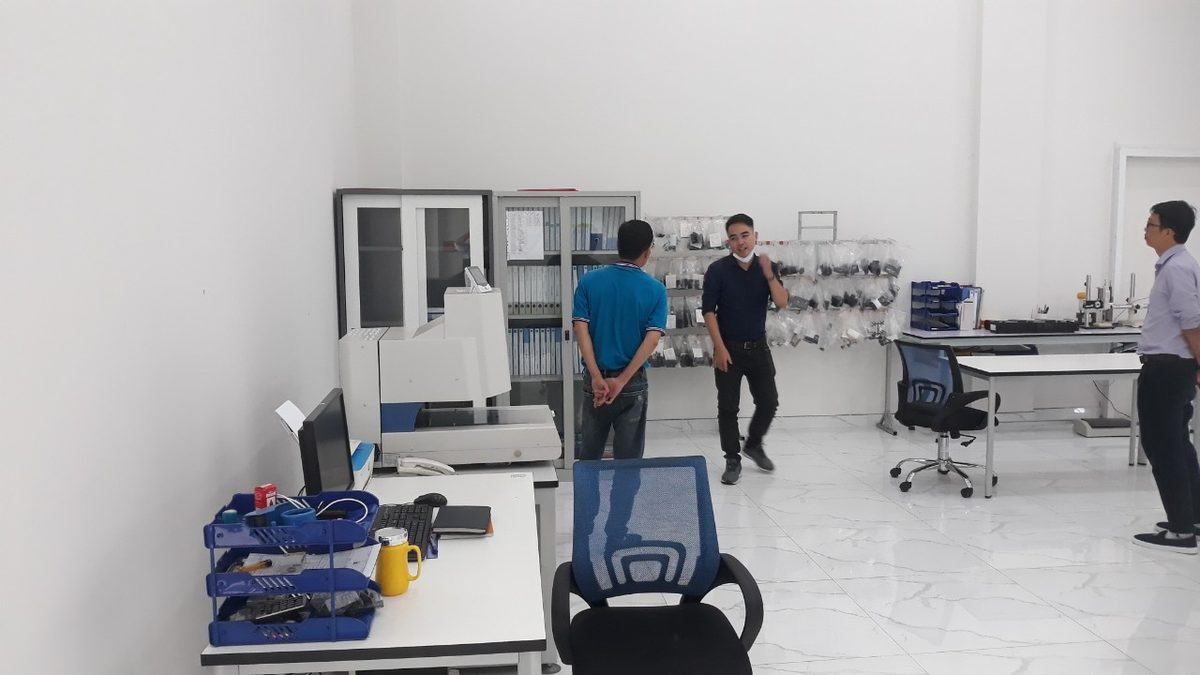
The workshop layout at Hirata reflects deliberate production planning. Equipment is arranged for logical workflow — raw material staging, machining cells, inspection, and finished goods storage in a clear sequence. This isn't an accident; it's the output of 5S discipline applied consistently. For US buyers, an organized factory floor is a leading indicator of reliable production scheduling and lower defect rates.
2. 5S Criteria — Standards Posted, Not Just Practiced
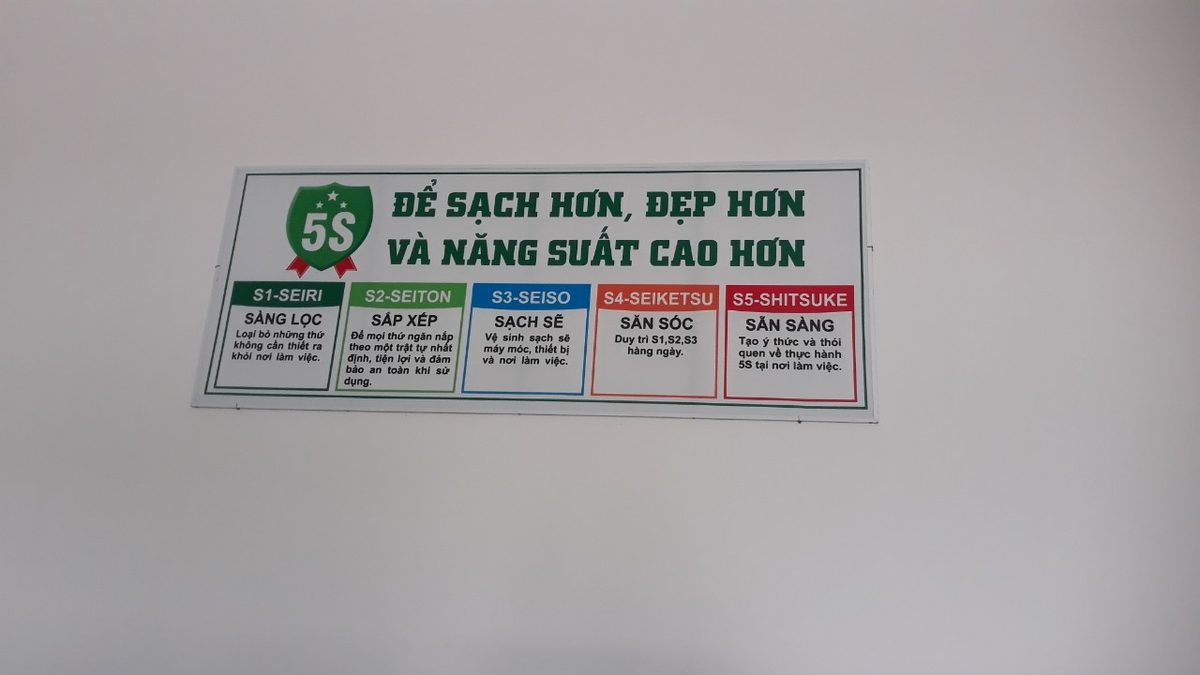
Most factories claim to run 5S. Hirata posts it. The 5S criteria board — covering Sort, Set in Order, Shine, Standardize, and Sustain — is displayed on the factory floor as an active management tool, not a compliance poster. This kind of visual management is standard in Japanese-tier manufacturing and signals that quality isn't just a QC department function; it's embedded in how every operator works.
3. 2D Video Measuring Machine — Precision Inspection on Every Batch
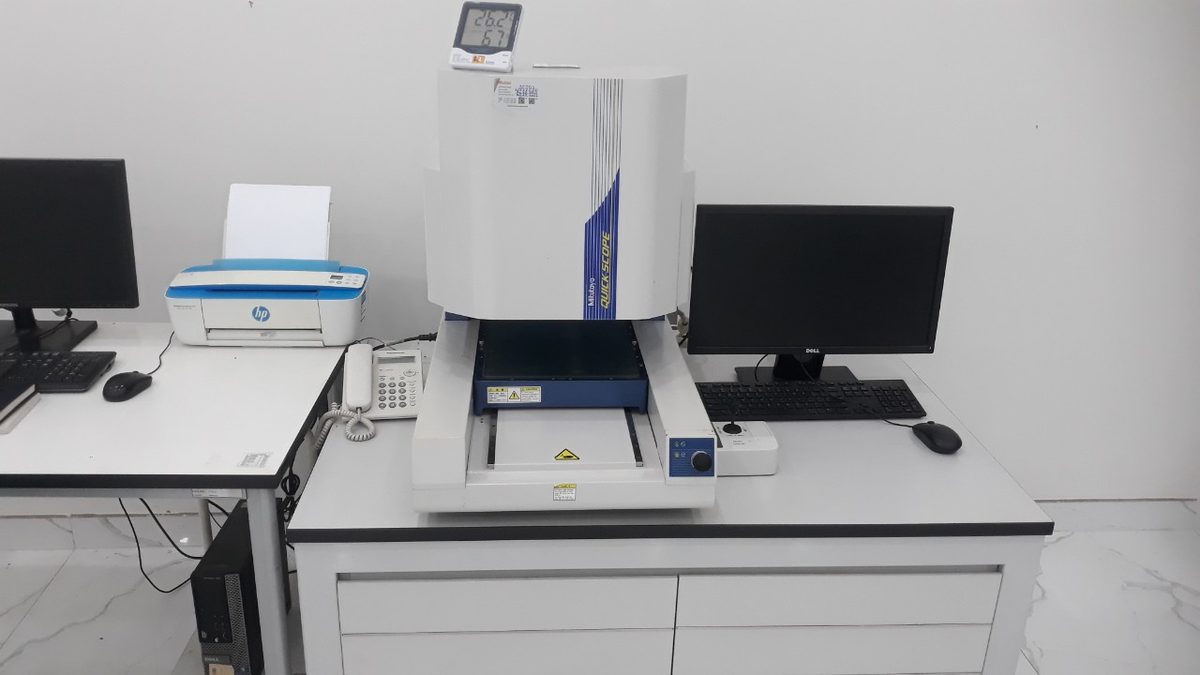
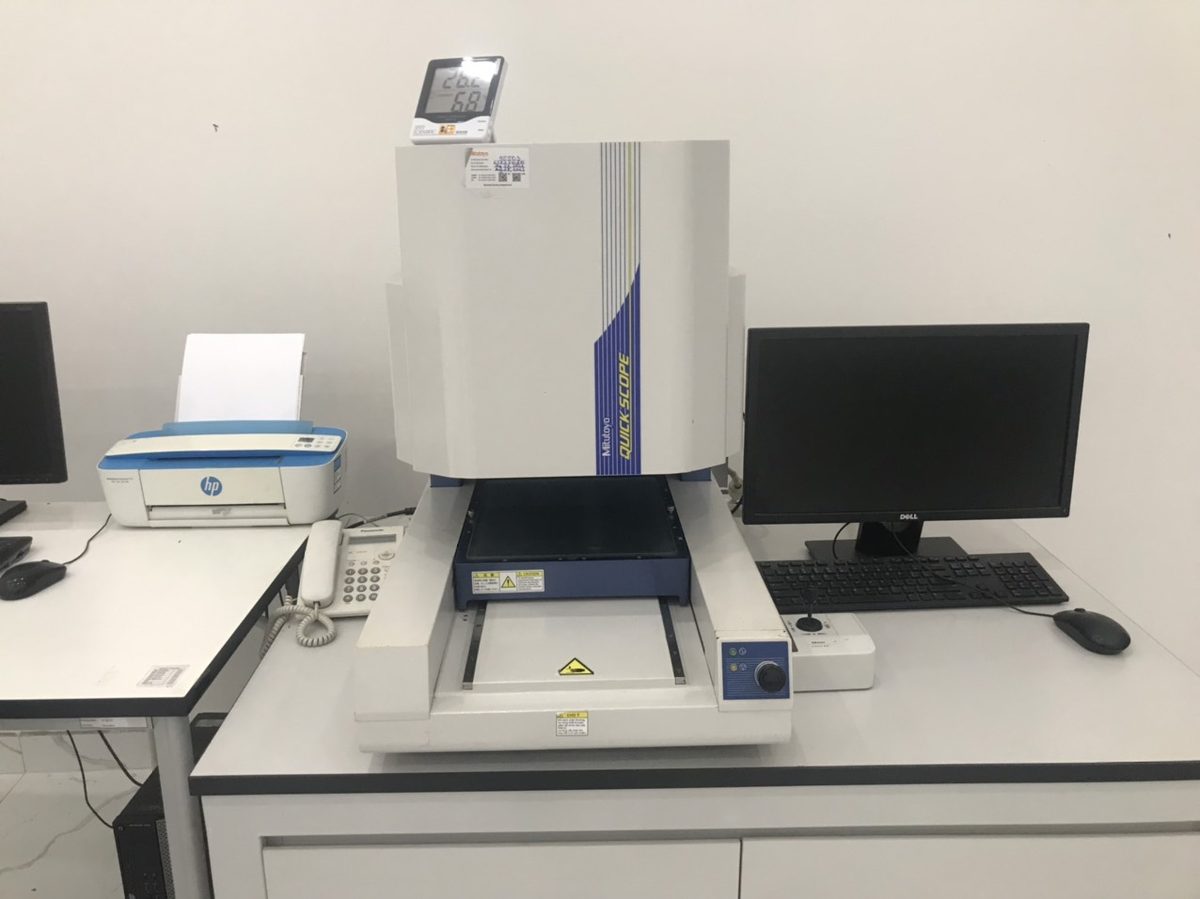
This is the detail that sets Hirata apart: a dedicated 2D Video Measuring Machine (VMM). Non-contact optical measurement allows the inspection team to verify dimensional accuracy without the risk of probe-induced error on delicate features. VMM is the standard tool for first-article inspection (FAI) in Japanese automotive and electronics supply chains.
What this means for US buyers: Hirata can produce inspection reports that meet First Article Inspection (FAI) and PPAP documentation requirements — rare at this factory scale in Vietnam. When you're qualifying a new part source, this documentation capability dramatically reduces risk.
2D VMM vs CMM — What's the Difference?
2D Video Measuring Machine (VMM)
Non-contact optical measurement. Ideal for flat profiles, hole patterns, contours, and features where touch-probe contact would damage or distort the part. Faster cycle time per part — suitable for batch inspection.
CMM (Coordinate Measuring Machine)
Contact-based 3D measurement. Higher absolute precision for complex 3D geometry. Slower per-part. Better for GD&T callouts across multiple planes.
Hirata's VMM is purpose-fit for their part mix — 2D profiles, turned diameters, hole positions, and flat-feature verification. The right tool for the job.
4. Inspection Area — Dedicated Quality Zone
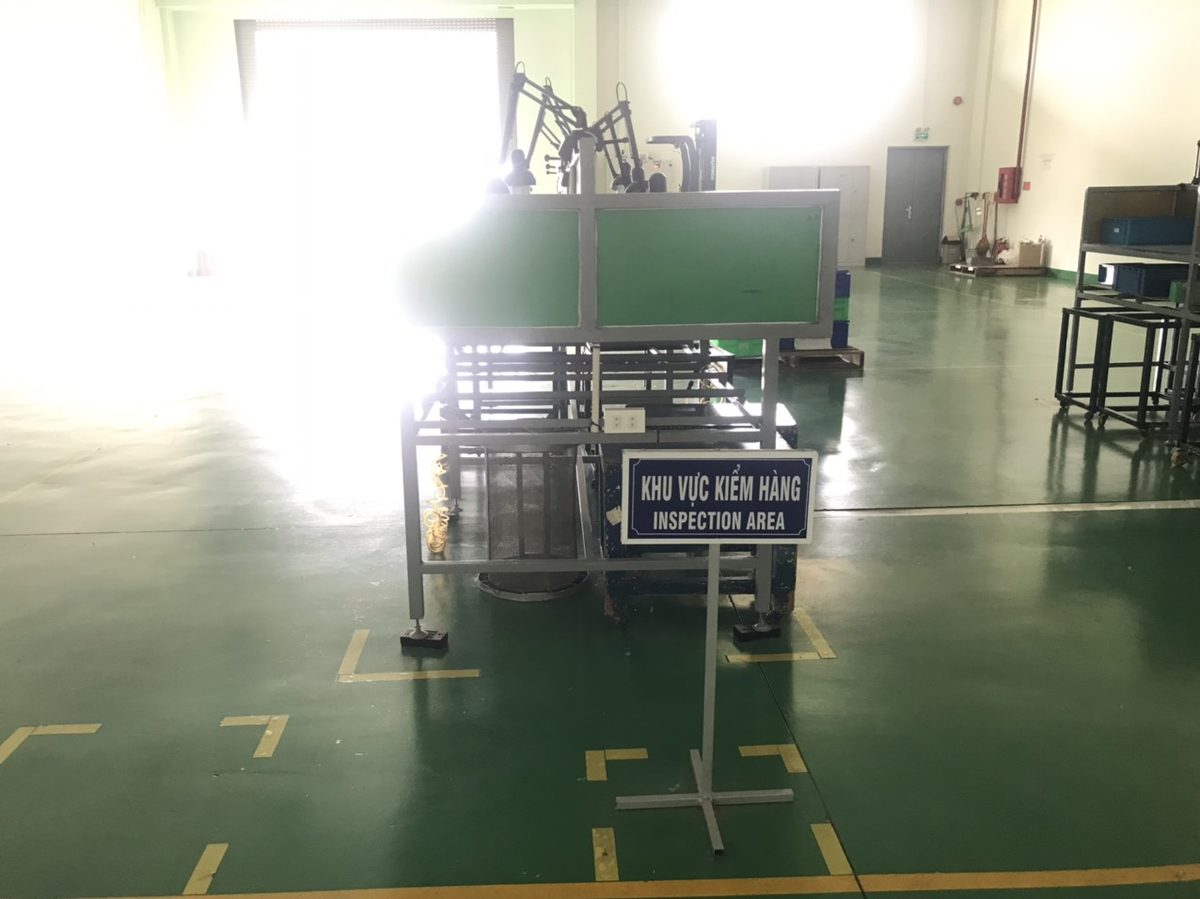
Hirata maintains a physically separated inspection area — a clear zone segregated from the production floor. Dimensional inspection happens here, not at the machine side. Parts are brought to the inspection station, not inspected mid-floor where vibration, debris, and temperature variation affect measurement accuracy. This is standard Japanese QC practice and a key signal during a factory audit.
5. Machine Inspection Records — Documented Maintenance Culture
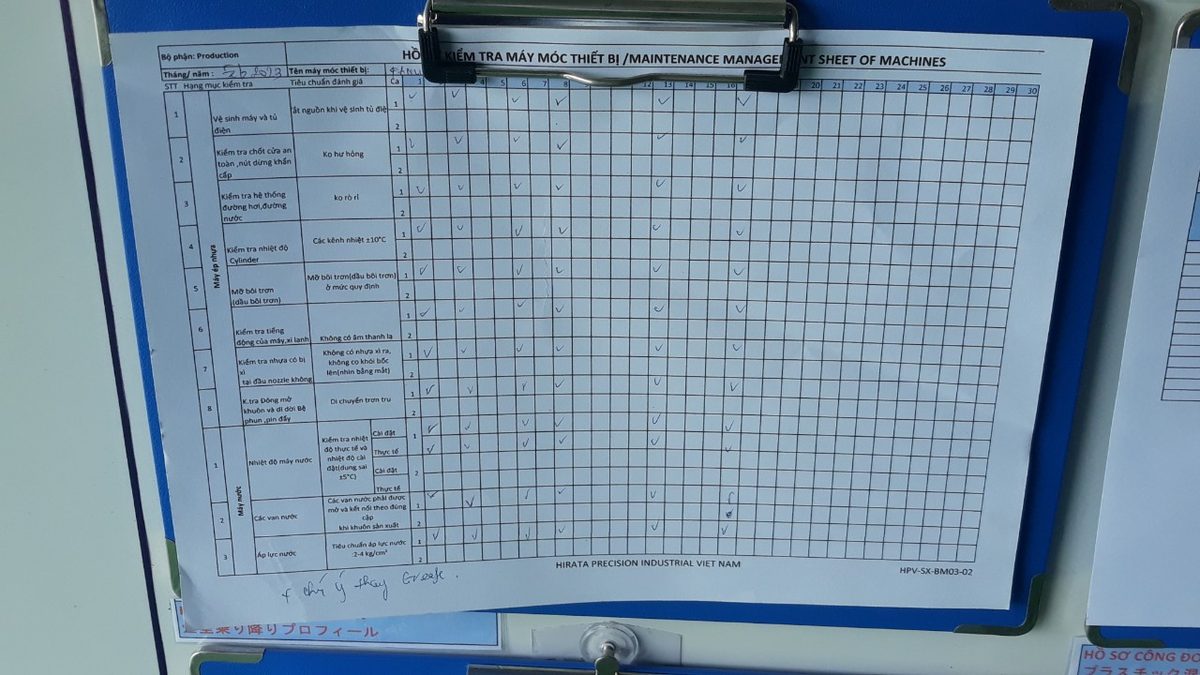
Machine maintenance records are posted on the equipment itself. This is another Japanese manufacturing discipline: machines that are maintained on schedule produce parts that stay in tolerance. When Dewin's audit team visits, we check these records as part of our 50-point Dolphin evaluation. Active, up-to-date maintenance logs are a prerequisite for a passing score.
6. Finished Parts Storage — Organized Outgoing Quality Control
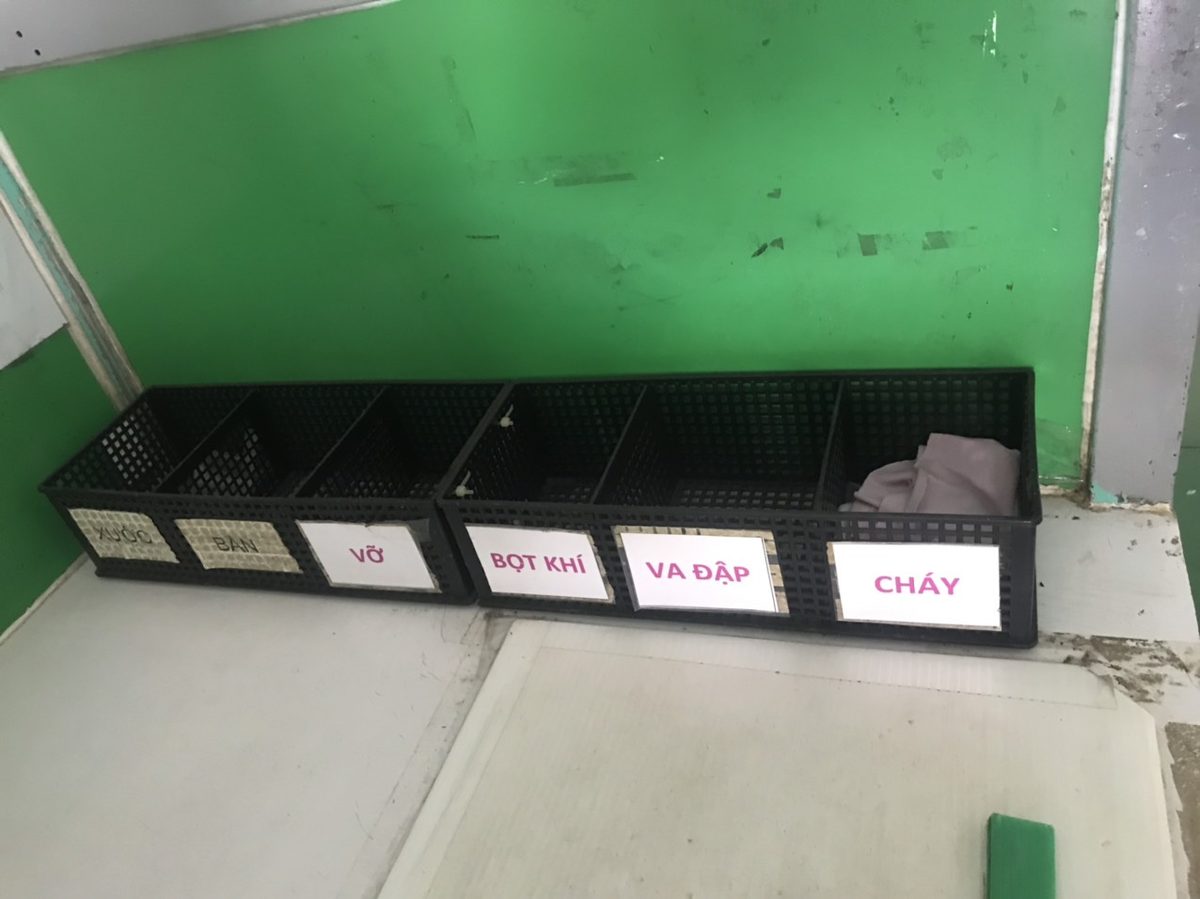
Finished parts are stored in labeled, organized baskets — segregated by batch, not mixed. This prevents lot contamination, simplifies traceability, and means that if an issue surfaces post-shipment, the factory can trace it back to a specific production run. For US buyers dealing with warranty or recall exposure, lot traceability is non-negotiable. Hirata has it.
Cost Comparison: Hirata (Vietnam) vs China + Section 301
For precision machined components, the tariff math is straightforward. China-sourced machined parts under HTS Chapter 84 or 85 carry 25% Section 301 on top of standard MFN rates. Vietnam carries zero Section 301. The landed cost difference is material.
| Cost Component | China Supplier | Hirata (Vietnam) |
|---|---|---|
| Ex-factory unit price | $10.00 | Est. $8.50–$9.50 |
| Section 301 tariff (25%) | +$2.50 | $0.00 |
| Standard MFN duty | ~$0.45 | ~$0.38 |
| Estimated landed cost | ~$12.95 | ~$9.88 |
| Est. savings per unit | ~24% lower landed cost |
Table is illustrative. Actual savings depend on HTS classification, quantity, and ex-factory pricing. Dewin provides detailed cost analysis for each project.
At $200K annual spend on precision machined parts, a 24% landed cost reduction means approximately $48K/year returned to margin. At $500K spend, that's $120K+/year. The math compounds quickly — and that's before accounting for reduced supply chain risk.
Dolphin Audit: How Hirata Scored Across 5 Pillars
Every factory in Dewin's network goes through our 50-point Dolphin audit. Here's how Hirata performs across the five pillars:
| Pillar | What We Check | Hirata Result |
|---|---|---|
| 1. Quality Systems | QC documentation, inspection records, NCR process | ✓ Pass — Machine inspection records, VMM measurement logs |
| 2. Equipment & Capability | Machine condition, calibration, precision inspection tools | ✓ Pass — 2D VMM (×2), maintained equipment with posted records |
| 3. Workplace Organization | 5S compliance, cleanliness, flow, visual management | ✓ Pass — 5S criteria posted, organized production layout |
| 4. Traceability | Lot control, incoming material verification, finished goods labeling | ✓ Pass — Labeled storage baskets, batch segregation |
| 5. Process Discipline | Work instructions, operator training, change control | ✓ Pass — Japanese-standard production discipline observed |
Is Hirata Right for Your Parts?
| Your Requirement | Hirata Fit? |
|---|---|
| Precision turned or milled components | ✓ Strong fit |
| FAI / PPAP documentation required | ✓ VMM inspection supports FAI reports |
| Tight dimensional tolerances (±0.02mm range) | ✓ 2D VMM capable |
| Lot traceability requirements | ✓ Batch segregation in place |
| Complex 3D geometry requiring full CMM | ⚡ Verify scope — VMM is 2D; complex 3D GD&T may need CMM supplement |
| Very high volume (1M+ parts/year) | ⚡ Discuss capacity with Dewin team |
How to Source from Hirata Through Dewin
- Send your drawings or RFQ — PDF, STEP, DXF, or part description works fine to start
- We run the factory match — Dewin evaluates your specs against our network, including Hirata and other precision machining factories
- Get a landed cost comparison — We model Vietnam vs your current China source including tariffs, shipping, and lead time
- Sample production — First articles with VMM inspection reports and dimensional data
- Production with on-ground QC — Dewin team verifies each production batch before shipment
- Export documentation — Certificate of Origin for Vietnam FTA benefits, commercial invoice, packing list, inspection certificate
Ready to cut your precision machining costs by 25%+?
Send us your drawings and we'll model the full landed cost comparison — Vietnam vs your current source, Section 301 included.
Get a Cost Comparison →