Custom Automotive Parts Sourcing: The 2026 Procurement Guide for OEM & Aftermarket Buyers
March 3, 2026 · 19 min read
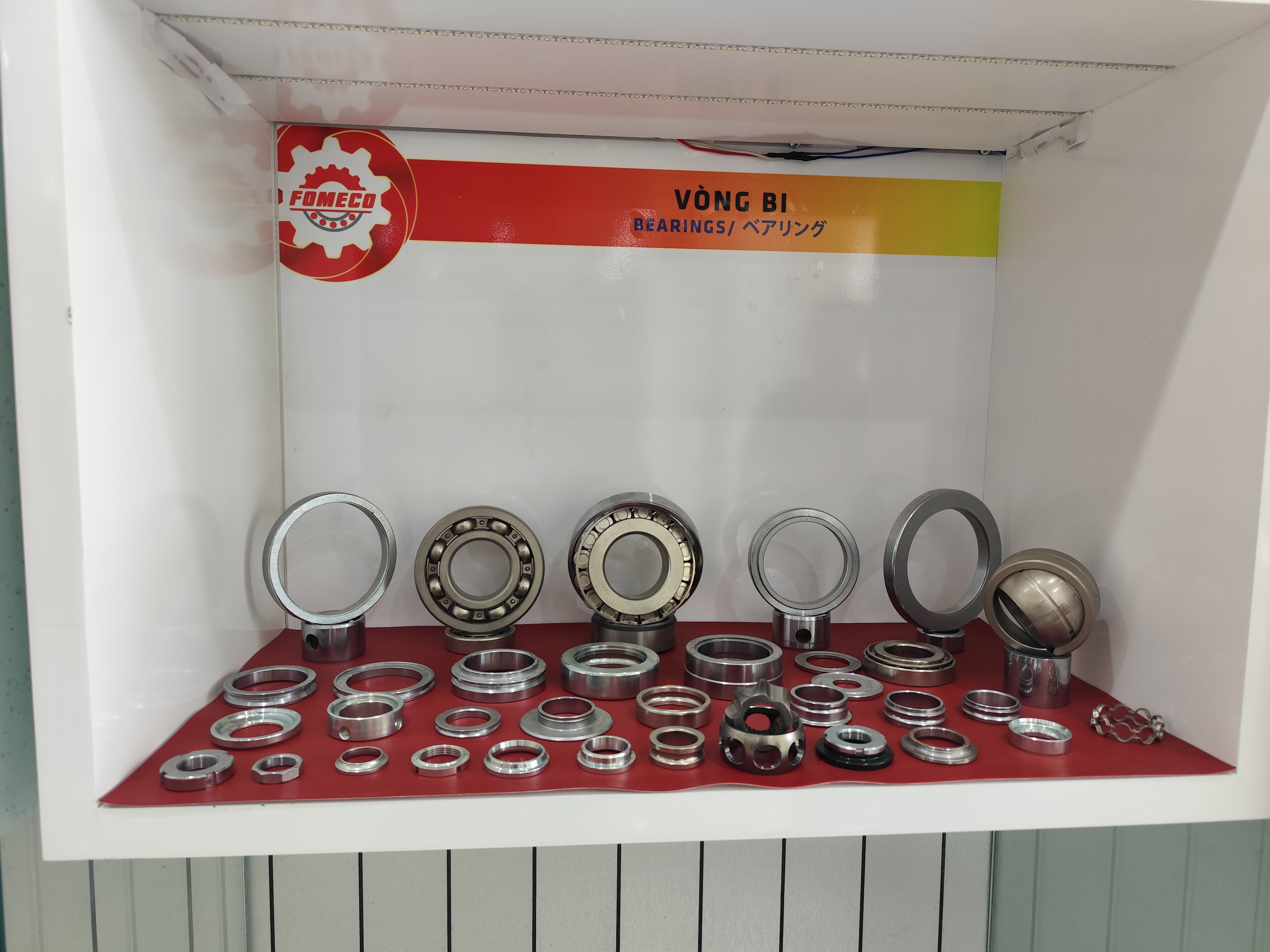
Automotive parts sourcing in 2026 looks nothing like it did five years ago. Section 301 tariffs have permanently altered the cost equation for China-sourced components. EV production is creating demand for part categories that didn't exist at scale in 2020. And the survivors of COVID supply chain disruptions have learned — painfully — that geographic concentration is a risk, not just a cost optimization.
This guide is written for procurement managers and supply chain directors at US automotive OEMs, tier-1 suppliers, and aftermarket companies who are actively diversifying their manufacturing base. We cover process capabilities, real cost benchmarks, qualification workflows, and the tariff math that makes the decision straightforward.
What Custom Automotive Parts Can You Source Offshore?
The answer, increasingly, is "almost everything except final assembly." Here's a realistic capability assessment for Southeast Asian manufacturing in 2026:
CNC Machined Components — Highest Readiness
- Brake caliper brackets: AL6061-T6 or GGG50, ±0.025mm, 5,000–200,000/year — well within offshore capability
- Transmission housings: ADC12 die-cast + CNC finish, bore tolerance ±0.015mm, Ra 1.6µm sealing surfaces
- Steering knuckles: Forged 4140 + CNC, ball joint bore ±0.01mm, HRC 28–32
- EV motor housings: AL6061-T6, 5-axis, integrated cooling channels, Ra 0.8µm sealing faces — fastest-growing category
- Cost range: $3.50–120/piece depending on size, complexity, and material. 40–55% below US domestic shop rates for equivalent quality.
Stamped & Pressed — High Volume Sweet Spot
- Materials: SPCC, SPHC, SGCC (galvanized), SAPH440, DP590 (advanced high-strength steels)
- Capability: Progressive die stamping on 30–1,000 ton presses, deep drawing up to 300mm
- Cost benchmark: $0.15–2.00/piece at 50,000+/year. Tooling: $8,000–45,000 for progressive dies.
- Best for: Brackets, heat shields, structural reinforcements — any part where tooling investment is justified by volume
Die Cast — Mature Capability for Complex Geometries
- Alloys: ADC12 (A383), A380, AlSi9Cu3, Zamak 3/5
- Machine range: 250–1,600 ton, with vacuum-assist available for porosity-critical applications
- Automotive applications: Valve bodies, pump housings, ECU enclosures, EV battery tray components
- Tolerances: ±0.05mm as-cast, ±0.015mm with CNC post-machining
- Cost: $1.50–8.00/piece at 20K+/year volumes. Tooling: $15,000–80,000.
Injection Molded — Interior, Exterior, and Under-Hood
- Interior: ABS, ABS+PC, PP+EPDM — dashboard, door panel, console components
- Under-hood: PA66+GF30, PBT+GF30 — connectors, sensor brackets, air intake parts
- Exterior: ASA, PC+ABS — mirror housings, grille inserts, light bezels
- Advanced: Double-shot (2K) molding for soft-touch over-rigid-substrate. Insert molding for metal-plastic composites.
- Tooling: $5,000–60,000 — 35–50% below US or European mold makers
The Tariff Math: Why Sourcing Geography Matters More Than Unit Price
The Section 301 tariff on Chinese auto parts is 25%. This single number has reshaped the entire cost comparison:
| Component | Vietnam FOB | China FOB | China + Tariff | US Domestic |
|---|---|---|---|---|
| CNC bracket (AL6061) | $4.80 | $4.20 | $5.25 | $11.50 |
| Die cast housing (ADC12) | $3.20 | $2.80 | $3.50 | $8.00 |
| Stamped bracket (100K/yr) | $0.35 | $0.28 | $0.35 | $0.85 |
| Molded trim (ABS+PC) | $0.85 | $0.72 | $0.90 | $2.20 |
| Rubber mount (NR, bonded) | $1.20 | $1.35 | $1.69 | $3.80 |
The pattern: Vietnam FOB prices are slightly higher than China FOB — but after 25% tariffs, Vietnam is 8–30% cheaper on landed cost. For rubber parts, Vietnam is cheaper even before tariffs (3rd largest NR producer globally, lower raw material cost).
On a $5M annual auto parts spend currently sourced from China, moving to Vietnam saves approximately $1.0–1.5M annually in tariffs alone — before any unit cost differences.
Supplier Qualification: The 18-Week Playbook
Automotive qualification isn't something you rush. A defective brake bracket triggers recalls that cost millions. Here's the structured approach:
Phase 1: Desktop Screening (Weeks 1–2)
- Verify IATF 16949 certification on iatfglobaloversight.org (not just the supplier's PDF)
- Review equipment list against your part requirements — check machine make/model, not just "3-axis CNC"
- Confirm export experience with customs data and reference customers in your market
- Evaluate capacity: current utilization vs. your volume requirements. A shop running at 90% won't prioritize your 5,000/year order.
Phase 2: Sample Evaluation (Weeks 3–6)
- Submit drawings for 20–50 sample parts with PPAP Level 1 requirement
- Evaluate: dimensional accuracy, surface finish, material certification (MTR), packaging quality
- This step filters out ~60% of candidates. Don't skip it to save time — the cost of a bad full production run is 100× the cost of samples.
Phase 3: Factory Audit (Weeks 6–8)
- On-site or third-party audit (SGS, TÜV, Bureau Veritas)
- Key areas: equipment maintenance logs, gauge calibration status, heat treatment atmosphere control, raw material traceability, worker skill matrices
- For IATF suppliers: verify CQI compliance for special processes (CQI-9 heat treat, CQI-11 plating, CQI-12 coating)
Phase 4: PPAP (Weeks 8–14)
Full Level 3 PPAP package:
- Process flow diagram and floor layout
- PFMEA (Process Failure Mode and Effects Analysis)
- Control plan with reaction plans for out-of-spec conditions
- Full dimensional layout on 30 pieces minimum
- Material test reports (MTRs) with lot traceability
- Cpk study: ≥1.33 on key characteristics, ≥1.67 on safety-critical
Phase 5: Pre-Production + Release (Weeks 14–18)
- 500–2,000 piece run at full production conditions
- Verify process stability, actual vs. target Cpk, throughput rate
- Test parts in your assembly environment — fit, function, assembly force checks
- Upon approval: initial shipments with 100% inspection, transitioning to skip-lot as statistical confidence builds
EV Parts: The Category Creating New Sourcing Demand
EV component sourcing is the fastest-growing segment, with part categories that barely existed at scale in 2020:
- Battery enclosures: Welded + CNC'd sheet aluminum (5052, 6061), friction stir welding for sealed joints. $200–800/unit at 10K+/year.
- Motor housings: AL6061-T6, 5-axis CNC with integrated cooling channels. ±0.02mm on bearing bores. $35–120/piece.
- Busbars: Copper C110, CNC machined or stamped, Ni or Sn plated. High-current battery pack conductors.
- Thermal management: Aluminum cold plates with CNC'd channels or vacuum-brazed assemblies, coolant manifolds, power electronics heat sinks.
- Charging hardware: PA66+GF30 connector housings, overmolded with silicone seals. IATF + UL rated.
Aftermarket Parts: Faster, Simpler Entry
If you're sourcing replacement parts, performance parts, or accessories, the barriers are lower and timelines shorter:
- Quality standard: ISO 9001 sufficient (no IATF needed). Expands supplier pool significantly.
- MOQs: 500–10,000/year works well with mid-sized offshore factories
- Reverse engineering: Can work from samples or 3D scans — ±0.05mm accuracy without original drawings
- Private label: Contract manufacturers produce under your brand, packaging, and part numbers
- Timeline: 2–3 weeks for samples, 4–6 weeks for first production after approval
Logistics Planning for Automotive Parts
- US West Coast: 18–22 days ocean from Vietnam. $2,800–4,200/40ft container (Q1 2026).
- US East Coast: 28–35 days. $4,500–6,500/40ft container.
- Air freight: 3–5 days, $4–7/kg — samples and emergency replenishment only.
- Safety stock: Most buyers maintain 2–3 months. Buffer against ocean schedule variability and demand spikes.
- Packaging: Specify automotive-grade in your RFQ — VCI wrapping for metal parts, dunnage trays for precision components, humidity indicators. $0.15/part investment prevents $5.00/part corrosion claims.
Your RFQ Checklist
Include all of these to get accurate quotes on the first round:
- 2D drawing (PDF) + 3D model (STEP/IGES) — both are non-negotiable
- Material spec with governing standard: "4140 per ASTM A29" with temper/condition
- Annual volume + batch size: "50,000/year, quarterly batches of 12,500"
- Surface treatment: type, thickness, test requirements (salt spray hours)
- Heat treatment: hardness range, case depth, standard (see our heat treatment specification guide)
- Testing: CMM layout, MTR, salt spray, PPAP level required
- Packaging: specify or request supplier proposal for automotive-grade
- Delivery terms: FOB, CIF, or DDP
- Quality standard: IATF 16949 vs. ISO 9001 vs. your company-specific requirements
Get Automotive Parts Quoted in 48 Hours
Upload your CAD files and get quotes from our network of IATF 16949-certified manufacturing partners. We handle supplier qualification, PPAP management, and in-process inspection — production-ready parts without the sourcing overhead.
Get an Instant Quote →