Food-Grade Stainless Steel Parts: How US Food Equipment OEMs Save 35–55% Sourcing from Vietnam
March 12, 2026 · 16 min read
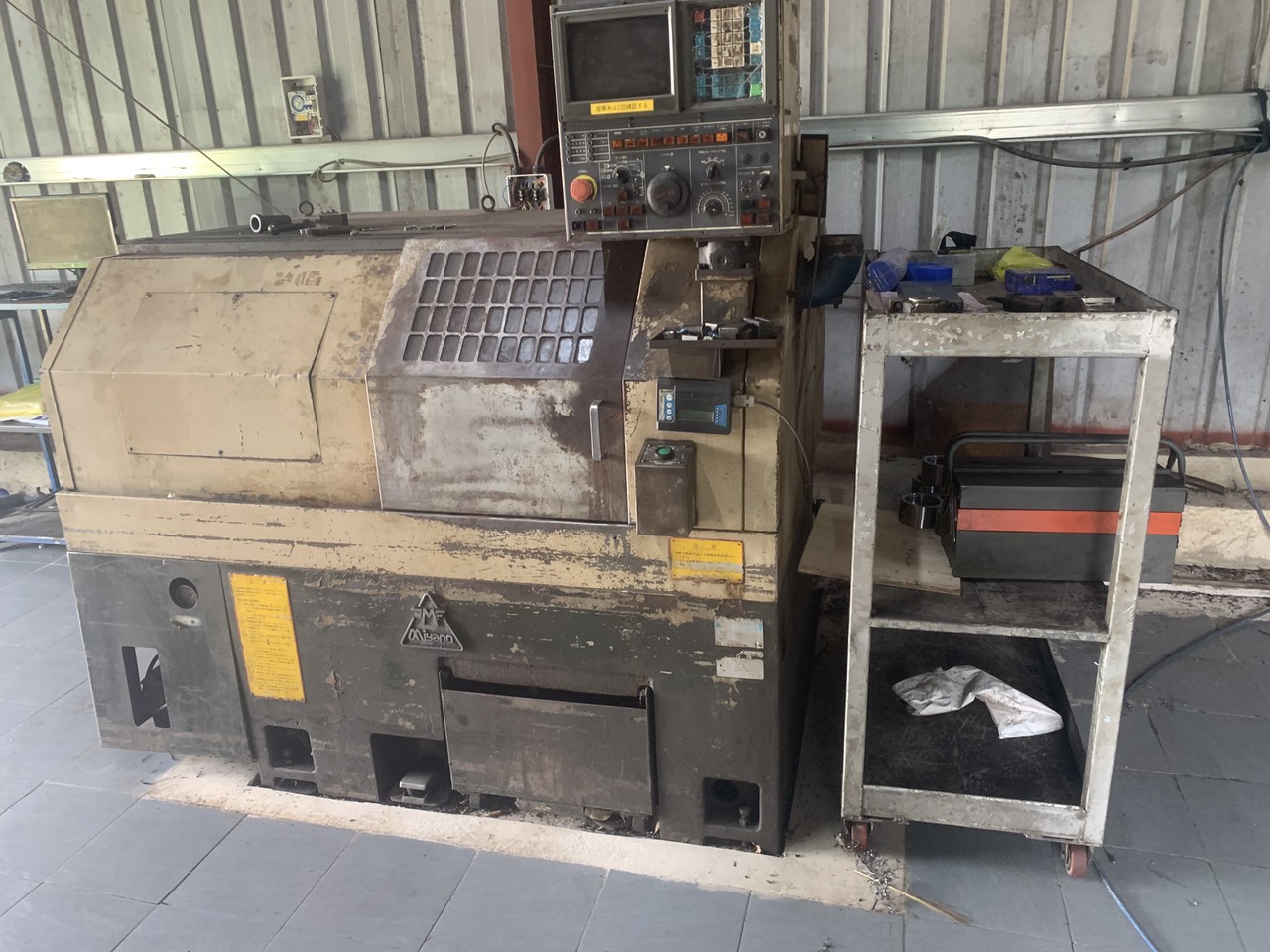
US food equipment manufacturers are caught between two cost pressures: rising domestic machining rates ($85–145/hr for qualified food-grade stainless shops) and 25% Section 301 tariffs on Chinese-made components. For companies making conveyor parts, filling machine nozzles, mixer shafts, and processing vessel fittings, the math has shifted — Vietnam now delivers FDA-compliant stainless steel parts at 35–55% below US shops, with zero Section 301 tariffs and surface finish quality that meets 3-A Sanitary Standards.
This isn't about cutting corners. Food-grade machining demands specific material traceability (mill certs per ASTM A276/A479), controlled surface finishes (Ra ≤ 0.8μm for product contact surfaces), and passivation per ASTM A967. Vietnam's top CNC shops now routinely deliver to these specs — the question is knowing how to specify correctly and verify compliance. This guide covers the complete sourcing process: material selection, surface finish requirements, regulatory compliance, cost benchmarks, and quality control protocols.
Why Food-Grade Stainless Steel Is the Perfect Offshore Candidate
Three factors make food-grade stainless parts uniquely profitable to source from Vietnam:
- High labor content: Food-grade parts require secondary operations — electropolishing, passivation, deburring to crevice-free standards — that are 60–70% labor cost. Vietnam's $4–6/hr skilled labor vs. $28–45/hr US rates creates massive savings on these finishing steps
- Material cost parity: SS304 and 316L bar stock costs within 5–10% globally (POSCO Korea and Nippon Steel supply both US and Vietnam markets). The savings come from machining and finishing, not material
- Zero tariff advantage: With 25% Section 301 tariffs on Chinese stainless components still in effect, Vietnam-sourced parts land 25% cheaper than identical Chinese parts before you even count the machining labor savings
Material Selection: SS304 vs. SS316L for Food Applications
SS304 / 304L — 70% of Food Equipment Components
- Use when: General food processing equipment — conveyor components, hoppers, guard rails, brackets, enclosures, non-acidic product contact surfaces
- FDA status: Approved for food contact under 21 CFR 175–178. The standard choice for dry food, grain, bakery, and general food handling equipment
- Vietnam material cost: $2.80–3.50/kg (ASTM A276 bar), $3.20–4.00/kg (ASTM A240 plate). Mill test reports (EN 10204 3.1) included at these prices
- Limitation: Not suitable for prolonged contact with acidic foods (tomato, citrus, vinegar), chloride-containing cleaning solutions, or marine/coastal environments. These require 316L
SS316L — When Corrosion Resistance Is Non-Negotiable
- Use when: Dairy, beverage, pharmaceutical, acidic food contact, CIP (Clean-in-Place) systems exposed to chlorinated sanitizers, and marine food processing
- Why 316L over 316: The low-carbon variant (0.03% C max) prevents sensitization during welding — critical for welded assemblies that must maintain corrosion resistance in weld heat-affected zones
- Vietnam material cost: $4.20–5.50/kg (bar), $4.80–6.20/kg (plate) — 40–55% premium over 304, but mandatory for the applications above
- Industry mandate: 3-A Sanitary Standards and EHEDG guidelines require 316/316L for all product contact surfaces in dairy and pharmaceutical equipment
Material Traceability — Don't Skip This
Every food-grade part must ship with a mill test certificate (MTC) per EN 10204 Type 3.1, showing chemical composition and mechanical properties traceable to the specific heat. Specify this in your RFQ — reputable Vietnam suppliers provide MTCs as standard. The risk you're guarding against: receiving 201 or 430 stainless sold as 304/316. A handheld XRF gun at incoming inspection eliminates this risk for $15,000–25,000 (or $200–500 per batch using a third-party inspection service in Vietnam).
Surface Finish Requirements: What FDA and 3-A Actually Require
Surface finish is where food-grade sourcing goes wrong most often. A standard machined finish (Ra 1.6–3.2μm) has microscopic peaks and valleys that harbor bacteria. Food-grade surfaces must be smooth enough to clean effectively.
Surface Finish Standards for Food Contact
- Ra ≤ 0.8μm (32 μin): The baseline for food product contact surfaces per 3-A Sanitary Standards. Achievable through mechanical polishing (180–240 grit) — most cost-effective option
- Ra ≤ 0.4μm (16 μin): Required for dairy product contact per PMO (Pasteurized Milk Ordinance) and many pharmaceutical applications. Requires electropolishing after mechanical polish
- Ra ≤ 0.25μm (10 μin): Ultra-hygienic applications — aseptic filling, sterile pharmaceutical. Requires precision electropolishing with controlled current density
- Non-contact surfaces: Ra ≤ 1.6μm (63 μin) is acceptable for structural components, frames, and surfaces that don't contact food product. Standard machined or #4 brushed finish
Why Vietnam Excels at Food-Grade Finishing
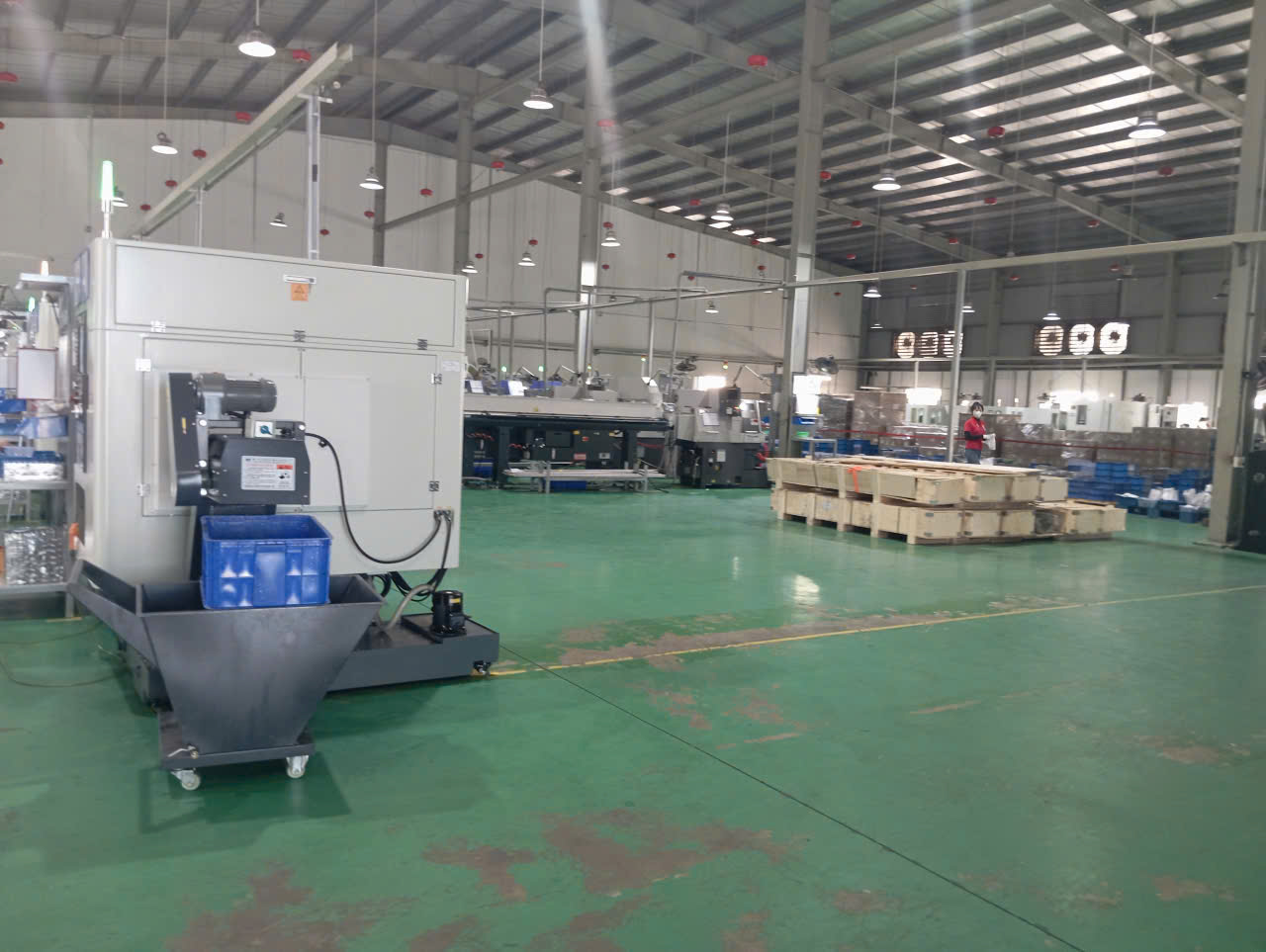
Polishing and electropolishing are overwhelmingly labor-intensive — a skilled polisher working a complex manifold to Ra 0.4μm might spend 2–4 hours on a single part. At US shop rates ($35–55/hr loaded labor), that's $70–220 in finishing cost alone. Vietnam's skilled polishers achieve identical results at $4–6/hr. This is where the 35–55% total cost savings concentrates — not in the CNC machining itself (which is 15–25% cheaper), but in the labor-intensive finishing and inspection steps.
Passivation: The Step That Prevents Field Failures
- What it does: Removes free iron from the machined surface and rebuilds the chromium oxide passive layer. Without passivation, food-grade stainless will develop tea staining or rouge within months of exposure to cleaning chemicals
- Specification: ASTM A967 or ASTM A380. Specify citric acid passivation (Method C per A967) — it's more environmentally friendly than nitric acid and equally effective for 304/316L
- Vietnam cost: $0.50–3.00/part (depending on size/complexity) vs. $5–15/part at US finishing houses
- Verification: Require copper sulfate test (ASTM A967 Annex A1) or water immersion test on first article. Takes 5 minutes and confirms the passive layer is intact
Real Cost Benchmarks: Food-Grade Parts, US vs. China vs. Vietnam
All Vietnam prices include machining + finishing + passivation + packaging. Add shipping and customs for landed cost. China prices include the 25% Section 301 tariff (HTS 7318/8479/8438 — most food equipment components fall here).
Part 1: Filling Nozzle (316L, Ra 0.4μm, Electropolished)
- Description: CNC turned nozzle, OD 38mm × 120mm long, internal bore with three cross-holes, full electropolish on product contact surfaces
- US quote (500 units): $42–58/unit — driven by 316L machinability challenges and electropolish labor
- China + 25% tariff (500 units): $24–33/unit landed
- Vietnam, 0% tariff (500 units): $18–26/unit landed
- Annual savings at 2,000 units: $32,000–64,000 vs. US; $12,000–14,000 vs. China
Part 2: Conveyor Guide Rail Bracket (304, Ra 0.8μm, Passivated)
- Description: CNC milled bracket from 304 plate, 150×80×25mm, 4× mounting holes, all edges deburred and broken, mechanical polish to 180 grit
- US quote (1,000 units): $18–28/unit
- China + 25% tariff (1,000 units): $11–16/unit landed
- Vietnam, 0% tariff (1,000 units): $8–13/unit landed
- Annual savings at 5,000 units: $50,000–75,000 vs. US; $15,000–20,000 vs. China
Part 3: Mixer Shaft (316L, Ra 0.4μm, Full Electropolish)
- Description: CNC turned shaft, OD 50mm × 450mm, keyway, threaded ends, full electropolish including shaft surface
- US quote (200 units): $120–165/unit — long cycle time + extensive EP surface area
- China + 25% tariff (200 units): $62–88/unit landed
- Vietnam, 0% tariff (200 units): $48–72/unit landed
- Annual savings at 500 units: $24,000–46,500 vs. US; $7,000–8,000 vs. China
Tariff Analysis: The 25% China Problem
Most food equipment stainless steel components fall under HTS codes that carry 25% Section 301 tariffs when sourced from China:
- HTS 8438: Food processing machinery parts — 25% Section 301 + 3.2% standard duty from China
- HTS 8479: Machine parts not elsewhere specified — 25% Section 301 + 2.5% standard duty from China
- HTS 7318: Stainless steel fasteners and fittings — 25% Section 301 + varying standard duties
- Vietnam equivalent: 0% Section 301 + same low standard duties (0–3.4%). No additional tariffs anticipated under current trade policy
For a food equipment OEM spending $500,000/year on Chinese stainless components, the tariff alone costs $125,000/year. Shifting that spend to Vietnam eliminates the tariff entirely — and the ex-factory prices are often 5–15% lower than China as well due to Vietnam's competitive labor costs in precision finishing.
Quality Control: What to Specify in Your RFQ
First Article Inspection (FAI) Checklist
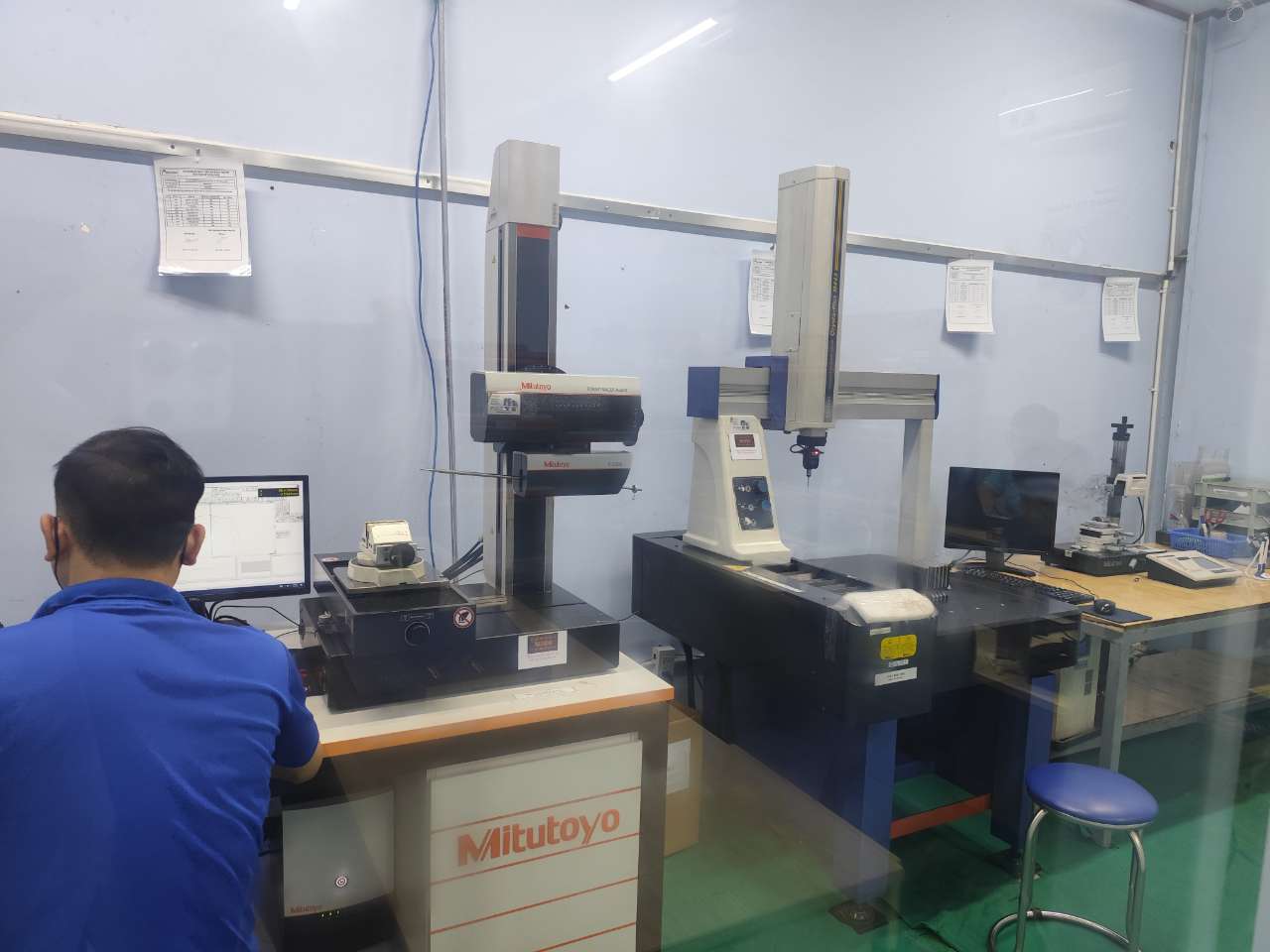
- Dimensional: CMM report per AS9102 or PPAP Level 3 — all GD&T callouts measured and reported
- Material verification: XRF or OES test on the actual part (not just the mill cert) confirming grade composition
- Surface finish: Profilometer readings at 3+ locations on product contact surfaces, reported as Ra in μm
- Passivation verification: Copper sulfate test per ASTM A967 Annex A1 — part must show no copper deposits after 6-minute exposure
- Visual: No crevices, lap joints, or dead legs on product contact surfaces. All internal corners must have minimum R1.5mm radius (3-A Standard 63-03)
Ongoing Production QC
- AQL sampling: General Inspection Level II, AQL 1.0 for critical dimensions, AQL 2.5 for non-critical
- Surface finish spot-check: 5 parts per lot, profilometer measurement at the most difficult-to-finish feature
- Passivation: Copper sulfate test on 3 parts per production lot minimum
- Third-party inspection: $250–400 per inspection visit in Vietnam (SGS, Bureau Veritas, TÜV all have Ho Chi Minh City offices). Cost-effective insurance on $5,000+ shipments
RFQ Specification Template for Food-Grade Parts
Include these items in every food-grade stainless steel RFQ to get accurate quotes and prevent specification gaps:
- ✅ 2D drawing (PDF) + 3D model (STEP) with all GD&T callouts
- ✅ Material grade with specification (e.g., "SS316L per ASTM A276")
- ✅ Surface finish requirements by surface — specify Ra value and method (mechanical polish / electropolish)
- ✅ Passivation spec (ASTM A967, citric acid, with copper sulfate test)
- ✅ Annual volume + order batch sizes (impacts tooling amortization and pricing)
- ✅ Food contact designation — state which surfaces contact product vs. non-contact
- ✅ Regulatory requirements (FDA 21 CFR, 3-A Sanitary, EHEDG, NSF/ANSI 169)
- ✅ Packaging requirements — individual poly-bag wrapping for polished surfaces, VCI paper if applicable
- ✅ Documentation requirements — mill certs, dimensional report, passivation certificate, surface finish report
Common Mistakes That Cost US Buyers Money
- Over-specifying surface finish: Requiring Ra 0.4μm electropolish on non-contact structural brackets adds 30–50% to part cost. Use Ra 0.8μm mechanical polish for non-contact food-zone surfaces and Ra 1.6μm for structural/non-food areas
- Specifying 316L when 304 suffices: For dry food, grain, and general food handling equipment not exposed to acids or chlorinated cleaners, 304 is FDA-approved and costs 30–40% less in material and machining
- Skipping passivation on the drawing: If you don't call it out, most shops won't do it. Free iron from tooling contamination will cause rust spots within weeks in a food plant environment
- Ignoring corner radii: Sharp internal corners are impossible to clean and violate 3-A Sanitary Standards. Call out minimum R1.5mm (⅛") on all product contact internal corners in your drawing
- Not specifying packaging: Polished stainless parts shipped loose in a carton arrive scratched. Require individual poly-bag wrapping or foam separation
Why Dewin for Food-Grade Stainless
We work with 12 Vietnam CNC shops that regularly produce food-grade stainless components — each audited for material traceability, surface finish capability (Ra 0.4μm electropolish verified), and clean handling procedures. Our team inspects first articles on-site with portable profilometers and XRF analyzers before any shipment leaves Vietnam.
- 179+ audited factories — 12 with dedicated food-grade stainless capability
- In-house QC team with profilometers and XRF for material/surface verification
- Mill cert traceability from POSCO, Nippon Steel, and certified domestic mills
- 0% Section 301 tariff — your parts land cheaper than Chinese equivalents
- Real factory photos and equipment lists — see exactly where your parts are made
Get a Food-Grade Stainless Steel Quote
Send us your drawings and food-grade specs. We'll match you with audited Vietnam factories that meet FDA, 3-A, and EHEDG requirements — with a landed cost comparison showing your savings vs. current sourcing.
Request a Quote →