Supplier Spotlight: Lidovit — Digital Fastener Manufacturing in Vietnam (Cold Heading, Threading & In-House Hardness Testing)
April 3, 2026 · 7 min read
Part of our Supplier Spotlight series — real factory visits, real photos, no stock images.
Fasteners are a procurement category that most sourcing teams don't think about until something goes wrong — a batch of under-spec bolts causes a warranty return, or a 25% Section 301 tariff bill quietly erodes your margins. Lidovit Trading and Industrial Joint Stock Company is the kind of fastener supplier that changes that calculation: a Vietnam-based manufacturer running cold heading, threading, heat treatment, and CNC turning with a level of production management — digital warehouse tracking, KPI boards, hardness testing — that's unusual even among larger factories.
This is our ninth Supplier Spotlight — a series where we show US procurement managers the actual audited factories inside Dewin's Vietnam network. Real photos from real site visits. No stock images. No anonymous "network" factories.
Previous spotlights: Bueno Technology (CNC), Altop Precision Die Casting, NAPEC (CNC + CMM), HDP Precision Mechanical, Minh Quang Multi-Process, Eguchiseiko Die Cast, Hirata Precision Industrial, and Huynh Duc Multi-Process.
⚠️ Section 301 Tariff Alert — HTS Chapter 73
US importers currently pay a 25% Section 301 tariff on steel fasteners imported from China — bolts, screws, nuts, washers, and threaded rods fall under HTS Chapter 73 (Articles of Iron or Steel). This is on top of standard MFN duties (typically 6–8.5% on fasteners). Vietnam-origin fasteners are not subject to Section 301. Standard MFN rates apply: typically 0–8.5% depending on fastener type.
Factory at a Glance
Country
Vietnam
Primary Processes
Cold heading, threading, heat treatment, CNC turning
Standout Capabilities
Digital warehouse (barcode/QR), KPI production board, hardness testing
Dewin Audit Status
✓ 50-Point Dolphin Audit Passed
Best Fit Parts
Structural fasteners, hex bolts, socket head cap screws, threaded inserts, studs, custom-spec fasteners
Industry Applications
Industrial machinery, outdoor power equipment, construction hardware, agricultural equipment
What We Saw on the Factory Floor
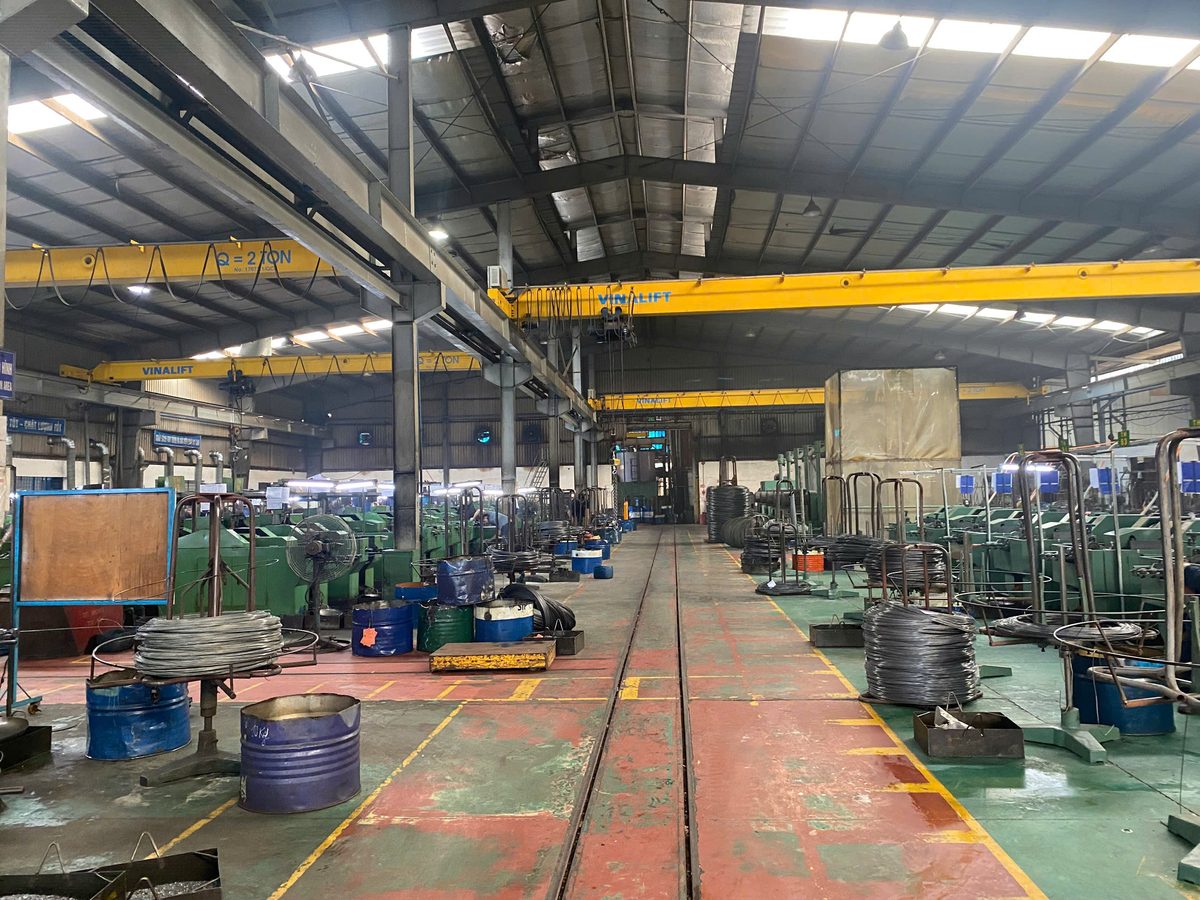
1. Main Production Workshop — Multi-Process Fastener Manufacturing
The main production floor at Lidovit handles the full fastener manufacturing sequence from wire feed through to finished threaded product. Cold heading presses form blank shapes from wire stock; threading machines cut or roll the thread profile; secondary operations handle CNC turning for custom forms. For US procurement teams, seeing the full production chain under one roof — rather than a value-added distributor buying pre-formed fasteners — is a meaningful quality and cost control differentiator.
2. Digital Warehouse Management — Barcode & QR Location Tracking
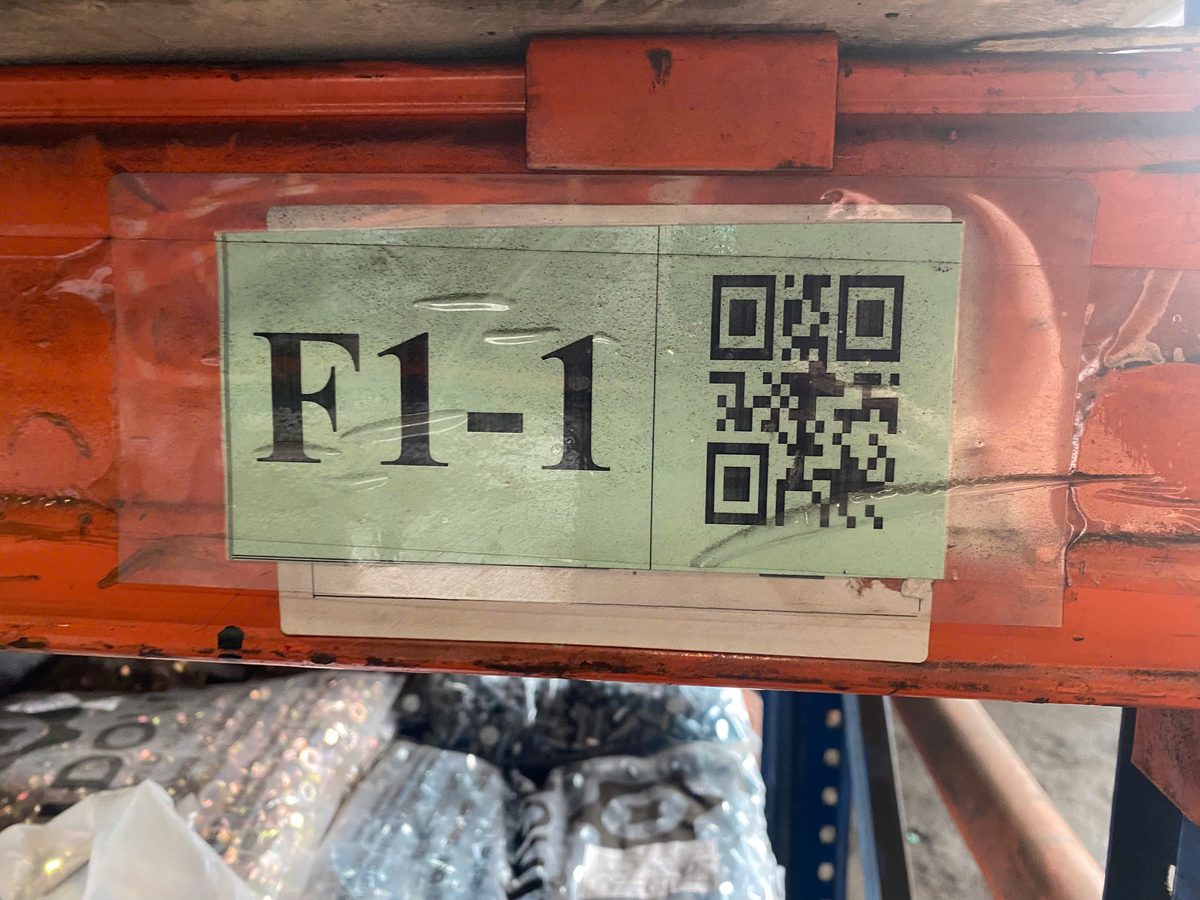
This is the detail that stands out most during a factory walkthrough: Lidovit runs a digital warehouse management system capable of location-level inventory control with barcode and QR code scanning. Every storage location is mapped; every SKU movement is logged to a specific bin or rack position.
For US buyers dealing with fastener suppliers, this matters operationally: it means mixed lots, FIFO failures, and picking errors — the source of most fastener quality issues in distribution environments — are controlled at the inventory level, not just the production level. When you submit an RFQ for a specific lot of M8 × 25mm hex head screws in Grade 8.8, Lidovit can tell you exactly what's in stock, where it is, and when it was produced.
Why Digital Warehouse Management Matters for Fasteners
What It Controls
- • Lot traceability by bin location
- • FIFO inventory rotation (prevents aged stock from shipping)
- • Mixed-part prevention (similar-looking fasteners segregated)
- • Real-time inventory accuracy for order fulfillment
What This Means for Your Orders
- • Correct lot dispatched to your PO — no substitutions
- • Material certifications matched to shipped lot
- • Fewer picking errors on high-mix fastener orders
- • Audit trail if a quality issue arises post-delivery
Most fastener factories — including large ones — run manual paper-based warehouse systems. Digital location management at this scale is a genuine process maturity indicator.
3. Factory KPI and Production Management Board
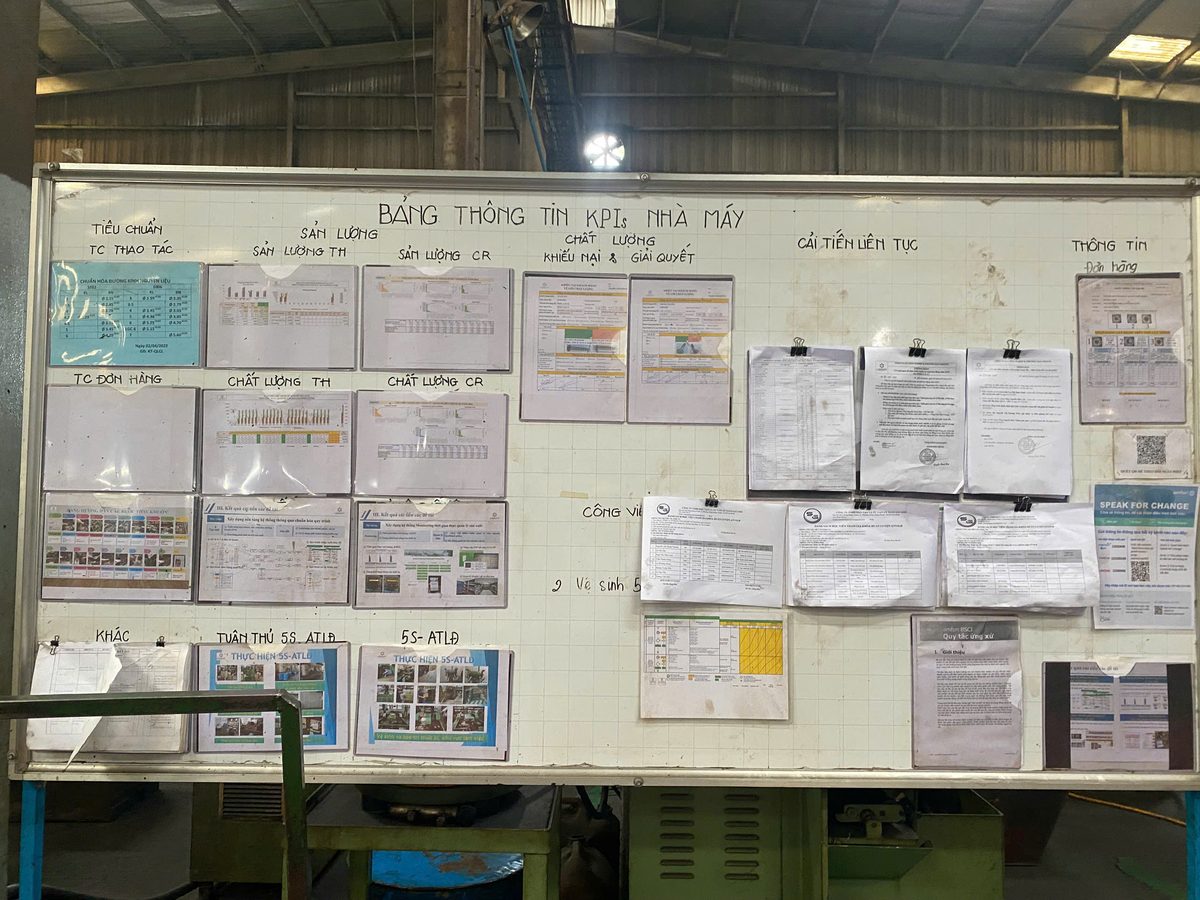
Visible in the production area: a Factory KPI and Production Management Board — a visual management tool tracking daily output targets vs actuals, defect rates, and schedule adherence. This is a lean manufacturing practice borrowed from Toyota Production System and widely used in Tier 1 automotive supply chains.
For US procurement managers, a KPI board on the factory floor signals that management is monitoring production metrics in real time, not just reacting to customer complaints. Factories that measure their own performance consistently are factories that can hold spec across a full production run — not just the first samples.
4. Hardness Testing Machine — Metallurgical QC for Fastener Grade Verification
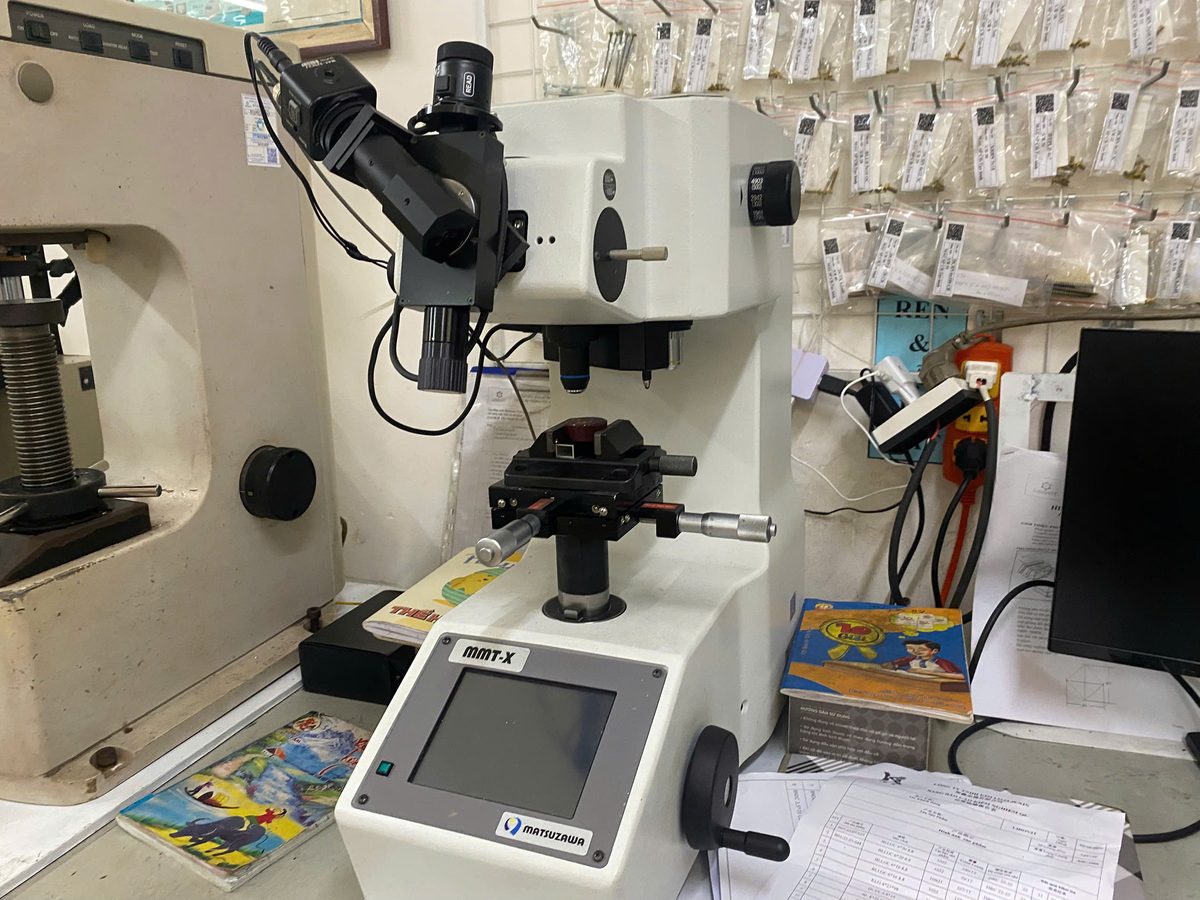
Fastener hardness is a specification that's easy to fake on a certificate of conformance and hard to catch without in-house testing. Lidovit operates an in-house hardness testing machine — this allows them to verify that heat-treated fasteners actually achieve the specified Rockwell or Vickers hardness range before they leave the factory.
Grade 8.8 bolts, for example, require a specific hardness range (22–32 HRC) to achieve the rated tensile and proof load. If heat treatment is under- or over-done, the fastener will fail in service — either by stripping at the thread or by brittle fracture under load. Checking hardness in-house is what separates a fastener manufacturer with real QC from one that relies on supplier certifications they can't verify.
Fastener Hardness — What the Grades Mean
| Fastener Grade | Hardness Range | Typical Use |
|---|---|---|
| Grade 4.6 / SAE Grade 2 | ≤ 22 HRC | Light structural, non-critical |
| Grade 8.8 / SAE Grade 5 | 22–32 HRC | General machinery, automotive, OPE |
| Grade 10.9 / SAE Grade 8 | 32–39 HRC | High-strength structural, powertrain |
| Grade 12.9 | 39–44 HRC | Ultra-high-strength critical joints |
In-house hardness testing lets Lidovit verify every heat-treated batch meets the specified grade — not just rely on the furnace cycle record.
5. CNC Lathe — Precision-Turned Fastener Components
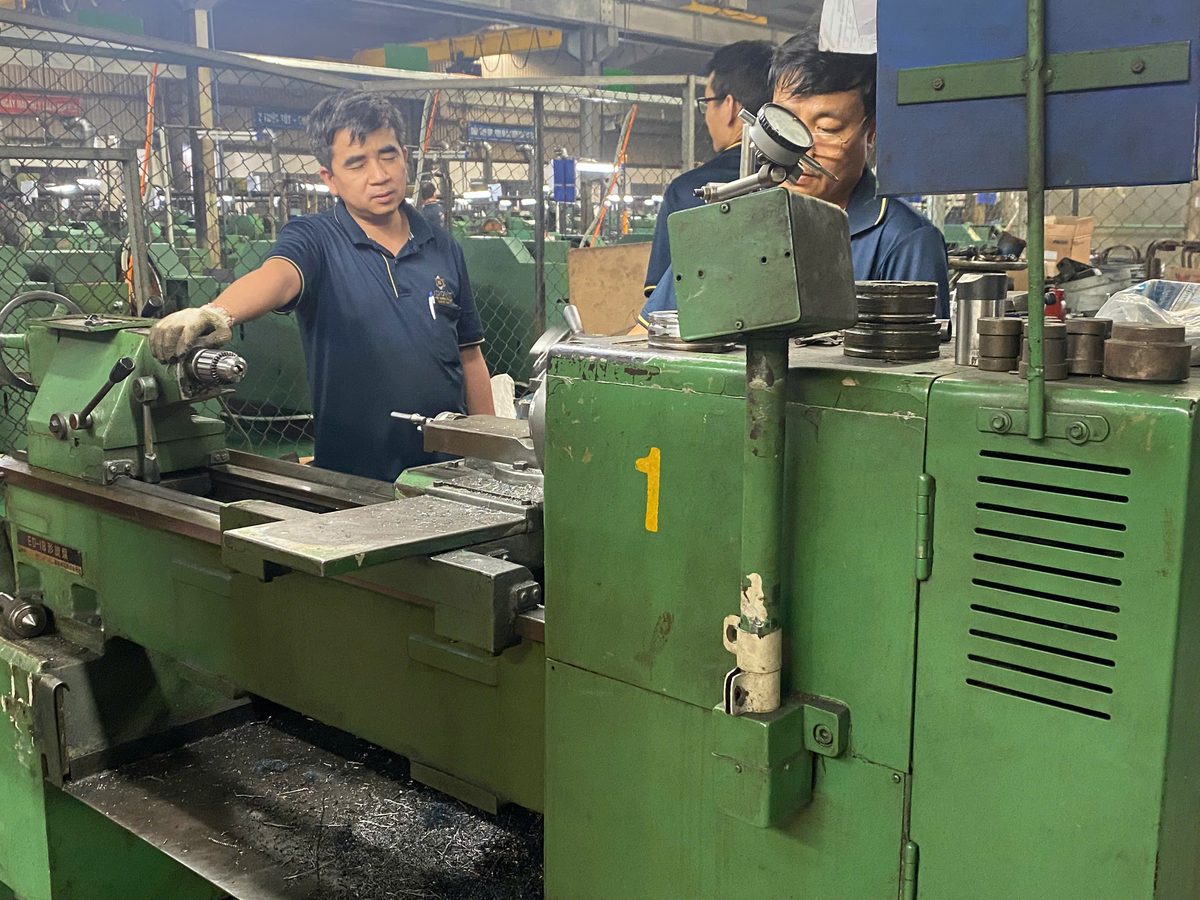
Beyond standard cold-headed fasteners, the CNC lathe capability allows Lidovit to produce custom-formed fastener components — specialty shoulder bolts, turned threaded inserts, custom stud configurations, and precision-turned spacers that don't fit standard catalog specs. This is useful for OEM and industrial machinery applications where standard M-series or inch-series catalog fasteners aren't quite right for the assembly.
6. Office Building & Facility — Professional Production Site
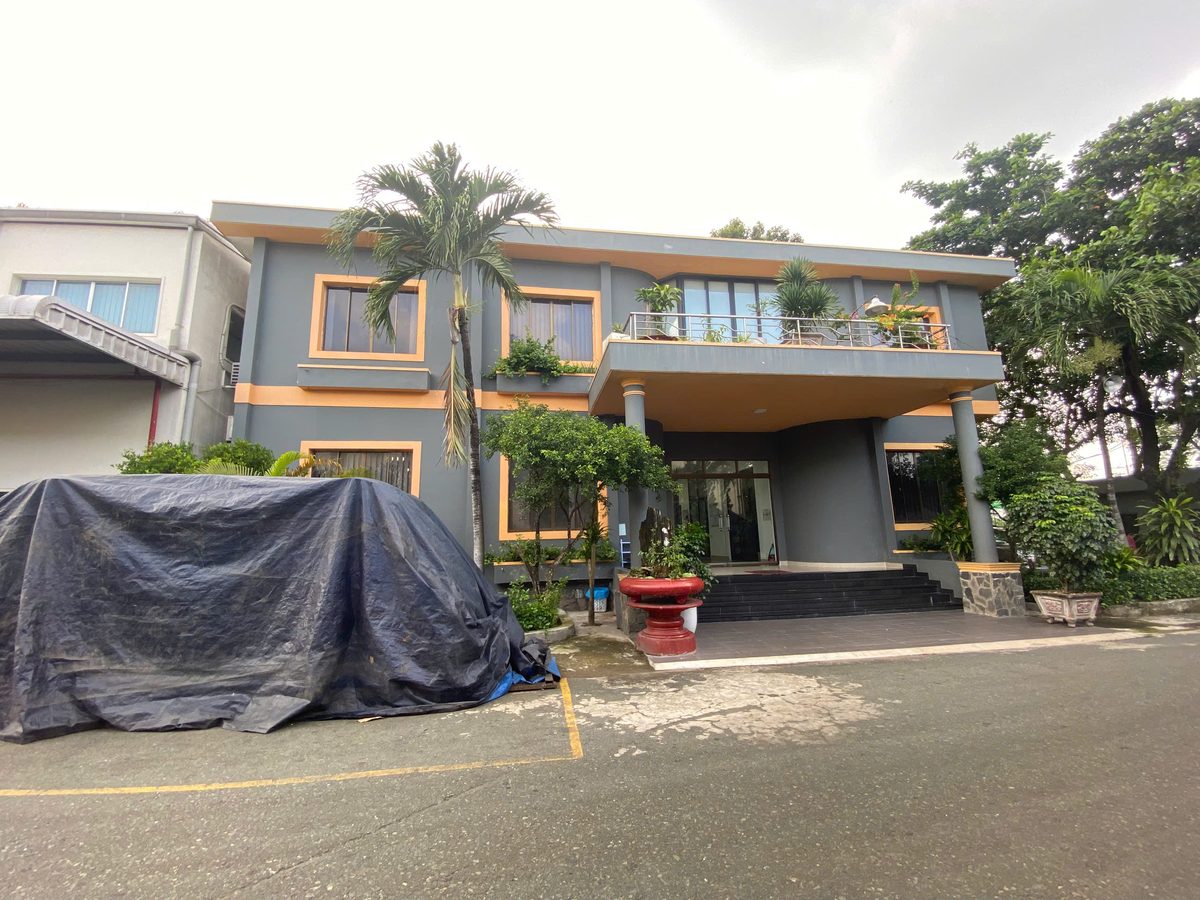
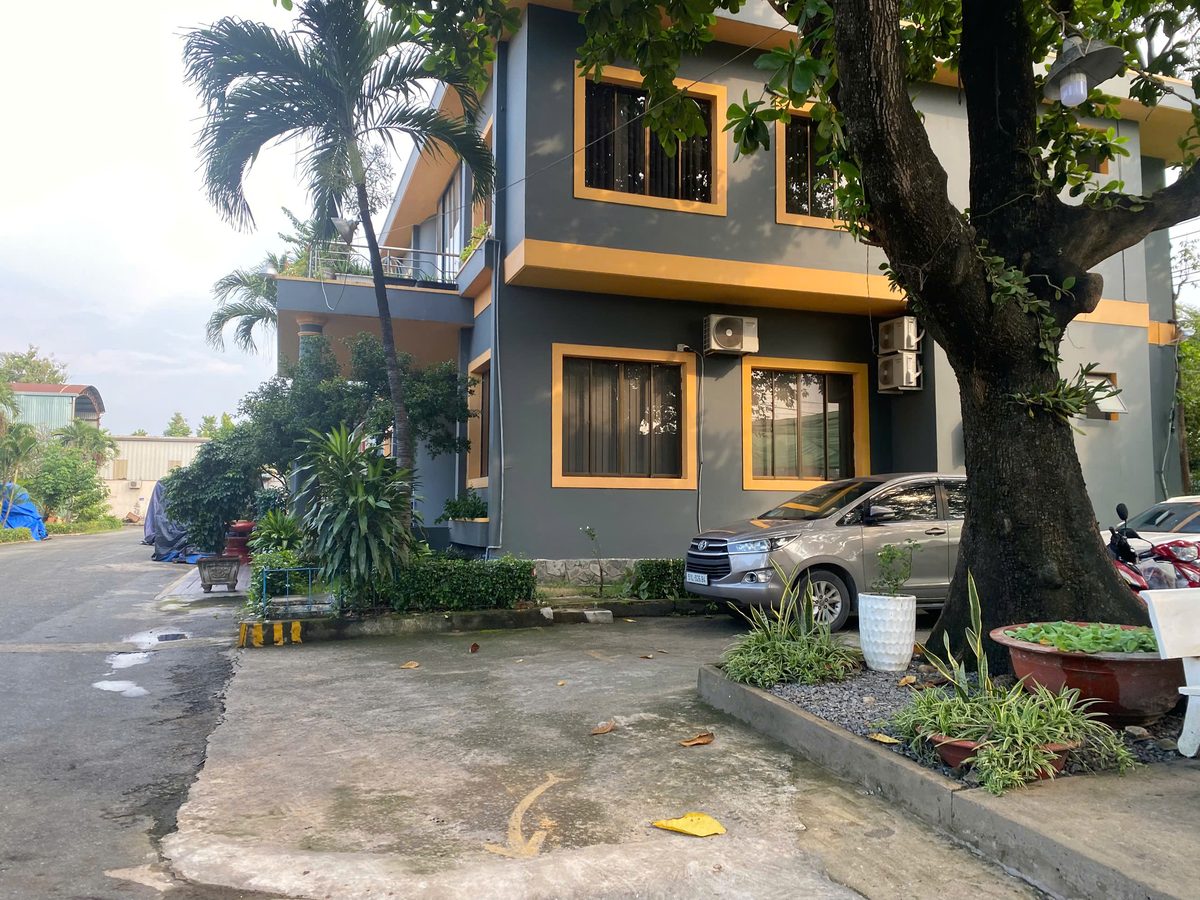
The factory compound includes a dedicated office building alongside the production facility — not an informal workshop arrangement. Separate office infrastructure typically indicates business maturity: engineering, quality, and commercial functions handled by dedicated staff rather than floor supervisors doubling as account managers. For US buyers who need responsive communication on specs, tolerances, and schedules, this matters.
Cost Comparison: Lidovit (Vietnam) vs China + Section 301
Fasteners from China carry one of the most straightforward tariff math stories in manufacturing sourcing. HTS Chapter 73 (Steel Articles) is subject to 25% Section 301 tariff — and fasteners fall squarely in this chapter. If your company buys $500K/year in structural fasteners from China, you're writing a $125K check to US Customs that a Vietnam source eliminates entirely.
| Cost Component | China Supplier | Lidovit (Vietnam) |
|---|---|---|
| Ex-factory price (hex bolt M10×50, Grade 8.8, est. per 1,000 pcs) | $85.00 | Est. $72.00–$80.00 |
| Section 301 tariff (25%, HTS Ch.73) | +$21.25 | $0.00 |
| Standard MFN duty (~6.2% HTS 7318.15) | ~$5.27 | ~$4.65 |
| Estimated landed cost (per 1,000 pcs) | ~$111.52 | ~$80.65 |
| Est. landed cost savings | ~28% lower landed cost |
Table is illustrative. Actual savings depend on HTS classification, fastener grade, quantity, and ex-factory pricing. Dewin provides detailed cost analysis for each project.
On $500K annual fastener spend from China, eliminating the Section 301 tariff alone saves approximately $125K/year — before accounting for lower ex-factory pricing from Vietnam. That's a straightforward business case with a single line-item change in your supplier list.
Dolphin Audit: 5-Pillar Assessment
Every factory in Dewin's Vietnam network is evaluated against our 50-point Dolphin audit framework. Here's how Lidovit scores:
| Pillar | What We Check | Lidovit Result |
|---|---|---|
| 1. Quality Systems | QC documentation, inspection records, NCR process | ✓ Pass — In-house hardness testing machine; metallurgical QC records maintained |
| 2. Equipment & Capability | Machine condition, calibration, precision inspection tools | ✓ Pass — Cold heading, threading, heat treatment, CNC lathe; hardness tester in-house |
| 3. Workplace Organization | 5S compliance, cleanliness, flow, visual management | ✓ Pass — KPI production board active; digital warehouse management prevents mixed-lot errors |
| 4. Traceability | Lot control, incoming material verification, finished goods labeling | ✓ Pass — Barcode/QR digital warehouse system provides bin-level lot traceability |
| 5. Process Discipline | Work instructions, operator training, change control | ✓ Pass — KPI management board indicates real-time production monitoring culture |
Is Lidovit Right for Your Fasteners?
| Your Requirement | Lidovit Fit? |
|---|---|
| Hex bolts, socket head cap screws, threaded rods (standard grades) | ✓ Strong fit — core product range |
| Heat-treated fasteners requiring grade certification (8.8, 10.9) | ✓ Strong fit — in-house hardness testing for grade verification |
| High-mix fastener orders requiring accurate lot control | ✓ Strong fit — digital barcode/QR warehouse prevents mixed-lot shipping |
| Custom fastener geometry (shoulder bolts, special-form studs) | ✓ CNC lathe capability for turned-form fastener components |
| Fasteners requiring material traceability documentation | ✓ Digital warehouse + hardness records = lot-traceable supply chain |
| Fine-thread metric or UNC/UNF inch-series catalog fasteners | ⚡ Confirm thread specs with Dewin team before committing |
| Stainless steel (316L, duplex) corrosion-resistant fasteners | ⚡ Verify material grades with Dewin — may require specialist sourcing |
How to Source from Lidovit Through Dewin
- Send your fastener spec sheet or RFQ — part numbers, grade specs (8.8 / 10.9 / SAE Grade), thread form (metric/UNC/UNF), finish, and annual volume
- We run the factory match — Dewin evaluates your specs against our 179+ audited factories, including Lidovit for standard and custom fastener work
- Get a landed cost comparison — we model Vietnam vs your current China source, Section 301 tariff included in the math
- Sample production with hardness certificates — first articles with hardness test results confirming grade compliance
- Production with lot-controlled shipping — digital warehouse tracking at Lidovit; Dewin on-ground inspection before export
- Export documentation — Certificate of Origin confirming Vietnam origin for tariff exemption, material certifications, hardness test records, inspection certificate, commercial invoice, packing list
Move your fastener spend from China to Vietnam — and cut your Section 301 tariff bill to zero.
On $500K annual fastener spend from China, Section 301 alone costs ~$125K/year. Send us your specs and we'll model the full landed cost comparison — Vietnam vs your current China source.
Get a Cost Comparison →